
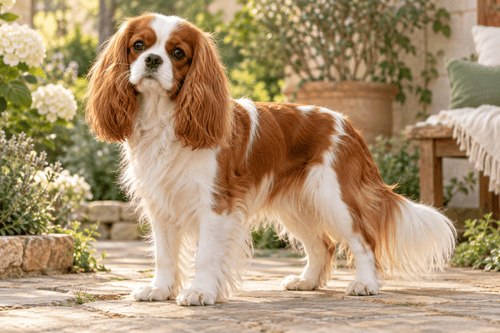
Cavalier King Charles Spaniel
Also known as: Cavalier, Cav
A spaniel heart in a lapdog body — sweet-natured, adaptable and endlessly affectionate.
- Affectionate
- Gentle
- Adaptable
- Sociable
- Eager to please
The Cavalier King Charles Spaniel is one of the gentlest companion breeds in existence, bred for centuries to sit on laps in English drawing rooms while retaining just enough spaniel instinct to enjoy a proper walk. They are affectionate with everyone, get on with children and other pets, and adapt to almost any home. The honest caveat is health: this is a breed with serious inherited conditions, and choosing a breeder well matters more here than in almost any other dog.
At a glance
- Origin
- England, UK
- Breed group
- Toy
- Size
- Small
- Weight
- 12–18 lb (5.4–8.2 kg)
- Height
- 11.8–13 in (30–33 cm)
- Lifespan
- 9–14 years
- Coat
- Medium-length silky coat with feathering
- Colours
- Blenheim, Tricolour, Ruby, Black & Tan
- Average cost
- $70–$110 / month
Breed ratings
Rated 1–5 on the same scale as every other entry, so scores are comparable between breeds. Amber stars mark things that cost you effort rather than things that benefit you.
Temperament
Cavaliers are among the friendliest dogs in existence — they greet strangers, tolerate handling and rarely show aggression. The flip side is that they bond intensely and genuinely struggle with being left alone, which is the most common behavioural complaint in the breed.
Care & upkeep
Exercise
Around an hour daily in two walks. Adaptable to city or country, but the spaniel nose is real — work on recall before trusting off-lead freedom.
Grooming
Brush 3–4 times a week, concentrating on the ear, leg and tail feathering. Check ears weekly — the heavy drop ears are the most common site of trouble in this breed.
Training
Easy and willing, motivated by food and praise. The real work is teaching independence and settled alone-time from puppyhood, because separation anxiety is common and much harder to fix later.
Feeding & diet
- Typical diet
- Measured small-breed diet
- Daily amount
- 150–250 g of dry food
- Meals per day
- 2 meals a day
Cavaliers gain weight easily and hide it under a feathered coat. Weight control has a direct bearing on heart health in a breed already predisposed to mitral valve disease, so weigh portions rather than estimating.
Foods to avoid
- Chocolate
- Grapes and raisins
- Onion and garlic
- Xylitol
- Rich table scraps
Who this breed suits
A good match for
- Families with children
- First-time owners
- Apartments
- Older owners wanting a calm companion
Probably not for
- Owners out all day
- Anyone unable to budget for potential cardiac care
- Households wanting a guard dog
Common health problems
This section describes conditions the breed is known to be predisposed to, so you know what to ask about. It is not veterinary advice and is not a diagnosis — always speak to a vet about your own animal.
- Mitral valve diseaseAffects most Cavaliers by ten years old and is the leading cause of death in the breed. Buy only from heart-screened lines.
- SyringomyeliaA painful spinal cord condition linked to skull shape. Signs include scratching at the neck and yelping without obvious cause.
- Episodic falling syndromeA DNA-testable neurological condition causing collapse after exercise or excitement.
- Ear infectionsThe heavy drop ears trap moisture. Weekly checks and cleaning prevent most cases.
- ObesityVery common in the breed and directly worsens cardiac disease.
Health screening of the parents is the single most important factor in a Cavalier purchase. Ask for heart certification and MRI results, and be prepared to walk away from a litter that has neither.
Interesting facts
- Named after King Charles II, who was said to be rarely seen without several at his side.
- The modern breed was recreated in the 1920s from a prize offered to recover the older, longer-muzzled type.
- The Blenheim colour and the thumb-shaped spot on the head are named after Blenheim Palace.
Diet & Feeding
Cavaliers need around 150–250 g of quality small-breed food daily, split into two meals. They are enthusiastic eaters with very little sense of when to stop, and they gain weight quietly under all that feathering — run your hands along the ribs monthly rather than judging by eye. Weight control matters more in this breed than most, because excess weight puts additional load on a heart that is already statistically likely to develop disease. Count treats inside the daily allowance.
Exercise Needs
About an hour a day split into two walks suits a healthy adult Cavalier, plus play at home. They are genuinely adaptable — happy with a long country walk or a shorter urban circuit — which is a large part of their appeal. They retain spaniel scenting instincts and will follow a trail, so recall needs proper work and open spaces should be assessed carefully. Once a heart murmur is diagnosed, exercise should be discussed with your vet rather than assumed.
Grooming
The silky coat needs brushing 3–4 times a week to prevent tangles, with particular attention to the feathering on the ears, legs and tail where mats form first. The long, heavy ears trap moisture and warm air, making infections common — check and clean them weekly. Trim the hair between the paw pads, bathe every 4–6 weeks, and clip nails every three weeks. Most owners keep the feathering trimmed for practicality rather than growing a full show coat.
Health & Vet Care
This is the section that should drive your decision. Mitral valve disease affects the majority of Cavaliers by ten years of age and is the leading cause of death in the breed. Syringomyelia, a painful spinal cord condition linked to skull shape, is also common. Buy only from breeders who follow a recognised heart and MRI screening scheme and who can show results for the parents and grandparents. Annual cardiac auscultation from age three is sensible, moving to twice yearly once a murmur appears.
Training Tips
Cavaliers are willing, food-motivated and easy to train by any reasonable standard — they want to please and they take correction badly, so reward-based methods are the only sensible route. The genuine training challenge is being left alone: this breed bonds hard and separation anxiety is common. Build alone-time deliberately from puppyhood in short increments rather than discovering the problem at six months. Socialise normally, though they rarely need help being friendly.
Read next
 How to Set Up a Dog-Friendly GardenCheck fences, gates, plants and products before adding water, shade and activities. Includes inspection lists, layout choices and a worked small-garden plan.
 Resource Guarding in Dogs: Signs, Safety and What HelpsRecognise guarding and manage bowls, chews, beds and visitors without provoking the dog. Includes barriers, collection steps and questions for professional help.
 How Lost Pets Actually Get Home — and How to Make Yours Easier to ReturnFollow four reunion routes from finder to owner. Includes contact steps, scanning and service decisions, ownership checks, safe handover and a worked example.