
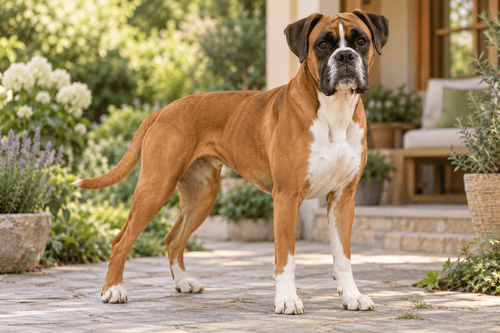
Boxer
Also known as: German Boxer, Deutscher Boxer
The eternal puppy — goofy, athletic and hopelessly devoted to its people.
- Playful
- Loyal
- Exuberant
- Patient with children
- Clownish
The Boxer is a working breed with the temperament of a comedian. Bred in Germany as a hunting and guard dog, the modern Boxer is athletic, exuberant and famously slow to grow up — many stay puppy-brained until three. They are exceptional with children and profoundly attached to their families, but their energy, strength and short muzzle all need managing.
At a glance
- Origin
- Germany
- Breed group
- Working
- Size
- Large
- Weight
- 55–71 lb (25–32 kg)
- Height
- 20.9–24.8 in (53–63 cm)
- Lifespan
- 10–12 years
- Coat
- Short, smooth, tight-fitting
- Colours
- Fawn, Brindle, with white markings, White
- Average cost
- $100–$105 / month
Breed ratings
Rated 1–5 on the same scale as every other entry, so scores are comparable between breeds. Amber stars mark things that cost you effort rather than things that benefit you.
Temperament
Boxers are among the most people-oriented of the working breeds and genuinely struggle when left alone for long periods. Their enthusiasm is physical — jumping, leaning and body-slamming are affection, and need training out early before the dog reaches 30 kg.
Care & upkeep
Exercise
A minimum of 90 minutes of real activity daily. Boxers need to run. Avoid the hottest part of the day — the shortened muzzle makes heat regulation harder than it looks.
Grooming
Almost nothing: a weekly rubber-mitt going-over. Wrinkles on the muzzle should be wiped clean, and white-marked Boxers need sunscreen on exposed pink skin in summer.
Training
Enthusiastic but easily bored and slow to mature. Short, upbeat sessions work; repetition does not. Prioritise a solid "off" cue and lead manners before adolescence, because an untrained adult Boxer is genuinely hard to hold.
Feeding & diet
- Typical diet
- High-quality high-protein diet
- Daily amount
- 700–1,000 g of dry food
- Meals per day
- 2 meals a day
Boxers are prone to bloat and to food sensitivities, particularly skin-related. Feed twice daily with a rest either side of exercise. Many do better on a limited-ingredient diet if itching becomes a pattern.
Foods to avoid
- Chocolate
- Grapes and raisins
- Onion and garlic
- Xylitol
- Rich or fatty scraps
Who this breed suits
A good match for
- Active families with children
- Owners home much of the day
- Homes with a secure garden
- People who want an athletic, involved dog
Probably not for
- Apartments
- Households out all day
- Hot climates without air conditioning
- Owners wanting a calm dog before age three
Common health problems
This section describes conditions the breed is known to be predisposed to, so you know what to ask about. It is not veterinary advice and is not a diagnosis — always speak to a vet about your own animal.
- Boxer cardiomyopathy (ARVC)A serious inherited heart-rhythm disease. Ask breeders about Holter monitoring and DNA testing.
- Aortic and subaortic stenosisA narrowing of the heart outflow, detectable by murmur.
- Mast cell tumoursBoxers have one of the highest cancer rates of any breed. Any new lump should be checked promptly.
- Hip dysplasiaScreened for by responsible breeders.
- Brachycephalic airway syndromeMilder than in flat-faced breeds, but heat and hard exercise still need managing.
Boxers have a shorter average lifespan than their size alone would predict, driven mainly by cancer and heart disease. Twice-yearly vet checks from middle age are worthwhile, as is prompt investigation of any lump.
Interesting facts
- One of the first breeds selected for police work in Germany.
- Boxers are thought to be named for the way they spar with their front paws when playing.
- The breed retains a hunting heritage — it was originally used to hold large game until hunters arrived.
Diet & Feeding
Boxers are lean, muscular and burn a lot of fuel — expect 700–1,000 g of quality dry food a day for an adult, adjusted to activity. Feed twice daily and leave an hour either side of hard exercise; the breed is deep-chested and carries a real bloat (GDV) risk. Boxers are also notably prone to food-related skin sensitivities. If itching, ear infections or paw-licking become a pattern, a limited-ingredient diet trial with your vet is usually more productive than topical treatment alone.
Exercise Needs
A Boxer needs at least 90 minutes of genuine activity daily, and needs to run — walking alone will not settle one. They excel at agility, flyball and long off-lead sessions in secure ground. Two cautions: keep hard exercise off the schedule until growth plates close at around 18 months, and avoid the heat of the day. The shortened muzzle is mild compared to a Bulldog's but still makes cooling less efficient than it looks.
Grooming
This is about as easy as grooming gets — a weekly going-over with a rubber mitt removes the loose hair, and Boxers keep themselves fairly clean. Wipe the muzzle wrinkles when they get grubby to prevent skin irritation. White and white-marked Boxers sunburn: pink skin on the nose and ears needs pet-safe sunscreen in summer. Trim nails every 3–4 weeks and check ears weekly.
Health & Vet Care
Boxers carry a heavier health burden than most breeds. The serious ones are Boxer cardiomyopathy (ARVC) — an inherited arrhythmia that can cause sudden death, screened by Holter monitoring — aortic stenosis, and cancer, particularly mast cell tumours; Boxers have among the highest cancer rates of any breed. Buy from breeders who cardiac-test. Get any new lump checked quickly rather than watching it, and move to twice-yearly vet visits from middle age.
Training Tips
Boxers are willing and clever but mature slowly — you are training a puppy-brained dog in an adult body until around three. Keep sessions short, upbeat and varied; they switch off under repetition. The two priorities before adolescence are a reliable "off" (Boxers jump, lean and body-slam as affection, which stops being funny at 30 kg) and lead manners, because an untrained adult is genuinely difficult to hold. Reward-based methods only; they sulk under harshness.
Read next
 How to Set Up a Dog-Friendly GardenCheck fences, gates, plants and products before adding water, shade and activities. Includes inspection lists, layout choices and a worked small-garden plan.
 Resource Guarding in Dogs: Signs, Safety and What HelpsRecognise guarding and manage bowls, chews, beds and visitors without provoking the dog. Includes barriers, collection steps and questions for professional help.
 How Lost Pets Actually Get Home — and How to Make Yours Easier to ReturnFollow four reunion routes from finder to owner. Includes contact steps, scanning and service decisions, ownership checks, safe handover and a worked example.