
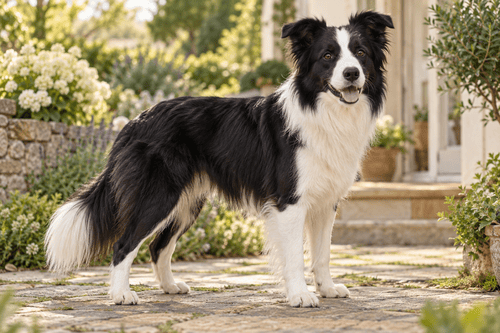
Border Collie
The most intelligent dog on earth — and the most demanding.
The Border Collie consistently tops rankings for canine intelligence and is the undisputed champion of herding, agility and obedience sports. Originally developed to work sheep on the Scottish-English border with minimal handler instruction, Border Collies are relentless, driven and require more mental stimulation than almost any other breed. In the wrong home they are a disaster; in the right one they are extraordinary.
At a glance
- Origin
- Scottish-English Border
- Size
- Medium
- Weight
- 26–44 lb (12–20 kg)
- Lifespan
- 12–15 years
- Coat
- Rough (medium-length) or Smooth (short)
- Colours
- Black & White most common, also Red & White, Blue Merle, Sable, Tri-colour
Breed ratings
Rated 1–5 on the same scale as every other entry, so scores are comparable between breeds. Amber stars mark things that cost you effort rather than things that benefit you.
Diet & Feeding
Border Collies are athletic and burn significant calories. Feed a high-protein, high-energy diet twice daily — working dogs may need up to 500 g dry kibble per day; pet dogs considerably less. Adjust portions to activity level and body condition (you should be able to feel ribs easily). Omega-3s support brain function and coat health.
Exercise Needs
Border Collies need a minimum of 2 hours of intense exercise daily, and even that may not be enough without mental stimulation. Agility, flyball, frisbee, sheepdog trials and obedience are ideal outlets. A tired body with an unstimulated mind still produces a problem dog — mental work is as important as physical. They are not suitable for sedentary owners or apartment living.
Grooming
Rough-coated Border Collies need brushing 2–3 times a week and more during shedding seasons. Pay attention to feathering on legs, chest and tail where tangles form. Smooth-coated varieties need only weekly brushing. Bathe every 6–8 weeks. Check paws after working on rough terrain and trim nails every 3 weeks.
Health & Vet Care
Border Collies can be prone to Collie Eye Anomaly (CEA), progressive retinal atrophy, hip dysplasia, epilepsy and MDR1 drug sensitivity (a genetic mutation affecting how certain drugs are metabolised). Always inform your vet of the breed before prescribing. Reputable breeders test for CEA, PRA, hip scoring and MDR1.
Training Tips
Border Collies live to work and learn. They pick up new behaviours in as few as 1–5 repetitions and need constant new challenges to stay balanced. They excel in every canine sport. However, without adequate outlets they develop obsessive behaviours — staring, chasing shadows, excessive barking. Structure, routine and a job to do are essential. They are not beginner dogs.
Read next
 How to Set Up a Dog-Friendly GardenA garden can be a safe, interesting space for your dog — or a source of escapes, toxic plants and dug-up borders. Here is how to set one up for safety, comfort and enrichment.
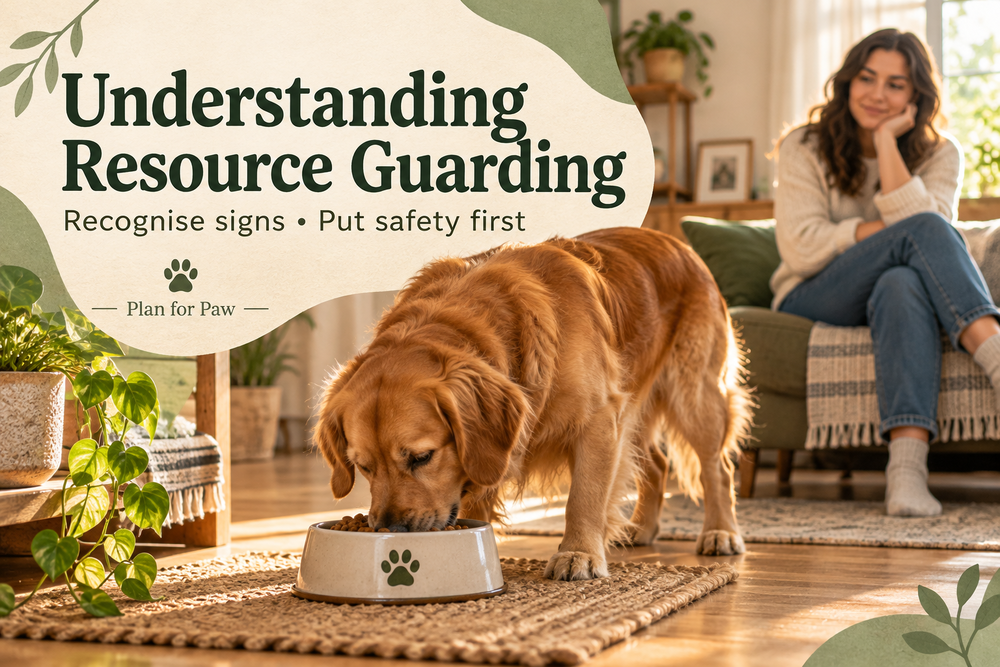 Resource Guarding in Dogs: Signs, Safety and What HelpsA dog that stiffens over the food bowl or growls when you approach a chew is guarding something it values. Here is how to recognise it early, keep everyone safe and what helps.
 How Lost Pets Actually Get Home — and How to Make Yours Easier to ReturnMost lost pets are found close to home by an ordinary person with a phone. What happens in the next few minutes decides how fast they get back. Here is how reunions really happen, and how to prepare.