
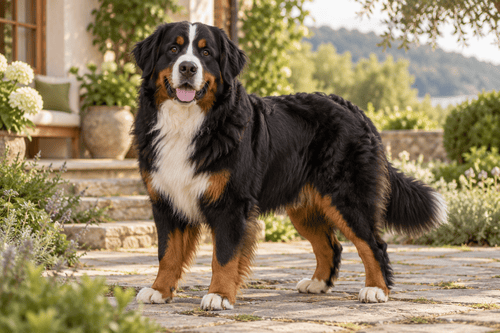
Bernese Mountain Dog
Also known as: Berner, Berner Sennenhund
A calm, tricoloured giant with a gentle nature and a painfully short life.
- Gentle
- Affectionate
- Calm
- Good-natured
- Slow to mature
The Bernese Mountain Dog is a Swiss farm breed developed to pull carts, drive cattle and guard property in the Alpine cantons. Modern Bernese are placid, deeply affectionate family dogs that are excellent with children and famously easy-going. The price of that temperament is health: the breed has one of the shortest average lifespans of any dog and a strikingly high cancer rate.
At a glance
- Origin
- Switzerland
- Breed group
- Working
- Size
- Giant
- Weight
- 77–121 lb (35–55 kg)
- Height
- 22.8–27.6 in (58–70 cm)
- Lifespan
- 7–10 years
- Coat
- Long, thick, silky tricoloured double coat
- Colours
- Tricolour — black with rust and white markings
- Average cost
- $145–$245 / month
Breed ratings
Rated 1–5 on the same scale as every other entry, so scores are comparable between breeds. Amber stars mark things that cost you effort rather than things that benefit you.
Temperament
Bernese are famously tolerant family dogs — patient with children, steady with visitors and rarely reactive. They are also deeply attached and do poorly when left alone for long stretches. Expect a slow mental maturity, with puppy behaviour lingering into the third year.
Care & upkeep
Exercise
An hour a day for an adult, ideally including a job such as hiking or carting. Bernese are built for cold and overheat easily — walk early and late in summer.
Grooming
Brush 2–3 times weekly and daily during the twice-yearly blowout. Mats form first around the ruff, behind the ears and on the trousers. Never shave the coat.
Training
Willing and sensitive. Prioritise lead manners before the dog reaches 40 kg, and socialise well so natural reserve settles into confidence rather than nervousness. Harsh handling shuts this breed down.
Feeding & diet
- Typical diet
- Large-breed formula
- Daily amount
- 900–1,400 g of dry food
- Meals per day
- 2 meals a day
Large-breed puppy formula with controlled calcium until 18 months protects developing joints. Adults gain weight easily under the coat, and every extra kilo loads hips and elbows that are already vulnerable.
Foods to avoid
- Chocolate
- Grapes and raisins
- Onion and garlic
- Xylitol
- Large meals around exercise
Who this breed suits
A good match for
- Families with children
- Cool climates
- Homes with space
- Owners wanting a calm giant
Probably not for
- Hot climates
- Apartments
- Owners wanting a long-lived dog
- Households sensitive to shedding
Common health problems
This section describes conditions the breed is known to be predisposed to, so you know what to ask about. It is not veterinary advice and is not a diagnosis — always speak to a vet about your own animal.
- Histiocytic sarcomaAn aggressive cancer seen at unusually high rates in this breed and a leading cause of death.
- Hip and elbow dysplasiaCommon. Buy only from breeders who score both and keep the dog lean for life.
- Bloat (GDV)A surgical emergency in deep-chested breeds. Learn the signs before you need them.
- Degenerative myelopathyA progressive spinal cord disease with a DNA test available.
- Cruciate ligament ruptureFrequent in heavy breeds, often requiring surgery.
Longevity is the difficult part of this breed. Ask breeders directly about the ages their previous dogs reached, and take any lump or persistent lameness seriously and quickly.
Interesting facts
- One of four Swiss Sennenhund breeds, and the only one with a long coat.
- Traditionally used to pull carts of milk and cheese to market.
- The white blaze, chest cross and rust markings are all required by the breed standard.
Diet & Feeding
Adults need roughly 900–1,400 g of quality food daily across two meals, with an hour of rest either side of exercise — this is a deep-chested breed with real bloat risk. Puppies must be on a large-breed formula with controlled calcium until 18 months; rapid growth in a heavy-boned dog produces lasting joint damage. Bernese carry weight easily under all that coat, and every extra kilo lands on hips and elbows that are already statistically vulnerable.
Exercise Needs
Around an hour daily for an adult, and they genuinely enjoy having a job — carting, hiking and drafting suit the breed's history. They are built for cold and struggle badly in heat: walk early and late in summer, and never leave a Bernese in a warm room without ventilation. Restraint during growth matters as much as it does in any giant breed, so keep jumping and long runs off the schedule until around 18 months.
Grooming
The long double coat needs brushing 2–3 times a week, daily during the twice-yearly blowout, which produces an amount of hair that surprises even prepared owners. Work down to the skin around the ruff, behind the ears, on the trousers and under the tail, where mats form first. Bathe every 6–8 weeks and trim the hair between the paw pads for grip. Never shave the coat — it insulates against heat as well as cold.
Health & Vet Care
The honest headline is a 7–10 year average lifespan and one of the highest cancer rates of any breed, particularly histiocytic sarcoma, which is aggressive and hard to treat. Also common: hip and elbow dysplasia, bloat (GDV), degenerative myelopathy and cruciate ligament rupture. Buy from breeders who hip and elbow score and who are open about longevity in their lines. Take any new lump or persistent lameness seriously and quickly.
Training Tips
Bernese are willing, sensitive and generally easy to train, though they mature slowly and can be goofy well into their third year. They are soft dogs — harsh handling produces a shut-down dog rather than a compliant one. Prioritise lead manners early, because a friendly 50 kg dog that pulls is genuinely hard to hold. Socialise well: the breed is naturally reserved with strangers and needs exposure to settle into confident aloofness rather than nervousness.
Read next
 How to Set Up a Dog-Friendly GardenCheck fences, gates, plants and products before adding water, shade and activities. Includes inspection lists, layout choices and a worked small-garden plan.
 Resource Guarding in Dogs: Signs, Safety and What HelpsRecognise guarding and manage bowls, chews, beds and visitors without provoking the dog. Includes barriers, collection steps and questions for professional help.
 How Lost Pets Actually Get Home — and How to Make Yours Easier to ReturnFollow four reunion routes from finder to owner. Includes contact steps, scanning and service decisions, ownership checks, safe handover and a worked example.