
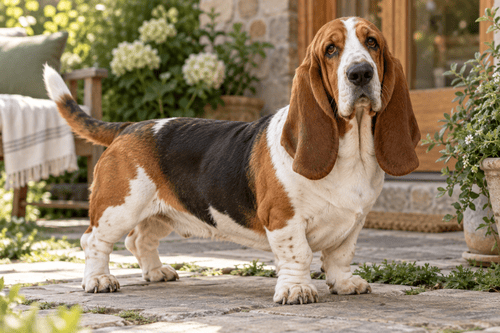
Basset Hound
Also known as: Basset, Hush Puppy
The second-best nose in dogdom, attached to the most stubborn body.
- Gentle
- Stubborn
- Sociable
- Laid-back
- Vocal
The Basset Hound was bred in France to trail rabbit and hare on foot, and every part of the design serves that job: short legs to keep the nose near the ground, long ears to sweep scent upward, loose skin to trap it. They are famously gentle, sociable and comic, and famously immovable when a scent takes hold. Their build brings real orthopaedic and skin care requirements.
At a glance
- Origin
- France
- Breed group
- Hound
- Size
- Medium
- Weight
- 44–64 lb (20–29 kg)
- Height
- 13–15 in (33–38 cm)
- Lifespan
- 10–12 years
- Coat
- Short, dense, weatherproof
- Colours
- Tricolour, Lemon & White, Red & White, Black & White
- Average cost
- $90–$135 / month
Breed ratings
Rated 1–5 on the same scale as every other entry, so scores are comparable between breeds. Amber stars mark things that cost you effort rather than things that benefit you.
Temperament
Bassets are exceptionally tolerant and get on with children, dogs and almost everyone they meet. The famous stubbornness is not defiance but a nose that outranks your voice — a Basset on a trail is genuinely not listening.
Care & upkeep
Exercise
45–60 minutes at their own pace, weighted toward sniffing rather than speed. Avoid stairs and jumping to protect the spine, and use secure fencing rather than trusting recall.
Grooming
A weekly rubber mitt for the coat, but clean the facial and neck folds weekly and check ears at least twice a week. Dry the ears after every wet walk.
Training
Food is the only reliable motivator. Keep sessions short, expect slow house-training, and aim for good lead manners and household behaviour rather than off-lead obedience.
Feeding & diet
- Typical diet
- Measured medium-breed diet
- Daily amount
- 300–450 g of dry food
- Meals per day
- 2 meals a day
Bassets are among the most food-obsessed breeds and every excess kilo loads a long back on short legs. Measure portions, count treats and never leave food within reach.
Foods to avoid
- Chocolate
- Grapes and raisins
- Onion and garlic
- Xylitol
- Fatty scraps
Who this breed suits
A good match for
- Families with children
- Relaxed households
- Owners who enjoy slow walks
- Multi-pet homes
Probably not for
- Owners wanting off-lead reliability
- Homes with many stairs
- People who dislike drool or shedding
- Households that leave food out
Common health problems
This section describes conditions the breed is known to be predisposed to, so you know what to ask about. It is not veterinary advice and is not a diagnosis — always speak to a vet about your own animal.
- Intervertebral disc diseaseThe long back and short legs carry spinal risk. Keep weight down and use ramps rather than stairs.
- Ear infectionsLong, heavy ears over the canal make this the most common complaint in the breed. Check twice weekly.
- Elbow dysplasia and osteochondrosisRelated to the achondroplastic build. Controlled growth and lean condition help.
- Glaucoma and eyelid abnormalitiesLoose facial skin causes entropion or ectropion; glaucoma occurs at elevated rates.
- Bloat (GDV)The deep chest carries risk. Rest around meals and learn the signs.
Weight and ears are the two things a Basset owner controls that make the biggest difference. A lean Basset with clean ears is a fundamentally healthier dog.
Interesting facts
- The name comes from bas, French for low.
- Second only to the Bloodhound in scenting ability among dog breeds.
- The long ears are thought to help sweep scent up toward the nose as the dog trails.
Diet & Feeding
Bassets need 300–450 g of quality food daily across two meals, and weight control is the whole ballgame. They are heavy-boned, low-slung and among the most food-obsessed breeds alive, and every excess kilo lands directly on a long back and short legs. Feed measured portions, count treats, and never leave food accessible — a Basset will find it. Rest for an hour either side of exercise, since the deep chest carries some bloat risk.
Exercise Needs
Around 45–60 minutes daily at a Basset's own pace, which is unhurried. What they genuinely need is sniffing time — a slow scent walk satisfies a Basset far more than a brisk march. Two structural cautions: avoid stairs and jumping where possible to protect the back, and be realistic about recall. Once a Basset commits to a trail it is functionally deaf, so secure fencing and long lines are the practical answer rather than better training.
Grooming
The short coat needs only a weekly rubber mitt, but Bassets shed more than expected and the skin needs real attention. Clean the facial and neck folds weekly to prevent dermatitis, and check the ears at least twice a week — long, heavy and hanging over the canal, they are the single most common site of infection in the breed. Dry the ears after any wet walk. Nails grow fast on a heavy dog and need trimming every three weeks.
Health & Vet Care
The structural issues dominate: intervertebral disc disease, elbow dysplasia and osteochondrosis all relate to the achondroplastic build, and weight is the factor most under your control. Add chronic ear infections, glaucoma, entropion or ectropion and bloat. Ramps rather than stairs, a lean body condition and weekly ear care between them prevent most of the problems a Basset would otherwise present with.
Training Tips
Bassets are intelligent and completely unmotivated to obey — that combination is what earns the stubborn label. Food is the only reliable currency, and sessions must be short and interesting. They are sensitive to harsh tone and simply disengage. House-training is often slow. The most realistic goal is a dog with good manners on lead and reliable behaviour in the house, rather than off-lead obedience, which very few Bassets ever offer.
Read next
 How to Set Up a Dog-Friendly GardenCheck fences, gates, plants and products before adding water, shade and activities. Includes inspection lists, layout choices and a worked small-garden plan.
 Resource Guarding in Dogs: Signs, Safety and What HelpsRecognise guarding and manage bowls, chews, beds and visitors without provoking the dog. Includes barriers, collection steps and questions for professional help.
 How Lost Pets Actually Get Home — and How to Make Yours Easier to ReturnFollow four reunion routes from finder to owner. Includes contact steps, scanning and service decisions, ownership checks, safe handover and a worked example.