
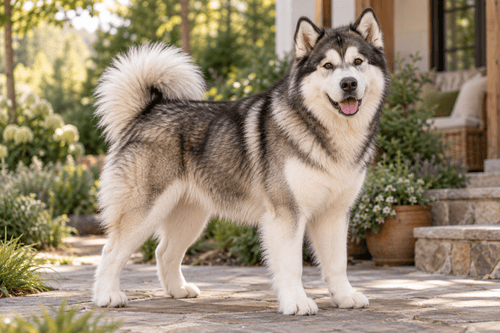
Alaskan Malamute
Also known as: Mal, Mally
Built to haul, not to race — a powerful arctic freighting dog with a will of its own.
- Friendly
- Independent
- Powerful
- Stubborn
- Sociable
The Alaskan Malamute is one of the oldest arctic sled breeds, developed by the Mahlemiut people to haul heavy loads over long distances rather than to run fast. They are powerful, friendly, deeply social and profoundly independent. Malamutes are frequently bought on appearance by owners expecting a large Husky, and the resulting mismatch fills rescues every year.
At a glance
- Origin
- Alaska, USA
- Breed group
- Working
- Size
- Large
- Weight
- 75–99 lb (34–45 kg)
- Height
- 22.8–25.2 in (58–64 cm)
- Lifespan
- 10–14 years
- Coat
- Thick double coat with a dense woolly undercoat
- Colours
- Grey & White, Black & White, Sable & White, Red & White, Solid White
- Average cost
- $145–$235 / month
Breed ratings
Rated 1–5 on the same scale as every other entry, so scores are comparable between breeds. Amber stars mark things that cost you effort rather than things that benefit you.
Temperament
Malamutes are affectionate and outgoing with people — they are poor guard dogs precisely because they like everyone. With other dogs it is a different picture: same-sex aggression is common and small pets are frequently unsafe.
Care & upkeep
Exercise
Two hours minimum, ideally including weight-bearing work such as carting or backpacking. Never off lead in open space, and fencing must be tall, sunk and dig-proof.
Grooming
Brush 3–4 times weekly and daily for weeks during each blowout, using an undercoat rake down to the skin. Never shave. The volume of shed undercoat is genuinely extraordinary.
Training
Intelligent and independent, with no particular drive to please. Patience, high-value reward and realistic goals work. Off-lead reliability is unlikely to ever arrive, so plan containment accordingly.
Feeding & diet
- Typical diet
- High-quality working-dog diet
- Daily amount
- 700–1,100 g of dry food
- Meals per day
- 2 meals a day
Arctic breeds are efficient converters and many Malamutes need less than their size suggests — overfeeding is common. Working dogs in cold conditions need substantially more.
Foods to avoid
- Chocolate
- Grapes and raisins
- Onion and garlic
- Xylitol
- Large meals around exercise
Who this breed suits
A good match for
- Experienced owners
- Cold climates
- Rural properties
- People wanting a working partner
Probably not for
- First-time owners
- Hot climates
- Homes with small pets
- Households wanting an off-lead dog
Common health problems
This section describes conditions the breed is known to be predisposed to, so you know what to ask about. It is not veterinary advice and is not a diagnosis — always speak to a vet about your own animal.
- Hip dysplasiaScreened by responsible breeders. Keep the dog lean to reduce joint load.
- Hereditary polyneuropathyA breed-specific neurological condition with a DNA test available.
- ChondrodysplasiaA dwarfism condition affecting limb growth; DNA testing is available.
- Zinc-responsive dermatosisA skin condition linked to zinc absorption, seen particularly in arctic breeds.
- Inherited cataractsAsk breeders for eye certification of the parents.
Bought on appearance more than almost any other breed, and rehomed for the same reason. Anyone considering a Malamute should meet several adults first, not just puppies.
Interesting facts
- Named after the Mahlemiut people of north-western Alaska.
- Bred for hauling heavy loads over distance rather than for speed — the opposite job to a racing Husky.
- Malamutes rarely bark, communicating instead with a distinctive woo-woo vocalisation.
Diet & Feeding
Malamutes need 700–1,100 g of quality food daily across two meals, and like most arctic breeds they are surprisingly efficient converters — many need less than their size suggests, and overfeeding is common. Working dogs in cold conditions need far more. They can be picky and may skip meals without concern. Rest around exercise given the deep chest, and never free-feed: weight gain on a heavy-boned dog loads hips that are already vulnerable.
Exercise Needs
Two hours daily is a minimum, and it should include weight-bearing work where possible — carting, backpacking, sledding or hard hiking suit a freighting breed far better than a jog. Malamutes are built for cold and suffer in heat, so summer exercise must be early and late. Never off lead in open space: prey drive is high and recall is genuinely unreliable in the breed. Fencing must be tall, sunk and dig-proof, because they are exceptional escape artists.
Grooming
The double coat needs brushing 3–4 times a week and daily for several weeks during each of the two annual blowouts, which produce an extraordinary volume of undercoat. Use an undercoat rake down to the skin; surface brushing achieves nothing. Bathe every 6–8 weeks and dry thoroughly. Never shave a Malamute — the coat regulates heat as well as cold and regrowth is often permanently damaged. Nails are thick and need trimming every three weeks.
Health & Vet Care
Screened conditions include hip dysplasia, hereditary polyneuropathy (DNA-testable and specific to the breed), chondrodysplasia, inherited cataracts and hypothyroidism. Malamutes are also prone to zinc-responsive dermatosis, a skin condition linked to zinc absorption. Ask breeders for hip scores, eye certification and DNA results. Bloat risk exists, and heat intolerance is a genuine year-round management issue rather than a footnote.
Training Tips
Malamutes are intelligent and entirely willing to decide your request lacks merit — they were bred to work as a team but to think independently. Training requires patience, high-value reward and realistic goals; harsh handling produces resistance from a very strong dog. Same-sex dog aggression is common, and many Malamutes cannot live safely with small pets. Socialise early, manage rather than test, and accept that off-lead reliability is unlikely ever to arrive.
Read next
 How to Set Up a Dog-Friendly GardenCheck fences, gates, plants and products before adding water, shade and activities. Includes inspection lists, layout choices and a worked small-garden plan.
 Resource Guarding in Dogs: Signs, Safety and What HelpsRecognise guarding and manage bowls, chews, beds and visitors without provoking the dog. Includes barriers, collection steps and questions for professional help.
 How Lost Pets Actually Get Home — and How to Make Yours Easier to ReturnFollow four reunion routes from finder to owner. Includes contact steps, scanning and service decisions, ownership checks, safe handover and a worked example.