
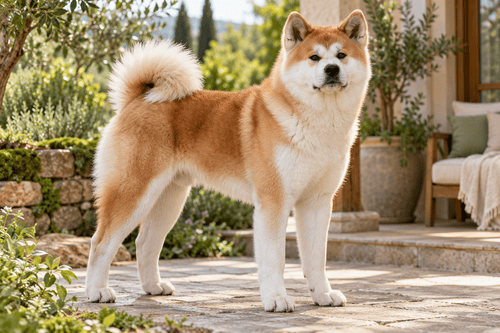
Akita
Also known as: Akita Inu, Japanese Akita, Great Japanese Dog
Dignified, powerful and famously loyal to one family — not a dog for everyone.
- Dignified
- Loyal
- Reserved
- Independent
- Territorial
The Akita is a Japanese spitz-type breed developed for hunting bear and boar, later becoming a national monument and a symbol of loyalty. They are quiet, clean, deeply devoted to their own family and reserved to the point of indifference with everyone else. Akitas are magnificent dogs and genuinely challenging ones: strong-willed, same-sex dog aggressive in many lines, and unsuitable for inexperienced owners.
At a glance
- Origin
- Japan
- Breed group
- Working
- Size
- Large
- Weight
- 71–130 lb (32–59 kg)
- Height
- 24–28 in (61–71 cm)
- Lifespan
- 10–13 years
- Coat
- Thick double coat with a dense woolly undercoat
- Colours
- Red Fawn, Brindle, White, Sesame
- Average cost
- $140–$250 / month
Breed ratings
Rated 1–5 on the same scale as every other entry, so scores are comparable between breeds. Amber stars mark things that cost you effort rather than things that benefit you.
Temperament
Akitas are devoted to their own family and largely indifferent to everyone else — that aloofness is breed-correct rather than a training failure. Same-sex dog aggression is common in the breed and should be planned around rather than trained away.
Care & upkeep
Exercise
An hour to 90 minutes of structured walking daily. Off-lead exercise is rarely appropriate given prey drive and dog selectivity — secure private space is the practical answer.
Grooming
Clean and odourless most of the year with brushing 2–3 times weekly — then daily during the dramatic twice-yearly coat blow. Never shave the double coat.
Training
Intelligent and independent — they were bred to make decisions without a handler. Socialisation from puppyhood is essential, and calm consistent handling works far better than confrontation with a dog of this power.
Feeding & diet
- Typical diet
- Large-breed high-quality diet
- Daily amount
- 700–1,100 g of dry food
- Meals per day
- 2 meals a day
Large-breed formula through growth and measured feeding thereafter. Some Akita lines show food sensitivities linked to skin disease — a diet trial with your vet is worthwhile if itching becomes a pattern.
Foods to avoid
- Chocolate
- Grapes and raisins
- Onion and garlic
- Xylitol
- Large meals around exercise
Who this breed suits
A good match for
- Experienced owners
- Single-dog households
- Homes with secure fencing
- Cool climates
Probably not for
- First-time owners
- Multi-dog households
- Homes with frequent visitors
- Hot climates
Common health problems
This section describes conditions the breed is known to be predisposed to, so you know what to ask about. It is not veterinary advice and is not a diagnosis — always speak to a vet about your own animal.
- Hip and elbow dysplasiaScreened by responsible breeders. Keep the dog lean to reduce joint load.
- HypothyroidismCommon in the breed; signs include coat changes, weight gain and lethargy.
- Sebaceous adenitisAn inflammatory skin condition seen at elevated rates in Akitas.
- Autoimmune diseaseIncluding VKH-like syndrome affecting eyes and skin pigment. Ask breeders about family history.
- Anaesthetic sensitivityReported in the breed. Flag it with your vet before any procedure.
Akitas are dog-selective by nature, particularly toward the same sex. Manage introductions rather than testing them, and do not rely on dog parks or group daycare.
Interesting facts
- Hachikō, an Akita, waited at Shibuya Station for his owner every day for nine years after the man died.
- Declared a Japanese natural monument in 1931.
- Akitas groom themselves like cats and have almost no doggy odour.
Diet & Feeding
Adults need 700–1,100 g of quality food daily across two meals, with rest either side of exercise given the deep chest and bloat risk. Puppies need a large-breed formula with controlled growth until 18 months. Akitas are efficient eaters and can gain weight quietly under the coat; assess condition by hand. Some lines show food sensitivities and autoimmune skin disease, so if itching, ear infections or paw-licking become a pattern, discuss a diet trial with your vet.
Exercise Needs
Around an hour to 90 minutes daily of structured walking. Akitas are not endurance athletes and do not need the volume a working herding breed does — what they need is consistent, controlled outlet and mental engagement. Off-lead exercise is rarely appropriate: prey drive is high and same-sex dog tolerance is often low, so secure private space is the realistic option. The double coat makes them cold-tolerant and heat-intolerant.
Grooming
Akitas are clean, close to odourless and cat-like in self-grooming — and then they blow coat twice a year in a way that has to be seen to be believed. Brush 2–3 times a week normally and daily for the two or three weeks of each blowout, using an undercoat rake. Bathe every 6–8 weeks. Never shave the coat: it insulates against heat as well as cold. Nails, ears and teeth on the usual schedule.
Health & Vet Care
Watch for hip and elbow dysplasia, hypothyroidism, progressive retinal atrophy, sebaceous adenitis (a skin condition seen at elevated rates) and autoimmune conditions including VKH-like syndrome. Akitas are also reported to have sensitivity to some anaesthetic and sedative protocols, so flag the breed with your vet. Buy from breeders who hip score, eye test and are candid about autoimmune history in their lines.
Training Tips
Akitas are intelligent and entirely capable of deciding your request is optional — they were bred to work independently, not to take direction. Socialisation from puppyhood is essential and non-negotiable, and even then many Akitas remain dog-selective for life. Use calm, consistent, reward-based handling; confrontation with a powerful, dignified breed produces conflict rather than compliance. Do not rely on dog parks or daycare, and manage rather than test same-sex introductions.
Read next
 How to Set Up a Dog-Friendly GardenCheck fences, gates, plants and products before adding water, shade and activities. Includes inspection lists, layout choices and a worked small-garden plan.
 Resource Guarding in Dogs: Signs, Safety and What HelpsRecognise guarding and manage bowls, chews, beds and visitors without provoking the dog. Includes barriers, collection steps and questions for professional help.
 How Lost Pets Actually Get Home — and How to Make Yours Easier to ReturnFollow four reunion routes from finder to owner. Includes contact steps, scanning and service decisions, ownership checks, safe handover and a worked example.