
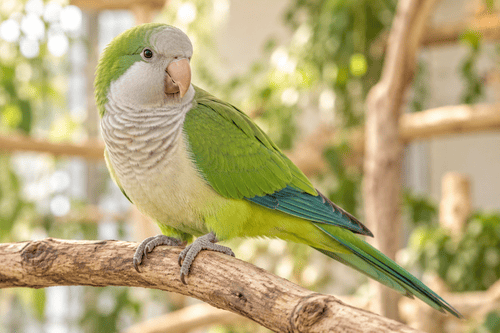
Quaker Parrot
Also known as: Monk parakeet, Myiopsitta monachus, Quaker parakeet
A small parrot with an enormous vocabulary and a habit of building things.
- Bold
- Talkative
- Affectionate
- Territorial
- Comic
The Quaker, or monk parakeet, is a South American parrot unique among parrots for building large communal stick nests rather than using tree hollows. They are bold, comic and exceptional talkers for their size, with a clarity that rivals much larger species. They are also loud, opinionated, prone to territorial behaviour — and illegal to keep in several jurisdictions because escaped populations have established themselves so successfully.
At a glance
- Origin
- South America
- Size
- Medium
- Weight
- 3.2–4.9 oz (90–140 g)
- Lifespan
- 20–30 years
- Coat
- Plumage
- Colours
- Green (wild type), Blue, Cinnamon, Lutino, Pallid
- Average cost
- $45–$90 / month
Breed ratings
Rated 1–5 on the same scale as every other entry, so scores are comparable between breeds. Amber stars mark things that cost you effort rather than things that benefit you.
Temperament
Quakers are confident, funny and deeply involved with their people. The two behavioural realities to plan for are volume and cage territoriality — many will defend the cage against hands, which is managed by taking the bird out from a neutral perch rather than reaching in.
Care & upkeep
Exercise
Three or more hours out of the cage daily. The species-specific need is nest-building material — safe twigs and weaving material satisfy a genuine instinct no other parrot has.
Grooming
Self-grooming with misting or a bath dish 2–3 times weekly. Watch the chest for bare patches, which are the usual first sign of plucking in this species.
Training
Among the best talkers of any small parrot and highly trainable generally. Consistent handling by several household members prevents the intense one-person bonding that causes problems later.
Feeding & diet
- Typical diet
- Pellet-based with fresh vegetables
- Daily amount
- 30–45 g pellets plus fresh vegetables
- Meals per day
- Fresh food daily; pellets available
Quakers gain weight readily and are prone to fatty liver disease on seed-heavy diets. Pellets and fresh vegetables should form the base, with seed reserved as a training reward.
Foods to avoid
- Avocado
- Chocolate
- Caffeine
- Alcohol
- Salt
- High-fat seed as a staple
Who this breed suits
A good match for
- Experienced small-parrot owners
- People home much of the day
- Households that can tolerate noise
- Owners wanting a talking bird
Probably not for
- Apartments with thin walls
- Jurisdictions where they are prohibited
- Owners away all day
- Homes wanting a quiet pet
Common health problems
This section describes conditions the breed is known to be predisposed to, so you know what to ask about. It is not veterinary advice and is not a diagnosis — always speak to a vet about your own animal.
- Fatty liver diseaseQuakers are notably prone to obesity on seed-heavy diets. Pellets and vegetables should form the base.
- Feather destructive behaviourCommon when bored or stressed. Bare patches on the chest are usually the first sign.
- Psittacosis (chlamydiosis)A bacterial infection transmissible to humans.
- PBFDPsittacine beak and feather disease — viral and untreatable. Ask breeders about testing.
- Chronic egg layingFemales may lay persistently without a mate, depleting calcium reserves.
Check the law before acquiring one. Quakers are prohibited or restricted in several US states and other jurisdictions because escaped birds establish feral colonies readily.
Interesting facts
- The only parrot that builds communal stick nests rather than nesting in tree hollows.
- Feral colonies have established in several countries from escaped pets, which is why the species is restricted in places.
- Exceptional talkers for their size, with unusually clear pronunciation.
Diet & Feeding
Feed a quality small-parrot pellet as 60–70% of intake — around 30–45 g daily — with fresh vegetables every day and limited fruit. Quakers have a genuine tendency toward obesity and fatty liver disease on seed-heavy diets, more so than many small parrots, so seed should be a treat and a training reward rather than a staple. They are enthusiastic foragers; scatter feeding and foraging toys slow intake and provide enrichment at the same time.
Exercise & Mental Stimulation
Quakers need 3 or more hours out of the cage daily in a bird-proofed room and are more physically active than their size suggests. The species-specific need is building material — this is the only parrot that constructs stick nests, and providing safe twigs, palm leaf and weaving material satisfies a genuine instinct. A large cage with horizontal bars for climbing suits them. Bird-proof properly and eliminate non-stick cookware from the household.
Grooming
Self-grooming, with misting or a bath dish 2–3 times a week to keep plumage in condition. Nails and beak checked every 6–8 weeks. Watch for feather plucking, which Quakers are notably prone to when bored or stressed — bare patches on the chest are the usual first sign and warrant a review of enrichment, sleep and diet as well as veterinary assessment for underlying disease.
Health & Vet Care
Register with an avian vet. The main concerns are fatty liver disease from poor diet, feather destructive behaviour, psittacosis, PBFD and chronic egg laying in females. Quakers are hardy birds otherwise and frequently live 20 to 30 years. Before acquiring one, check the law where you live — Quakers are prohibited or restricted in several US states and other jurisdictions because feral colonies have established from escaped pets.
Living with a Quaker
They are extraordinary talkers, learning large vocabularies with clear pronunciation, and they are affectionate, funny and thoroughly involved in household life. The honest counterweights: they are loud, with a piercing call that carries; they become territorial about their cage and may defend it against hands; and they bond intensely and can become one-person birds. Consistent handling by several people and a firm routine prevent most of the problems.