
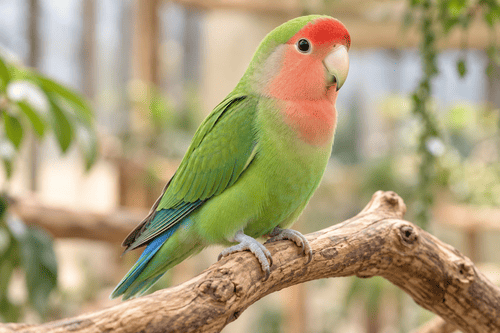
Lovebird
Also known as: Agapornis, Peach-faced lovebird (most common species)
Tiny, vivid and ferociously bonded — a small parrot with an outsized personality.
- Bold
- Energetic
- Devoted
- Territorial
- Noisy
Lovebirds are small African parrots named for the intense pair bonds they form. They are brilliantly coloured, endlessly busy and much bolder than their size suggests — a lovebird will take on a bird three times its weight. They are rewarding for engaged owners but are frequently bought on looks alone by people expecting something as placid as a budgie, which they are not.
At a glance
- Origin
- Africa and Madagascar
- Size
- Small
- Weight
- 1.4–2.1 oz (40–60 g)
- Lifespan
- 10–15 years
- Coat
- Plumage
- Colours
- Green (wild type), Peach-faced, Lutino, Blue, Violet, Pied
- Average cost
- $30–$60 / month
Breed ratings
Rated 1–5 on the same scale as every other entry, so scores are comparable between breeds. Amber stars mark things that cost you effort rather than things that benefit you.
Temperament
Lovebirds are famously feisty and can be aggressive toward other bird species and sometimes toward each other — they are not a safe addition to a mixed aviary. They bond intensely, either to a mate or to a person, and a hand-raised single bird demands a great deal of attention.
Care & upkeep
Exercise
3+ hours of out-of-cage flight daily. Lovebirds are extremely active and become destructive and screamy without an outlet.
Grooming
Self-grooming. Offer bathing water or misting 2–3 times weekly — most lovebirds bathe enthusiastically. Provide plenty of safe shreddable material; chewing is a need, not a fault.
Training
Trainable but stubborn and easily distracted. Hand-raised birds tame well; parent-raised ones often stay flighty. Consistency matters more than session length.
Feeding & diet
- Typical diet
- Pellet-based with fresh vegetables
- Daily amount
- 15–25 g pellets plus fresh vegetables
- Meals per day
- Fresh food daily; pellets available
As with all small parrots, seed-heavy diets cause obesity and vitamin deficiency. Pellets should form the base, with daily fresh vegetables and limited fruit.
Foods to avoid
- Avocado
- Chocolate
- Caffeine
- Alcohol
- Salt
- Apple seeds and stone fruit pits
Who this breed suits
A good match for
- Experienced small-parrot owners
- People home much of the day
- Owners wanting an interactive bird
- Households that can tolerate noise
Probably not for
- Mixed-species aviaries
- Apartments with thin walls
- Homes with young children
- Owners out all day with a single bird
Common health problems
This section describes conditions the breed is known to be predisposed to, so you know what to ask about. It is not veterinary advice and is not a diagnosis — always speak to a vet about your own animal.
- Psittacosis (chlamydiosis)A bacterial infection transmissible to humans; test any bird showing lethargy and respiratory signs.
- Feather pluckingUsually driven by boredom, loneliness or stress. Very difficult to reverse once established.
- Egg bindingFemales may lay persistently even without a mate, depleting calcium reserves.
- PBFDPsittacine beak and feather disease — viral and untreatable; ask breeders about testing.
- Aggression injuriesLovebirds attack other birds readily. Mixed housing frequently ends in serious injury.
The name creates a persistent myth that lovebirds must be kept in pairs or will die of loneliness. That is not true — but a single lovebird needs several hours of daily human interaction to substitute for a mate.
Interesting facts
- There are nine species; the peach-faced lovebird is by far the most commonly kept.
- Females of some species carry nesting material tucked into their rump feathers.
- Despite the romantic name, lovebirds are among the most territorially aggressive small parrots.
Diet & Feeding
Feed a quality small-parrot pellet as the base — around 15–25 g daily — with fresh vegetables every day and fruit in small amounts. Seed-heavy diets, the default in most pet shops, produce obese birds with vitamin A deficiency and shortened lives. Lovebirds are enthusiastic foragers, so scatter-feeding and foraging toys work well and slow down eating. Provide a cuttlefish bone or mineral block for calcium, and change water daily.
Exercise & Mental Stimulation
Lovebirds are extremely active for their size and need three or more hours of out-of-cage flight daily in a bird-proofed room. They are also compulsive chewers — this is a need, not a vice, so supply a constant rotation of shreddable material: palm leaf, soft wood, paper, cardboard. Deprived of an outlet they become destructive toward your home and noisy in a way that will strain relations with neighbours. A large flight cage is the minimum housing.
Grooming
Lovebirds groom themselves and most bathe with real enthusiasm — offer a shallow dish or mist them 2–3 times a week. Beyond that, check nails every 6–8 weeks and have them trimmed if they start curling. Never use aerosols, scented candles or non-stick cookware anywhere near birds; the fumes from overheated PTFE are rapidly fatal to small parrots. Moulting once or twice a year is normal; patchy or bloody loss is not.
Health & Vet Care
See an avian vet annually. Watch for psittacosis (transmissible to humans), feather plucking (boredom- and stress-driven, and extremely hard to reverse once established), egg binding in persistently laying females and PBFD. One risk specific to the species is injury from their own aggression — lovebirds attack other birds readily, and mixed-species housing frequently ends at the vet. As with all birds, illness is hidden until advanced: fluffed posture or floor-sitting is urgent.
Living with a Lovebird
Lovebirds are bold, funny and deeply bonding, but they are loud — a piercing, repetitive call that carries through walls. Think hard about that before choosing one for a flat. The name has created a persistent myth that they must be kept in pairs or die of loneliness; that is not true, but a single lovebird substitutes you for a mate and needs several hours of genuine daily interaction. They live 10–15 years and are not a beginner bird despite their size.