
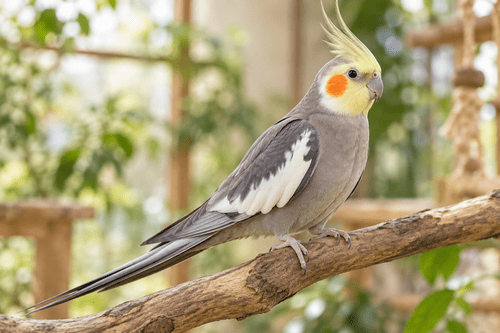
Cockatiel
Also known as: Tiel, Quarrion, Weiro
Whistling, crested and genuinely affectionate — the best first parrot there is.
- Affectionate
- Gentle
- Curious
- Sensitive
- Whistly
The cockatiel is a small Australian parrot and, for most households, the sensible middle ground between a budgie and a large parrot. They are affectionate, capable whistlers, quieter than most parrots and long-lived enough to be a serious commitment without reaching the multi-decade obligation of an African Grey. Their expressive crest makes them unusually easy to read.
At a glance
- Origin
- Australia
- Size
- Small
- Weight
- 2.8–4.2 oz (80–120 g)
- Lifespan
- 15–25 years
- Coat
- Plumage with a mobile crest
- Colours
- Grey (wild type), Lutino, Pearl, Pied, Cinnamon, Whiteface, Albino
- Average cost
- $30–$60 / month
Breed ratings
Rated 1–5 on the same scale as every other entry, so scores are comparable between breeds. Amber stars mark things that cost you effort rather than things that benefit you.
Temperament
Cockatiels are among the most emotionally readable pet birds — the crest position tells you plainly whether the bird is relaxed, alert or frightened. They bond strongly with their people and prefer routine and calm.
Care & upkeep
Exercise
At least 2–3 hours out of the cage daily in a bird-proofed room. Flight is important for physical and psychological health.
Grooming
They bathe themselves — offer a shallow dish or a light misting 2–3 times a week. Nails every 6–8 weeks. Cockatiels produce fine feather dust; an air purifier helps sensitive households.
Training
One of the easiest parrots to tame and train. Step-up, recall and whistled tunes come readily with positive reinforcement. Males whistle and mimic more than females.
Feeding & diet
- Typical diet
- Pellet-based with fresh vegetables
- Daily amount
- 30–40 g pellets plus fresh vegetables
- Meals per day
- Fresh food daily; pellets available
A seed-only diet is the leading cause of premature death in cockatiels, through fatty liver disease and vitamin A deficiency. Pellets should form 60–70% of intake, with vegetables daily and seed as a treat.
Foods to avoid
- Avocado
- Chocolate
- Caffeine
- Alcohol
- Salt
- Apple seeds and stone fruit pits
Who this breed suits
A good match for
- First-time bird owners
- Families with school-age children
- Apartments
- People home much of the day
Probably not for
- Households with non-stick cookware in constant use
- Owners away all day with a single bird
- People needing complete silence in the mornings
Common health problems
This section describes conditions the breed is known to be predisposed to, so you know what to ask about. It is not veterinary advice and is not a diagnosis — always speak to a vet about your own animal.
- Fatty liver diseaseAlmost always diet-driven, from seed-heavy feeding. Largely preventable.
- Psittacosis (chlamydiosis)A bacterial infection transmissible to humans. Any lethargic bird with respiratory signs needs prompt testing.
- Night frightsCockatiels panic in total darkness and can injure themselves thrashing. A dim night light in the room prevents it.
- Egg bindingChronic egg laying in females can deplete calcium and become life-threatening. Discuss management with an avian vet.
- PBFDPsittacine beak and feather disease — a viral condition; ask breeders about testing.
Cockatiels produce a fine white feather dust as a natural part of preening. It is normal for the bird but can aggravate human respiratory conditions — an air purifier and regular cleaning make a real difference.
Interesting facts
- The smallest member of the cockatoo family.
- Males are the strong whistlers; females mostly call rather than mimic tunes.
- The crest is a genuine mood indicator — flat means frightened, high means alert, gently angled means relaxed.
Diet & Feeding
The single biggest determinant of how long a cockatiel lives is what is in the bowl. A seed-only diet kills cockatiels early, through fatty liver disease and vitamin A deficiency, and it remains the most common way the species is fed. Make a quality pellet 60–70% of intake, add fresh vegetables daily — dark leafy greens, carrot, broccoli, sweet potato, capsicum — and treat seed as exactly that, a treat. Provide a cuttlefish bone for calcium and change the water daily.
Exercise & Mental Stimulation
Cockatiels need 2–3 hours minimum out of the cage daily in a bird-proofed room, and they need to fly — flight is not optional enrichment but core physical and psychological health. The cage should allow full wing extension as a bare minimum. Rotate foraging toys, shreddable materials and puzzle feeders; a bored cockatiel screams or plucks. Bird-proof properly: windows covered, ceiling fans off, other pets excluded, toilets closed.
Grooming
Cockatiels groom themselves thoroughly and need little from you. Offer a shallow water dish or a light misting 2–3 times a week — most enjoy it and it keeps plumage in condition. Nails need trimming every 6–8 weeks by a vet or experienced handler. One thing to plan for: cockatiels produce fine white feather dust as part of normal preening. It is harmless to the bird but can aggravate human asthma, so an air purifier and regular cleaning are worth it.
Health & Vet Care
Register with an avian vet, not a general small-animal practice. The main concerns are fatty liver disease (diet-driven and preventable), psittacosis (transmissible to humans), egg binding in chronically laying females and PBFD. One breed-specific quirk: night frights — cockatiels panic in total darkness and can injure themselves thrashing against the bars, so leave a dim night light in the room. Birds hide illness; fluffed posture, tail bobbing or floor-sitting needs same-day attention.
Living with a Cockatiel
Cockatiels are the parrot most often recommended to first-time bird owners, and the recommendation holds up. They are affectionate, gentle, readily tamed and quieter than most parrots — they whistle rather than scream, which matters in a flat. Males whistle and mimic tunes; females mostly call. They live 15–25 years, so this is a long commitment. If you work outside the home, keep two: a single cockatiel alone all day is a lonely bird.