
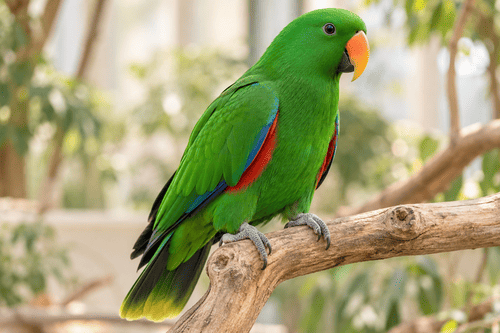
Eclectus Parrot
Also known as: Eclectus roratus, Ekkie
The parrot where males and females look like different species — and eat like it too.
- Gentle
- Observant
- Intelligent
- Calm
- Territorial (females)
The Eclectus is a large parrot from New Guinea and northern Australia, remarkable for extreme sexual dimorphism: males are emerald green with orange beaks, females scarlet and blue with black beaks. They are calmer and quieter than most large parrots, and they have the most specific dietary requirements of any commonly kept species — a fact responsible for a great many avoidable health problems.
At a glance
- Origin
- New Guinea, Solomon Islands, northern Australia
- Size
- Large
- Weight
- 1 lb (0.4–0.6 kg)
- Lifespan
- 30–50 years
- Coat
- Plumage — hair-like feather texture
- Colours
- Males emerald green, females scarlet with blue or purple underparts
- Average cost
- $65–$130 / month
Breed ratings
Rated 1–5 on the same scale as every other entry, so scores are comparable between breeds. Amber stars mark things that cost you effort rather than things that benefit you.
Temperament
Eclectus are calmer than most large parrots and less physically demanding than cockatoos, though they bond closely. Females are typically more assertive and territorial, males more easy-going — a real behavioural difference rooted in wild nesting ecology.
Care & upkeep
Exercise
3–4 hours out of the cage daily in a large cage allowing full wing extension. Avoid enclosed nest-like hides, particularly for females, as they trigger hormonal behaviour.
Grooming
Mist 2–3 times a week to keep the hair-like plumage in condition. Check nails and beak every 6–8 weeks. Any feather chewing warrants a dietary review as well as behavioural assessment.
Training
Intelligent and highly capable talkers with unusually clear speech. Positive reinforcement works well. Managing hormonal behaviour, particularly in females, is a bigger project than teaching cues.
Feeding & diet
- Typical diet
- Fresh produce-led low-supplementation diet
- Daily amount
- Fresh vegetables, fruit and sprouted seed daily
- Meals per day
- Fresh food twice daily
The most species-specific diet of any common pet parrot. Eclectus need high fibre, low fat and minimal synthetic supplementation — over-fortified pellets are linked to neurological signs and feather destruction.
Foods to avoid
- Over-fortified pellets
- Avocado
- Chocolate
- Caffeine
- Alcohol
- High-fat seed mixes
Who this breed suits
A good match for
- Experienced parrot owners
- Calm structured households
- People home most of the day
- Owners able to commit for decades
Probably not for
- First-time bird owners
- Households following generic parrot diets
- Owners away all day
- Anyone unable to plan for a 40-year animal
Common health problems
This section describes conditions the breed is known to be predisposed to, so you know what to ask about. It is not veterinary advice and is not a diagnosis — always speak to a vet about your own animal.
- Over-supplementation toxicityEclectus absorb some nutrients differently. Excess synthetic vitamins are linked to toe-tapping, wing-flipping and feather destruction.
- Feather destructive behaviourCommon in the species and frequently diet-linked as well as behavioural.
- Chronic egg layingFemales may lay persistently without a mate, depleting calcium. Avoid nest-like enclosed spaces.
- Psittacosis (chlamydiosis)A bacterial infection transmissible to humans.
- PBFDPsittacine beak and feather disease — viral and untreatable. Ask breeders about testing.
Generic parrot nutrition advice actively harms this species. Find an avian vet with Eclectus experience specifically before making any dietary decisions.
Interesting facts
- Males and females look so different that they were classified as separate species for many years.
- The feathers have a hair-like texture unlike any other parrot.
- In the wild, females hold nest hollows and males bring food to them, which explains the temperament differences.
Diet & Feeding
This is the section that defines Eclectus ownership. They have an unusually long digestive tract adapted to a high-fibre, low-fat fruit and vegetable diet, and they absorb some nutrients more readily than other parrots. Over-supplementation, particularly with synthetic vitamins and colourings, is linked to toxicity and to feather-destructive behaviour. Feed a diet built on fresh vegetables, fruit and sprouted seed, with any pellet chosen specifically as low-fortification. Discuss the plan with an avian vet rather than following generic parrot advice.
Exercise & Mental Stimulation
Eclectus need 3–4 hours out of the cage daily and a cage large enough for full wing extension and movement — this is a big-bodied bird. They are calmer than macaws or cockatoos but no less intelligent, and they need foraging work, shreddable material and rotating puzzle toys. Females in particular become territorial around enclosed spaces, so avoid nest-box-like hides, which trigger hormonal behaviour that is difficult to unwind.
Grooming
The feathers have a distinctive hair-like texture and benefit from regular misting — 2–3 times a week keeps plumage in condition and most birds enjoy it. Nails and beak should be checked every 6–8 weeks and trimmed by a vet or experienced handler if overgrown. Never use aerosols, scented products or non-stick cookware in the home. Any bare patches or chewed feathers warrant immediate dietary review as well as behavioural assessment.
Health & Vet Care
Find an avian vet with Eclectus experience specifically, because generic parrot nutrition advice frequently harms this species. Watch for toe-tapping and wing-flipping, neurological signs often linked to over-supplementation, feather destructive behaviour, psittacosis, PBFD and chronic egg laying in females. This is a 30 to 50 year commitment, so plan for the bird outliving significant parts of your life and consider provision in your will.
Living with an Eclectus
Eclectus are gentle, observant and less demanding of physical contact than cockatoos, though they bond closely. They are quieter than most large parrots but still capable of substantial volume, and they are excellent talkers with unusually clear speech. Females tend to be more assertive and territorial, males more easy-going — a genuine difference rather than folklore. They suit calm, structured households with someone present most of the day.