
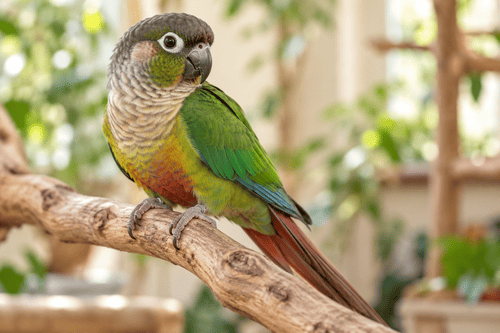
Green-Cheeked Conure
Also known as: Green cheek, Pyrrhura molinae, GCC
Big parrot personality at a volume a flat can survive.
- Playful
- Affectionate
- Mischievous
- Curious
- Bold
The green-cheeked conure is a small South American parrot and one of the best-balanced pet birds available. They have the mischief, intelligence and affection of a much larger parrot at roughly a tenth of the noise, which makes them a rare option for apartment living. They are also long-lived, demanding of attention and entirely capable of running a household if allowed.
At a glance
- Origin
- South America
- Size
- Small
- Weight
- 2.1–2.8 oz (60–80 g)
- Lifespan
- 20–30 years
- Coat
- Plumage
- Colours
- Green (wild type), Yellow-sided, Pineapple, Cinnamon, Turquoise
- Average cost
- $35–$70 / month
Breed ratings
Rated 1–5 on the same scale as every other entry, so scores are comparable between breeds. Amber stars mark things that cost you effort rather than things that benefit you.
Temperament
Green-cheeks have the personality of a large parrot in a small body — comic, affectionate and thoroughly involved. They can become one-person birds without deliberate socialisation, and adolescence brings a nippy stage that needs patient handling rather than punishment.
Care & upkeep
Exercise
Three or more hours out of the cage daily in a bird-proofed room. Flight is core health, not optional enrichment, and constant shreddable material is a need rather than a luxury.
Grooming
Self-grooming. Offer a bathing dish or misting 2–3 times a week and have nails trimmed every 6–8 weeks. Keep all aerosols and non-stick cookware away from the bird.
Training
Trainable and food-motivated. Step-up, recall, target training and simple tricks all come readily. They are quieter than most conures but not silent — morning and evening calls are part of the package.
Feeding & diet
- Typical diet
- Pellet-based with fresh vegetables
- Daily amount
- 20–30 g pellets plus fresh vegetables
- Meals per day
- Fresh food daily; pellets available
Pellets should form 60–70% of intake with daily fresh vegetables. Seed-heavy feeding is the leading dietary cause of premature death in small parrots.
Foods to avoid
- Avocado
- Chocolate
- Caffeine
- Alcohol
- Salt
- Apple seeds and stone fruit pits
Who this breed suits
A good match for
- Apartments
- First-time parrot owners
- People home much of the day
- Families with older children
Probably not for
- Homes using non-stick cookware regularly
- Owners away all day
- People wanting a completely silent pet
Common health problems
This section describes conditions the breed is known to be predisposed to, so you know what to ask about. It is not veterinary advice and is not a diagnosis — always speak to a vet about your own animal.
- Feather pluckingDriven by boredom, loneliness or stress and very difficult to reverse once established.
- Psittacosis (chlamydiosis)A bacterial infection transmissible to humans. Lethargy with respiratory signs needs prompt testing.
- PBFDPsittacine beak and feather disease — viral and untreatable. Ask breeders about testing.
- Fatty liver diseaseDiet-driven, from seed-heavy feeding, and largely preventable.
- AspergillosisA fungal respiratory infection linked to damp bedding and poor ventilation.
Adolescence brings a nippy phase in most green-cheeks. Consistent handling by several household members prevents the one-person bonding that makes rehoming difficult later.
Interesting facts
- Significantly quieter than sun and nanday conures, which is why they suit apartment living.
- Many sleep on their backs in a hand, which alarms first-time owners unnecessarily.
- Colour mutations such as pineapple and turquoise are all derived from the wild green form.
Diet & Feeding
A quality small-parrot pellet should form 60–70% of intake — around 20–30 g daily — with fresh vegetables every day and fruit in small amounts. Seed-heavy diets, still the default in many pet shops, produce obesity and vitamin A deficiency and shorten lives substantially. Conures are enthusiastic foragers, so scatter-feeding and foraging toys slow eating and provide enrichment simultaneously. Provide a cuttlefish bone and change the water daily.
Exercise & Mental Stimulation
Green-cheeks need 3 or more hours out of the cage daily in a bird-proofed room, and flight is core health rather than optional enrichment. The cage should permit full wing extension at minimum. They are compulsive chewers and shredders — supply palm leaf, soft wood, paper and cardboard continuously. Bird-proof properly: windows covered, ceiling fans off, other pets excluded, toilets closed, and no non-stick cookware in use anywhere in the home.
Grooming
They groom themselves. Offer a shallow bathing dish or a light misting 2–3 times a week; most enjoy it and it keeps plumage in condition. Nails need trimming every 6–8 weeks by a vet or experienced handler. Never use aerosols, scented candles or overheated non-stick pans near birds — PTFE fumes are rapidly fatal. Moulting once or twice a year is normal; patchy loss or bare patches suggests plucking and needs investigating.
Health & Vet Care
Register with an avian vet. Watch for psittacosis (transmissible to humans), feather plucking, which is boredom and stress driven and extremely hard to reverse once established, PBFD, aspergillosis and fatty liver disease from seed-heavy feeding. Birds hide illness until advanced — a fluffed posture, tail bobbing while breathing or sitting on the cage floor needs same-day attention rather than overnight observation.
Living with a Green-Cheeked Conure
They are affectionate to the point of comedy — sleeping in shirts, lying on their backs in a hand, following you room to room. They are markedly quieter than sun or nanday conures, which is why they suit flats, though they still have a morning and evening call. They are prone to nippiness during adolescence and can become one-person birds without deliberate socialisation. Expect 20 to 30 years, which makes this a genuine long-term commitment.