African Grey Parrot
The most intelligent bird you will ever share your home with — and the most demanding.
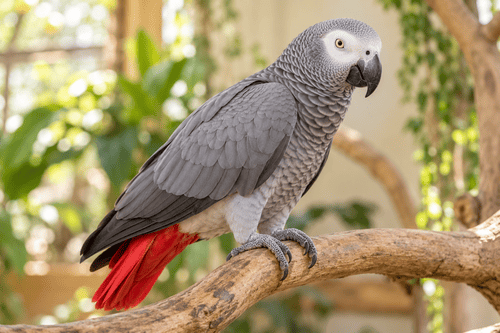
The African Grey is widely considered the most cognitively advanced parrot species in the world. Capable of understanding context, learning hundreds of words and exhibiting problem-solving abilities that rival those of a young child, African Greys are extraordinary companions. They are also extraordinarily demanding — requiring decades of commitment, daily interaction and an owner who understands that these are not decorative birds.
At a glance
- Origin
- West and Central Africa
- Size
- Large
- Weight
- 1 lb (0.4–0.6 kg)
- Lifespan
- 40–60 years
- Coat
- Plumage (grey with red or maroon tail)
- Colours
- Grey body, bright red, maroon tail (Congo), grey with darker edges and burgundy tail (Timneh)
Breed ratings
Rated 1–5 on the same scale as every other entry, so scores are comparable between breeds. Amber stars mark things that cost you effort rather than things that benefit you.
Diet & Feeding
African Greys should eat a varied, whole-food diet — not seeds alone. Seeds are high in fat and nutritionally incomplete. Feed a high-quality pellet as the base (60–70%), supplemented with fresh vegetables (leafy greens, peppers, carrots, sweet potato), limited fruit and cooked grains. African Greys are prone to calcium and Vitamin A deficiency — ensure dark leafy greens are a daily staple. Fresh water must be changed daily.
Exercise & Mental Stimulation
African Greys need 3–4 hours outside the cage daily and constant mental stimulation. A bored African Grey will feather-pluck — a deeply ingrained stress behaviour that is very difficult to reverse. Rotate toys regularly, teach foraging behaviours, train daily with positive reinforcement. They excel at puzzle toys, shreddable toys and trick training. A large cage is the minimum — an aviary-style setup is ideal.
Grooming
Most African Greys enjoy misting with a fine water spray 2–3 times per week — this keeps feathers in good condition and is an excellent bonding activity. Nails need trimming every 6–8 weeks by a vet or experienced groomer. Wing clipping is a personal and controversial choice — discuss with an avian vet. Never use aerosol sprays, scented candles or non-stick cookware near an African Grey — fumes are lethal to birds.
Health & Vet Care
Find an avian vet — not a general small animal vet. African Greys are prone to psittacine beak and feather disease (PBFD), aspergillosis (fungal infection), calcium deficiency, heavy metal toxicity and feather destructive behaviour. Annual wellness checks including blood panels are essential. Birds hide illness until severely compromised — any change in droppings, appetite or behaviour warrants prompt veterinary attention.
Living with an African Grey
An African Grey is a 40–60 year commitment. They bond deeply with one or two people, can become jealous of relationships and may go through challenging adolescent phases at 4–6 years. They demand a structured daily routine, consistent training and a household free of significant stress or chaos. They are not suitable for occasional interaction. Rehoming is traumatic for this species. Before acquiring one, understand fully what you are committing to.