
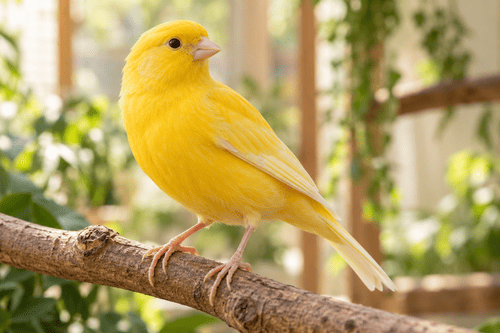
Canary
Also known as: Serinus canaria domestica, Domestic canary
A songbird to listen to rather than handle — quiet, undemanding and centuries in the making.
- Quiet
- Independent
- Alert
- Song-focused
- Timid
The domestic canary descends from wild finches of the Canary Islands and has been bred in captivity for over 400 years, producing song, colour and type varieties. Unlike parrots, canaries are not handling birds — they are kept for their song and their presence. That makes them one of the few genuinely low-interaction pets that can still be kept to a high welfare standard in a small home.
At a glance
- Origin
- Canary Islands
- Size
- Small
- Weight
- 0.5–1.1 oz (15–30 g)
- Lifespan
- 10–15 years
- Coat
- Plumage
- Colours
- Yellow, Orange, Red Factor, White, Variegated, Bronze
- Average cost
- $15–$35 / month
Breed ratings
Rated 1–5 on the same scale as every other entry, so scores are comparable between breeds. Amber stars mark things that cost you effort rather than things that benefit you.
Temperament
Canaries are observation pets rather than companion birds. Most never become tame in the way a parrot does, and attempts to force handling cause genuine stress. Kept correctly, they are content, active and entirely absorbing to watch.
Care & upkeep
Exercise
Canaries are flight birds — cage width matters far more than height. A minimum of 60 cm wide for one bird, with varied perch diameters to protect the feet.
Grooming
Entirely self-grooming. Provide a shallow bath dish two or three times a week. Nails may need occasional trimming if all perches are the same diameter.
Training
Not trainable in a meaningful sense, though they learn routines and will sing in response to household sounds. Some males learn song patterns from recordings or other birds.
Feeding & diet
- Typical diet
- Seed or pellet base with fresh greens
- Daily amount
- 1–2 tsp seed or pellets plus fresh greens
- Meals per day
- Fresh food daily
A quality canary seed mix can form the base, unlike with parrots, but daily fresh greens and egg food during moult are what make the difference between adequate and good nutrition.
Foods to avoid
- Avocado
- Chocolate
- Caffeine
- Alcohol
- Salt
- Apple seeds
Who this breed suits
A good match for
- Apartments
- Older owners
- People wanting a low-interaction pet
- Quiet households
Probably not for
- Owners wanting a tame handleable bird
- Homes using non-stick cookware
- Households with cats given free access to the cage
Common health problems
This section describes conditions the breed is known to be predisposed to, so you know what to ask about. It is not veterinary advice and is not a diagnosis — always speak to a vet about your own animal.
- Air sac mitesCause clicking, wheezing and open-mouth breathing. Treatable but needs prompt veterinary attention.
- Scaly leg mitesProduce crusty, thickened legs and feet. Treatable with vet-prescribed products.
- Egg bindingFemales can become egg-bound even without a mate. A hunched, straining bird is an emergency.
- Feather cystsSeen particularly in heavily bred feather varieties such as the Gloster.
- AspergillosisA fungal respiratory infection linked to damp bedding and poor ventilation.
The annual moult in late summer stops the song and can look alarming to new keepers. It is normal — the bird needs extra protein and quiet rather than veterinary attention.
Interesting facts
- Bred in captivity for more than 400 years, producing song, colour and type varieties.
- Only males sing — females call but do not produce the full song.
- Canaries were used in coal mines until 1986 because they show signs of gas exposure before humans do.
Diet & Feeding
A quality canary seed mix can form the base, unlike with parrots, but it should not be the whole diet — supplement daily with fresh greens such as kale, broccoli, dandelion and grated carrot, plus egg food during moult and breeding. Many keepers now use a pellet-and-fresh-food approach for better nutrition. Provide cuttlefish bone for calcium and a shallow dish of grit if your food type requires it. Change water daily, and remove seed husks, which conceal how much is actually left.
Exercise & Housing
Canaries are flight birds and need horizontal space — a long cage matters far more than a tall one. A minimum of 60 cm wide for a single bird, and larger is genuinely better. Provide perches of varying diameter, including natural wood, to prevent foot problems. Many keepers allow supervised flight in a bird-proofed room. Avoid overcrowded perch layouts that prevent proper flapping between them, which is the point of a wide cage.
Grooming
Self-grooming entirely. Provide a shallow bath dish two or three times a week — most canaries bathe enthusiastically and it keeps plumage in condition. Nails occasionally need trimming if perches are all the same diameter. During the annual moult, usually in late summer, males stop singing and the bird needs extra protein and quiet; this is normal and not illness, though it is when many first-time keepers worry.
Health & Vet Care
Register with an avian vet. Common problems are air sac mites, which cause clicking and wheezing, scaly leg mites, egg binding in females, feather cysts in some heavily bred varieties and aspergillosis from damp bedding. Canaries hide illness until advanced — fluffed posture, sitting on the cage floor or tail bobbing while breathing is a same-day veterinary matter. Avoid all aerosols and non-stick cookware fumes.
Living with a Canary
Set expectations correctly and a canary is an excellent pet. They are not handling birds — most never become tame in the parrot sense, and forcing contact causes stress. They are kept for song and presence. Only males sing, and they sing far less during moult. They can be kept singly, which is unusual among birds and is genuinely fine for this species. They are quiet, clean and suit apartments, older owners and anyone wanting a low-interaction companion.