
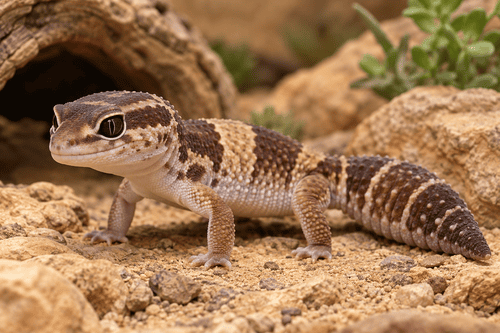
African Fat-Tailed Gecko
Also known as: Fat-tail, Hemitheconyx caudicinctus, AFT
Calmer than a leopard gecko and just as easy — a quietly excellent first reptile.
- Docile
- Calm
- Nocturnal
- Tolerant
- Solitary
The African fat-tailed gecko is a West African ground-dwelling gecko closely related to the leopard gecko, and comparable in care. They are typically **calmer and more placid** than leopard geckos, store fat in the thick tail that gives them their name, and need slightly higher humidity. For an owner wanting a small, handleable, nocturnal reptile, they are among the best options available.
At a glance
- Origin
- West Africa
- Size
- Small
- Weight
- 1.6–3 oz (45–85 g)
- Lifespan
- 15–20 years
- Coat
- Soft granular scales with a thick fat-storing tail
- Colours
- Brown and tan banded (wild type), Albino, Whiteout, Oreo, Patternless
- Average cost
- $15–$35 / month
Breed ratings
Rated 1–5 on the same scale as every other entry, so scores are comparable between breeds. Amber stars mark things that cost you effort rather than things that benefit you.
Temperament
Fat-tails are typically calmer and slower-moving than leopard geckos, which makes them easier for nervous handlers and children under supervision. They tolerate regular short handling sessions once settled.
Care & upkeep
Exercise
A ground-dwelling species needing floor space rather than height — 60 x 40 x 40 cm minimum, with three hides including an essential moist hide for shedding.
Grooming
None required. Maintain 50–60% humidity and a well-stocked moist hide so sheds come away cleanly, then check toes and tail tip afterwards.
Training
Not trainable, but they habituate readily to handling and learn the feeding routine. Allow two weeks to settle after arrival before starting handling sessions.
Feeding & diet
- Typical diet
- Live insect insectivore diet
- Daily amount
- Gut-loaded insects, dusted with calcium
- Meals per day
- Adults every other day; juveniles daily
Insectivores only. Gut-load insects for 24 hours before offering, dust with calcium at every feeding, and reserve waxworms and superworms as occasional treats because of their fat content.
Foods to avoid
- Insects larger than the space between the eyes
- Wild-caught insects
- Unattended live crickets
- Heat rocks
- Fine sand substrate
Who this breed suits
A good match for
- First-time reptile keepers
- Apartments
- Nervous handlers wanting a calm species
- Evening-active households
Probably not for
- Owners wanting a diurnal reptile
- Anyone unwilling to keep live insects
- Very dry setups copied from leopard gecko guides
Common health problems
This section describes conditions the breed is known to be predisposed to, so you know what to ask about. It is not veterinary advice and is not a diagnosis — always speak to a vet about your own animal.
- Retained shed (dysecdysis)Stuck skin on toes and tail tip constricts circulation and causes tissue loss. A moist hide is the prevention.
- Metabolic bone diseaseCaused by insufficient calcium. Dust insects at every feeding and use a multivitamin weekly.
- ImpactionCaused by ingesting loose substrate. Feed from a dish and avoid fine sand substrates.
- CryptosporidiosisA serious parasitic infection with no reliable cure. Quarantine new animals and screen faeces.
- Weight lossThe tail stores fat reserves, so a thinning tail is one of the earliest signs of illness.
The single biggest difference from leopard gecko care is humidity. Fat-tails need a genuinely moist hide, and setups copied from leopard gecko guides frequently cause stuck sheds.
Interesting facts
- Closely related to the leopard gecko but from a more humid West African habitat.
- The thick tail stores fat reserves, which is why tail condition is such a useful health indicator.
- Typically calmer and less flighty than leopard geckos, making them good for nervous handlers.
Diet & Feeding
Fat-tails are insectivores — they eat only live insects. Staples: dubia roaches, crickets and mealworms, with waxworms and superworms as occasional treats only because of the fat content. Gut-load insects for 24 hours before offering and dust with calcium at every feeding, plus a multivitamin weekly. Adults eat every other day; juveniles daily. Never leave live crickets unattended in the enclosure, since they will bite a sleeping gecko.
Heating & Humidity
Fat-tails thermoregulate from the ground up. Use a thermostat-controlled heat mat under one third of the floor, giving a warm-side surface of 30–32°C and a cool side of 22–25°C. Never use heat rocks. The key difference from a leopard gecko is humidity: fat-tails come from a more humid region and need 50–60%, which means a moist hide is essential rather than merely helpful, and the substrate should hold some moisture.
Enclosure & Setup
A single adult needs a minimum of 60 x 40 x 40 cm, larger being better. Provide three hides: warm, cool and a moist hide packed with damp sphagnum moss, which is what prevents the stuck sheds that cost geckos toes. Use a substrate that holds humidity without being sodden, add cork bark and low branches, and keep a shallow water dish available. House alone — males fight and cohabitation is a common cause of injury.
Health & Vet Care
Find a reptile-experienced vet. The main problems are dysecdysis (retained shed), particularly on toes and the tail tip, where constriction causes tissue loss, metabolic bone disease from insufficient calcium, impaction, cryptosporidiosis and parasites. Weigh monthly: fat-tails store reserves in the tail, and a thinning tail is one of the earliest and most reliable indicators that something is wrong.
Living with a Fat-Tailed Gecko
They are nocturnal, becoming active in the evening, and are typically calmer and less flighty than leopard geckos, which makes them easier for a nervous handler. Allow two weeks to settle before handling, then build up in short sessions. They can drop the tail if badly frightened — it regrows, though not identically. Expect 15 to 20 years, which makes this a considerably longer commitment than the price tag suggests.