Cat Weight Management: How to Help an Overweight Cat Safely
Cats cannot lose weight the way dogs can — rapid loss is genuinely dangerous. Here is how to assess your cat's condition, adjust feeding safely and track progress with your vet.
In short
Cats cannot lose weight the way dogs can — rapid loss is genuinely dangerous. Here is how to assess your cat's condition, adjust feeding safely and track progress with your vet.
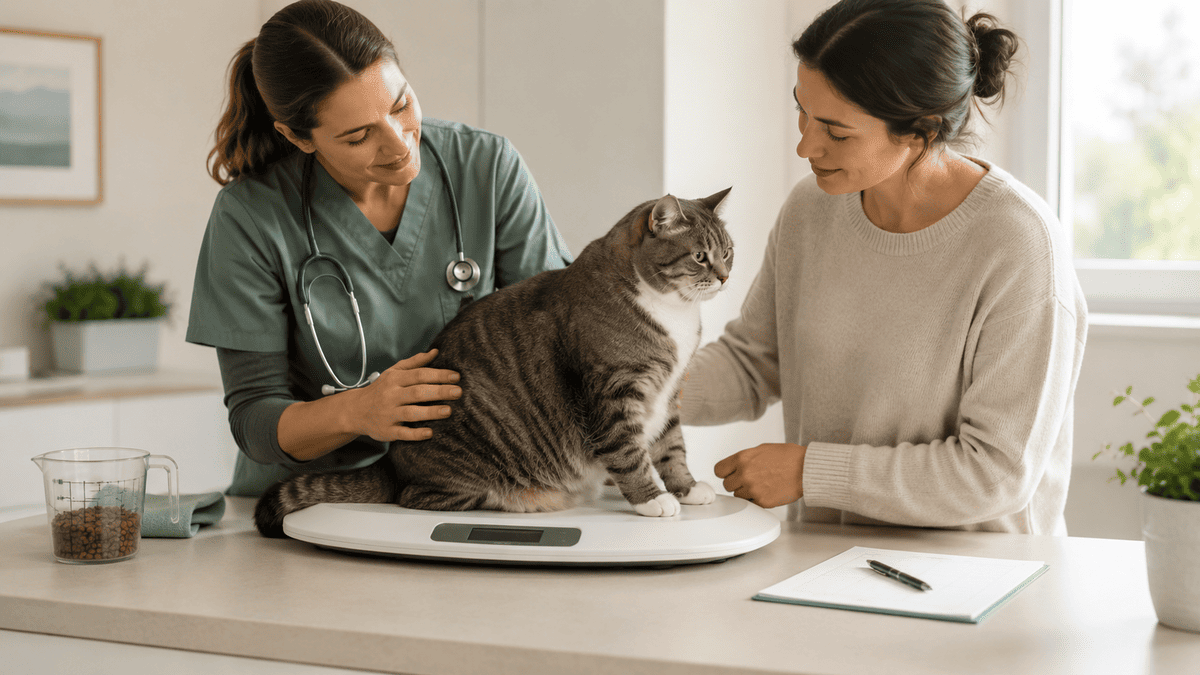
More than half of cats seen in practice are overweight, and it shortens their lives — contributing to diabetes, arthritis, urinary problems and reduced mobility. But cat weight loss is not simply a smaller version of dog weight loss. Cats that lose weight too quickly can develop hepatic lipidosis, a serious and sometimes fatal liver condition. Any cat weight plan should be agreed with your vet.
Assessing Your Cat at Home
- Ribs: you should feel them easily with light pressure, like knuckles under a thin glove
- Waist: viewed from above, there should be a visible narrowing behind the ribs
- Belly: viewed from the side, the abdomen should tuck up slightly, not hang
- The primordial pouch: the loose flap of skin on the lower belly is normal in cats and not the same as fat
Behavioural Signs of Excess Weight
- Difficulty jumping onto surfaces they used to reach
- Reduced grooming, especially of the lower back and base of the tail
- Sleeping more and playing less
- Breathing heavily after mild activity
The Safe Rate of Loss
Roughly 0.5–1% of body weight per week is the generally accepted safe rate for cats. For a 6 kg cat that is around 30–60 g a week — slow enough that it needs a scale, not an eye. Never crash-diet a cat, and never withhold food entirely.
Practical Changes That Work
- Measure everything: weigh food rather than using a cup. Guessing is where most excess creeps in.
- Stop free feeding: set meals let you know exactly what is eaten and by which cat.
- Count the treats: treats should be no more than 10% of daily calories, and they add up fast.
- Feed for the target weight, not the current weight — your vet can calculate this.
- Use puzzle feeders: slow eating and add mental work at the same time.
- Play daily: two 10-minute wand toy sessions, ending with a catch and a small food reward.
- Move the food bowl away from the favourite sleeping spot to add gentle activity.
Complete Cat Owner Binder
Weight plans succeed on record-keeping. The Complete Cat Owner Binder includes printable feeding logs, a weight chart and vet visit pages so you can show your vet exactly what has been fed and what has changed.
Get the Complete Cat Owner Binder →Multi-Cat Households
A weight plan is impossible if another cat can access the food. Feed in separate rooms, at set times, and remove uneaten food after twenty minutes. Microchip-activated feeders are an option where separate rooms are not practical.
When to Involve the Vet Urgently
A cat that stops eating for more than 24–36 hours needs veterinary attention regardless of weight. Sudden weight loss without a diet change is also a reason to book an appointment rather than celebrate — it can indicate hyperthyroidism, diabetes or kidney disease.
Two ways to track a weight plan
Want cat feeding and weight logs together? Choose the Complete Cat Owner Binder. Want a focused medical record with a weight chart? Choose the Pet Health Record Binder.
Get the Pet Health Record Binder →Frequently Asked Questions
How quickly should a cat lose weight?
Around 0.5–1% of body weight per week. Faster loss risks serious liver complications, so plans should be vet-supervised.
Should I switch to a diet food?
Sometimes, but portion control often achieves more than a product change. Discuss with your vet before switching, particularly for cats with other conditions.
My cat cries constantly for food. What can I do?
Split the same daily ration into more, smaller meals, use puzzle feeders to extend eating time, and add play sessions before meals.
Printable and fillable PDF templates for pet owners — feeding schedules, health records, training trackers and more.