
Multi-Cat Households: How to Set Up Resources So Cats Actually Get Along
Most conflict between cats is about resources, not personality. Here is the resource formula, the signs of tension owners miss, and how to lay out a home for multiple cats.
In short
Most conflict between cats is about resources, not personality. Here is the resource formula, the signs of tension owners miss, and how to lay out a home for multiple cats.
Cats are not naturally group-living animals in the way dogs are. They can live together very happily, but it depends far more on how the home is set up than on whether they "like each other". Most multi-cat tension traces back to competition for resources — and most of it is invisible to owners because cat conflict is quiet.
The Resource Formula
The standard guideline is one of each key resource per cat, plus one spare, distributed across the home rather than clustered together:
- Litter trays: in separate locations — two trays side by side count as one
- Feeding stations: separated, ideally out of sight of each other
- Water sources: away from the food
- Beds and resting spots: at different heights
- Scratching posts: near sleeping areas and doorways
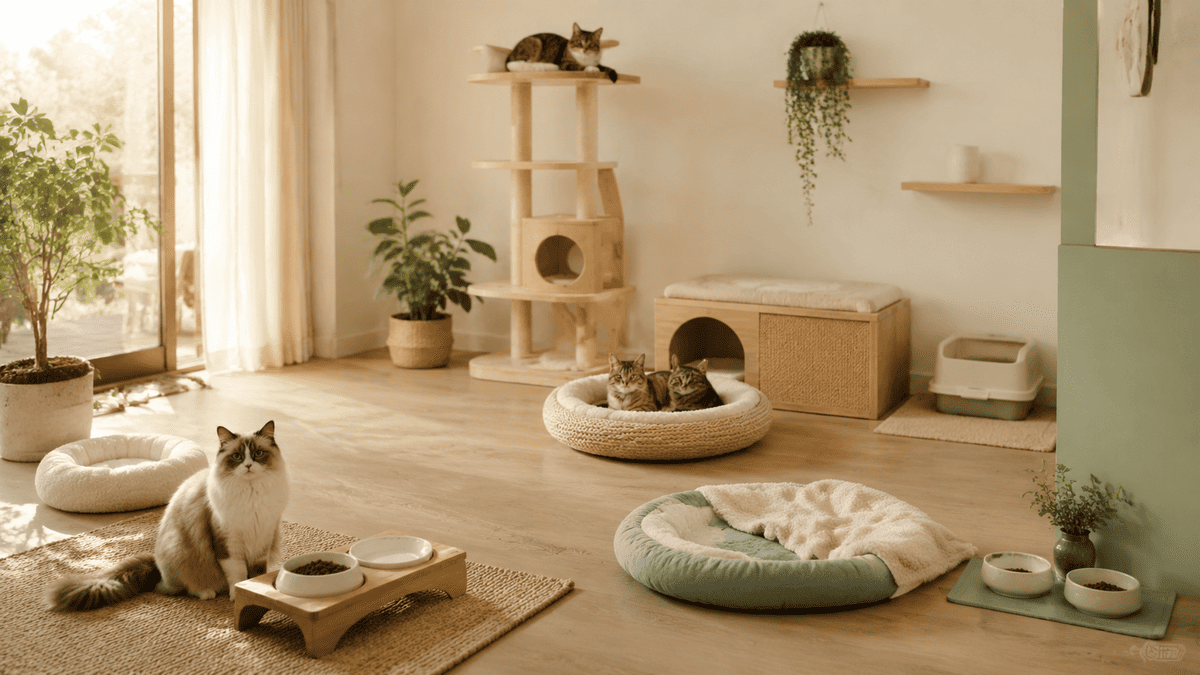
Distribution matters as much as quantity. Every resource in one room means one cat can control access to all of them.
Vertical Space Reduces Conflict
Height is territory. Cat trees, shelves and cleared surfaces let cats occupy the same room without sharing the same plane, which is often enough to defuse tension entirely. In small flats, vertical space is the single most effective upgrade you can make.
Signs of Tension Owners Miss
Open fighting is the obvious sign, but it is rarely the first one. Watch for:
- One cat blocking a doorway, corridor or the route to the litter tray
- Prolonged staring, which is a genuine threat between cats
- One cat waiting for the other to leave before eating
- A cat spending nearly all its time in one room
- Toileting outside the tray
- Overgrooming, or one cat grooming another and then escalating
Complete Cat Owner Binder
With more than one cat, records get mixed up fast. The Complete Cat Owner Binder gives each cat its own printable feeding, litter, health and medication pages — so you can see which cat is eating less or using the tray differently.
Get the Complete Cat Owner Binder →Feeding Multiple Cats
Free feeding from a shared bowl makes it impossible to know who is eating what — which matters enormously when appetite change is one of the earliest signs of illness in cats. Feed separately, at set times, and note each cat's intake. If one cat is on a prescription diet, separate feeding is not optional.
Introducing a New Cat
Slow, phased introductions — full separation, scent swapping, feeding either side of a door, then brief supervised visual contact — prevent months of conflict. Rushing the introduction is the most common cause of long-term hostility between housemate cats.
When to Get Help
Persistent fighting, one cat consistently unable to access resources, or stress-related illness such as recurrent cystitis are reasons to involve your vet and, where appropriate, a qualified feline behaviourist. Rule out pain first — a cat in discomfort is far less tolerant of a housemate.
Two ways to manage multiple cats
Want per-cat feeding, litter and health logs? Choose the Complete Cat Owner Binder. Want focused medical records for each cat? Choose the Pet Health Record Binder.
Get the Pet Health Record Binder →Frequently Asked Questions
How many litter trays do I need for two cats?
Three, in separate locations. The plus-one rule matters most in multi-cat homes.
My cats never fight — do they get along?
Possibly, but check for quiet tension: blocking, staring, one cat avoiding rooms or waiting to eat. Absence of fighting is not the same as comfort.
Should cats share food bowls?
No. Separate stations let you monitor individual intake and remove a common source of competition.
Printable and fillable PDF templates for pet owners — feeding schedules, health records, training trackers and more.