
Dog Arthritis: Home Adjustments That Make a Real Difference
Arthritis is common in older dogs and significantly underdiagnosed. Here are the early signs, the home adjustments that genuinely help, and what to discuss with your vet.
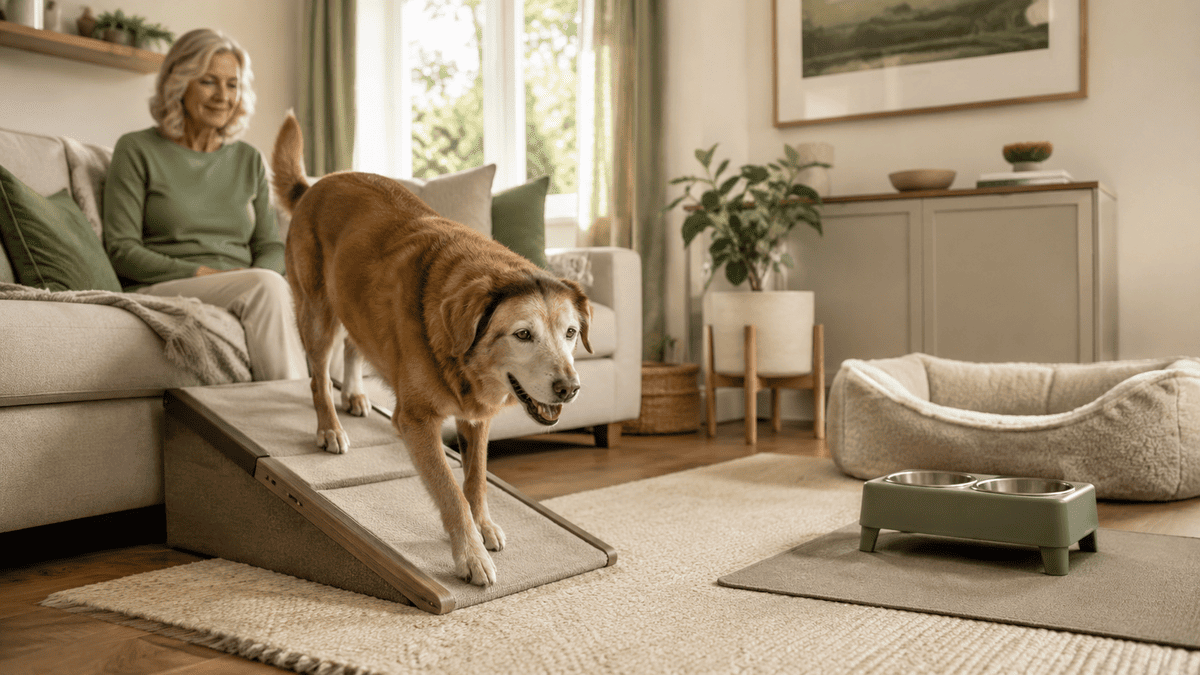
In short
Arthritis is common in older dogs and significantly underdiagnosed. Here are the early signs, the home adjustments that genuinely help, and what to discuss with your vet.
Arthritis is one of the most common conditions in older dogs, and one of the most frequently missed. The signs are gradual, and owners often attribute them to age rather than pain. But "slowing down" is usually a symptom, not an inevitability — and there is a great deal that can be done about it, both medically and at home.
Early Signs That Are Easy to Miss
- Stiffness on first getting up, easing after a few minutes of movement
- Reluctance to jump into the car or onto the sofa
- Slowing down or lagging behind on familiar walks
- Hesitating at stairs, or taking them one step at a time
- Sitting down during walks
- Licking repeatedly at one joint
- Irritability when touched in a particular area
- Difficulty settling, or changing position frequently at night
None of these are normal ageing. All of them are worth raising with your vet, because pain management is far more effective when started early.
Home Adjustments That Help
Flooring
Hard, slippery floors are one of the biggest daily obstacles for an arthritic dog. Runners, rugs and non-slip mats along the routes your dog uses most — from the bed to the door, around the food bowl — make a visible difference within days.
Bedding
A supportive orthopaedic or memory foam bed, off the cold floor and away from draughts, helps a stiff dog rest properly. Thin beds on tiles are a common cause of restless nights.
Access
- A ramp for the car — jumping down is harder on joints than jumping up
- Steps to the sofa or bed if your dog is allowed on them
- Baby gates to prevent unsupervised stair use
- Raised food and water bowls for dogs with neck or spine stiffness
Pet Health Record Binder
Mobility changes are gradual, which makes them hard to judge from memory. The Pet Health Record Binder gives you printable symptom, weight and medication pages so you can show your vet a clear picture of how things have changed month by month.
Get the Pet Health Record Binder →Exercise: Little and Often
Rest is not the answer. Arthritic joints do better with regular, moderate movement than with a long walk at the weekend and little in between. Three or four shorter walks a day on soft, even ground usually suit an arthritic dog far better than one long outing. Avoid repeated high-impact activity — ball throwing, sudden turns, jumping.
Weight Is the Single Biggest Factor
Every extra kilogram loads already painful joints. Weight management is consistently one of the most effective interventions available for arthritis, and one of the few entirely within your control. Weigh monthly and discuss a target weight with your vet.
What to Discuss With Your Vet
- Pain assessment and appropriate medication — never give human painkillers, which are toxic to dogs
- Joint supplements and whether they are worth using in your dog's case
- Referral to a qualified canine physiotherapist or hydrotherapist
- Whether other conditions are contributing
- A realistic quality-of-life plan as the condition progresses
Two ways to track mobility
Want a focused health record with symptom and weight pages? Choose the Pet Health Record Binder. Want daily notes on walks, mobility and medication? Choose the Daily Dog Care Tracker.
Get the Daily Dog Care Tracker →Frequently Asked Questions
Is my dog just getting old, or is it arthritis?
Stiffness, reluctance to jump and shortened walks are signs of pain, not of age itself. Only a vet can assess it properly, and treatment often produces a striking improvement.
Can I give my dog human painkillers?
No. Ibuprofen, paracetamol and aspirin can cause serious harm in dogs and are potentially fatal in cats. Always use medication prescribed by your vet.
Should I stop walking my arthritic dog?
No. Regular, shorter, low-impact walks are better than rest. Your vet can advise on the right level for your individual dog.
Printable and fillable PDF templates for pet owners — feeding schedules, health records, training trackers and more.