Dog Ear Problems: Signs to Watch and How to Check at Home
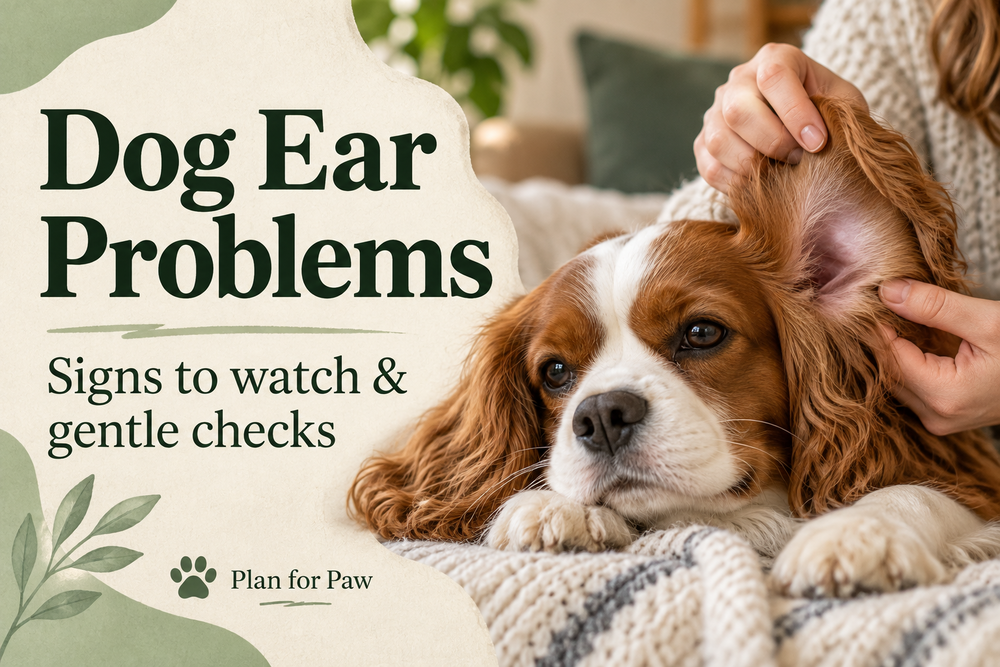
Ear problems are one of the most common reasons dogs see the vet. Here is what healthy ears look like, the early signs of trouble, how to check at home and why you should not clean a sore ear yourself.
In short
Ear problems are one of the most common reasons dogs see the vet. Here is what healthy ears look like, the early signs of trouble, how to check at home and why you should not clean a sore ear yourself.
Ear problems are among the most common reasons dogs visit the vet, and they can be very uncomfortable. A dog's ear canal is long and L-shaped, which makes it a warm, damp place where trouble can develop. A quick weekly check helps you spot changes early.
What Healthy Ears Look Like
- Pale pink skin inside the flap
- Little or no wax
- No strong smell
- Your dog is relaxed when you touch them
Know what is normal for your dog — it is the change from normal that matters.
Signs That Need a Vet
- Head shaking or tilting
- Scratching or rubbing an ear on the floor or furniture
- Redness or swelling
- A bad smell
- Dark, yellow or bloody discharge
- Pain or flinching when the ear is touched
- A puffy, swollen ear flap — sometimes a sign of an ear haematoma from shaking
- Loss of balance, circling or unusual eye movements — call your vet promptly
Why You Should Not Clean a Sore Ear Yourself
If an ear looks sore, do not clean it before your vet has looked. Cleaning can hurt, push debris further in, and make it harder for the vet to see the problem. Some ear treatments are also unsafe if the eardrum is damaged, which only a vet can check. Never put cotton buds into the ear canal.
Dogs Who Are More Prone
- Breeds with long, floppy ears
- Breeds with hairy ear canals
- Dogs who swim often
- Dogs with allergies — repeated ear problems are often linked to skin allergies
Pet Health Record Binder
Ear problems that keep coming back are much easier to investigate with a history. Note each episode, the treatment and how it went in the printable Pet Health Record Binder — your vet will ask.
Get the Pet Health Record Binder →The Weekly Ear Check
- Choose a calm moment and give a treat.
- Lift each ear flap and look inside, using a torch if needed.
- Smell — a healthy ear should not smell strongly.
- Gently feel the base of the ear. Watch for flinching.
- Treat and finish.
Pair it with a treat every time and most dogs come to accept it easily.
Routine Cleaning
Many dogs never need routine ear cleaning. If your vet recommends it — for example after swimming — use a cleaner your vet suggests and follow their method. Do not over-clean; healthy ears look after themselves.
After Swimming
For water-loving dogs, gently dry the outer ear with a towel after swimming. Ask your vet whether a drying ear cleaner is appropriate.
Two ways to build the habit
Want weekly ear checks logged alongside grooming and walks? Choose the Daily Dog Care Tracker. Want everything in one system? Choose the Complete Dog Owner Binder.
Get the Daily Dog Care Tracker →Frequently Asked Questions
Can ear infections go away on their own?
Do not wait to find out. Ear problems are painful and can get worse. A vet needs to examine the ear to decide on the right treatment.
Why does my dog keep getting ear problems?
Repeated ear problems often have an underlying cause, such as allergies. Ask your vet to look for it rather than treating each episode on its own.
Is brown wax normal?
A small amount of light wax can be normal. Lots of dark wax, a smell or scratching are reasons to see your vet.
Printable and fillable PDF templates for pet owners — feeding schedules, health records, training trackers and more.