
Fireworks and Pets: A Two-Week Plan for a Calmer Night
Fireworks frighten a large number of dogs and cats. Preparation that starts two weeks before the night works far better than anything you try on the night itself. Here is the plan.
In short
Fireworks frighten a large number of dogs and cats. Preparation that starts two weeks before the night works far better than anything you try on the night itself. Here is the plan.
Fireworks season catches many owners out. The night arrives, the dog is shaking behind the sofa, and there is very little you can do in the moment. Most of the help comes from what you set up in the two weeks before.
Two Weeks Before: Talk to Your Vet
If your pet has been very frightened in past years — trembling, panting, hiding for hours, trying to escape, refusing food — book a vet appointment early. Noise fear is a welfare problem, and there are treatment options that need to be started in advance. Your vet can advise on what suits your pet.
Ten Days Before: Build a Den
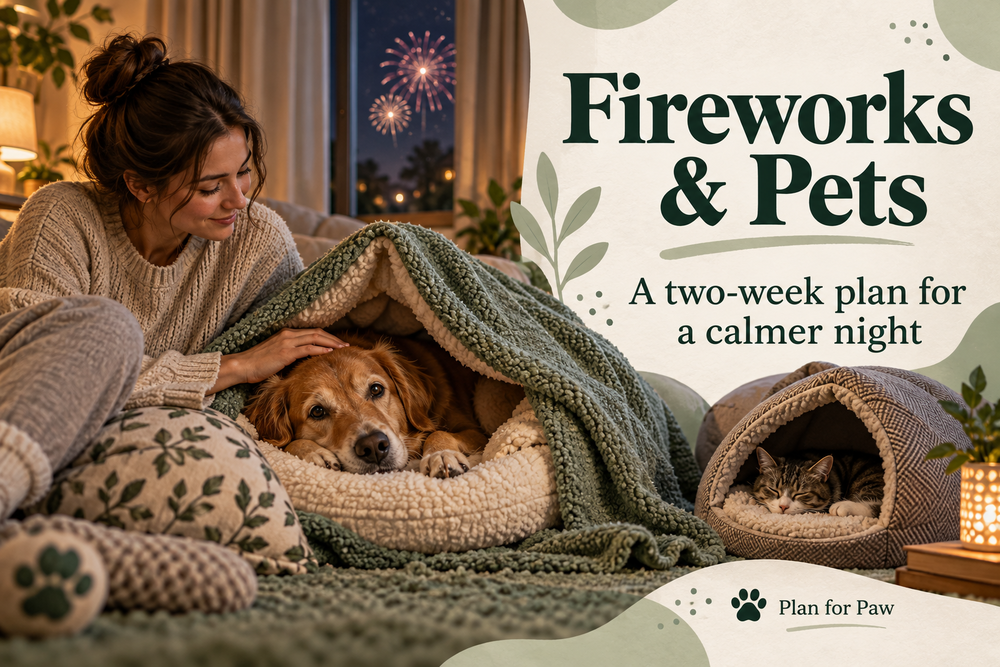
Choose a quiet room, ideally at the centre of the house with the fewest windows. Set up:
- A covered crate or bed with blankets over the top and sides
- Water, a few favourite toys and a familiar-smelling blanket
- For cats: a high shelf, a covered bed and a litter tray nearby
Feed treats and a chew there every day so it becomes a good place to be before the noise starts. Never shut your pet in — the den should be a choice.
Sound Work
For dogs with mild worries, playing firework sounds at a very low volume while something pleasant happens — dinner, a game — can help, increasing the volume only very slowly over many sessions. Stop if your dog shows any sign of worry. For dogs with severe fear, this is best done with guidance from a qualified behaviourist, ideally months rather than days ahead.
The Day Itself
- Walk early: take your dog out in daylight, well before displays start, and keep them on a lead.
- Feed early: a meal an hour or two before dark helps many pets settle.
- Close up: shut windows, curtains and cat flaps before dusk.
- Add background sound: TV, radio or music masks some of the bangs.
- Check the garden: if your dog must go out, go with them on a lead — even in a fenced garden.
Pet Health Record Binder
Note how your pet coped each year, what helped and what your vet prescribed. The Pet Health Record Binder gives you printable pages for behaviour notes, medication and vet visits, so next year starts from what you learned.
Get the Pet Health Record Binder →During the Fireworks
- Stay home if you can. Your calm presence helps.
- Comfort your pet if they come to you — this does not "reward fear".
- Let them hide if they want to; do not pull them out.
- Stay relaxed yourself and carry on with normal activities.
- Never punish a frightened pet for barking, shaking or an accident indoors.
Escape Risk
A panicked dog can clear a fence it would never normally try, and frightened cats often run and hide far from home. Check that collars fit, ID tags show a current phone number and the microchip registration is up to date. Keep your dog on a lead for outdoor toilet trips throughout the fireworks period, which often lasts more than one night.
Afterwards
Expect some pets to be unsettled for a day or two. Keep the routine predictable. If fear seems to be getting worse year on year, raise it with your vet well before next season.
Two ways to plan ahead
Want to log behaviour, walks and meals through fireworks season? Choose the Daily Dog Care Tracker. Want emergency contacts and microchip details on one card? Choose the Pet Emergency Card.
Get the Daily Dog Care Tracker →Frequently Asked Questions
Should I comfort my dog during fireworks?
Yes. Comforting a frightened dog does not make the fear worse. Stay calm and let your dog choose whether to come to you or hide in the den.
Do anxiety wraps and pheromone diffusers work?
Some pets seem to benefit, others do not. They are best used alongside a den and good preparation, not as a substitute. Ask your vet for advice for your pet.
How do I keep my cat safe during fireworks?
Bring cats in before dark, lock the cat flap, provide hiding places at height and at floor level, and keep a litter tray indoors.
Printable and fillable PDF templates for pet owners — feeding schedules, health records, training trackers and more.