
Should Indoor Cats Wear a Collar? ID Options for Cats Who Escape
Indoor cats escape more often than owners expect — through an open door, a window or a carrier at the vet. Here is how to think about collars, microchips and ID for cats, including QR tags.
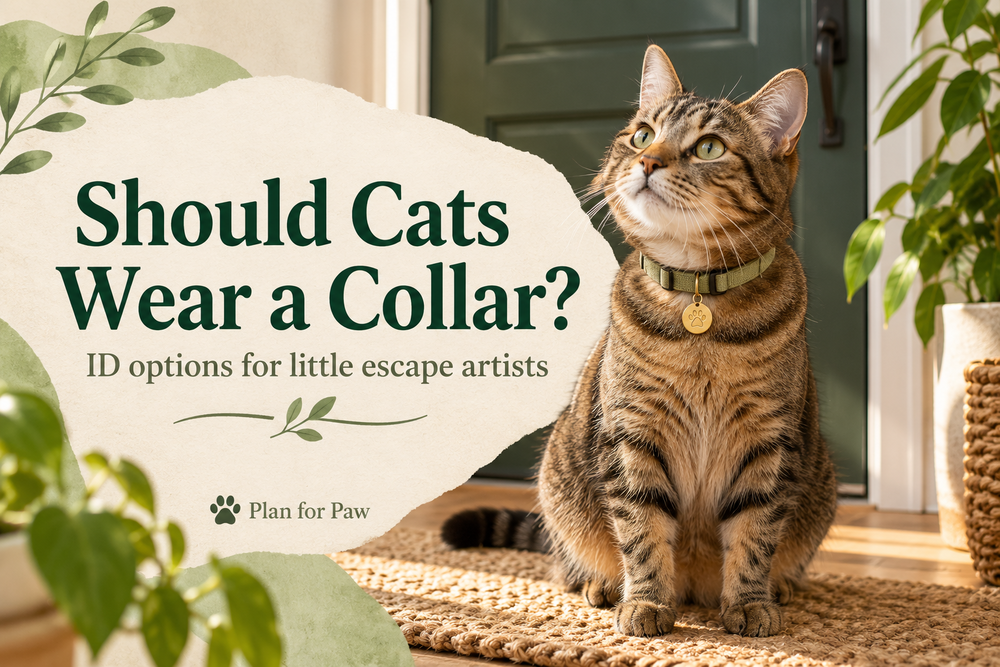
In short
Indoor cats escape more often than owners expect — through an open door, a window or a carrier at the vet. Here is how to think about collars, microchips and ID for cats, including QR tags.
"My cat never goes outside" is one of the most common things owners say about ID. Yet indoor cats escape every day — a delivery at the front door, a window left open, a frightened bolt during building work, or a carrier that opens in a vet car park. An indoor cat outdoors is usually frightened, hides close by and is often taken in by a well-meaning neighbour. What helps most then is ID that lets that neighbour reach you.
Microchip First
A microchip is the permanent ID: it cannot fall off and it is what vets and shelters check. But it can only be read with a scanner, so a neighbour who finds your cat has to take it somewhere to be scanned. Keep the registration current — see our microchip registration checklist.
Visible ID: Do Cats Need a Collar?
A collar with a tag means anyone can contact you within minutes. For cats who go outdoors, or indoor cats who are known escapers, many owners find it worthwhile. If you choose a collar:
- Always use a breakaway (quick-release) collar, designed to open if it gets caught
- Fit it correctly: two fingers underneath, snug enough that a leg cannot get through
- Introduce it gradually: a few minutes at a time with treats and play
- Check it regularly for wear and for rubbing under the collar
- Keep the tag light — a heavy tag is uncomfortable and noisy
Some cats simply will not tolerate a collar, and that is fine. In that case, the carrier is where visible ID matters most.
The Carrier Is the Biggest Risk Point
A large share of indoor cat escapes happen during transport — a carrier door that pops open, a cat that slips out in the car park or at the vet. Put ID on the carrier too: a card with your number and your cat's photo, so anyone who helps can reach you immediately.
Where a QR Tag Fits for Cats
Cat tags are tiny — there is barely room for one phone number. A QR code tag gets around that. The code is small, but scanning it with any phone camera opens a full profile: your cat's photo, a button to call you, and notes such as "indoor cat — very nervous, please do not chase" or "on daily medication".
The Plan for Paw Smart Pet ID gives you a permanent QR code you can put on a breakaway collar tag, plus a printable Pet ID card that is ideal for the carrier. Finders can call you or send an "I found your cat" message with a photo, and if your cat escapes you can switch on Lost Mode, which turns the same code into a lost cat alert with where and when your cat was last seen. You choose what is shown, there is no app and no subscription. Our QR code pet tag guide explains how it compares with other ID.
Smart Pet ID for cats
A small QR code for a breakaway collar and a printable card for the carrier — both open your cat's profile with a Call Owner button and care notes. Update details any time and switch on Lost Mode if your cat gets out. See your finished tag before you pay — no app, no subscription.
Create My Cat's QR Tag →If Your Indoor Cat Gets Out
- Search very close to home first — under cars, in sheds, under decking. Frightened indoor cats usually hide nearby and stay silent.
- Search at dawn, dusk and late at night when it is quiet.
- Put the litter tray and a worn item of clothing outside your door.
- Tell neighbours, ask them to check sheds and garages, and post in local groups.
- Report your cat missing to the microchip registry and local vets.
Two ways to prepare
Want a lost pet sheet and emergency contacts ready? Choose the Pet Emergency and Care Info Kit. Want feeding, litter and health records for your cat? Choose the Complete Cat Owner Binder.
Get the Pet Emergency and Care Info Kit →Frequently Asked Questions
Are collars safe for cats?
A correctly fitted breakaway collar is designed to release if caught. Never use a standard buckle collar on a cat.
My cat is microchipped. Does it need a tag too?
A chip needs a scanner; a tag can be read by anyone. Together they give a finder a quick way to contact you and a permanent backup.
Can a QR tag go on a cat carrier?
Yes. A Smart Pet ID comes with a printable card that works well on a carrier, which is where many indoor cat escapes happen.
Printable and fillable PDF templates for pet owners — feeding schedules, health records, training trackers and more.