
Kitten Socialisation Checklist: What to Introduce Before 14 Weeks
The early weeks shape how confident a cat will be for life. Here is a practical socialisation checklist for kittens — people, handling, sounds, objects and the carrier — and how to do it gently.
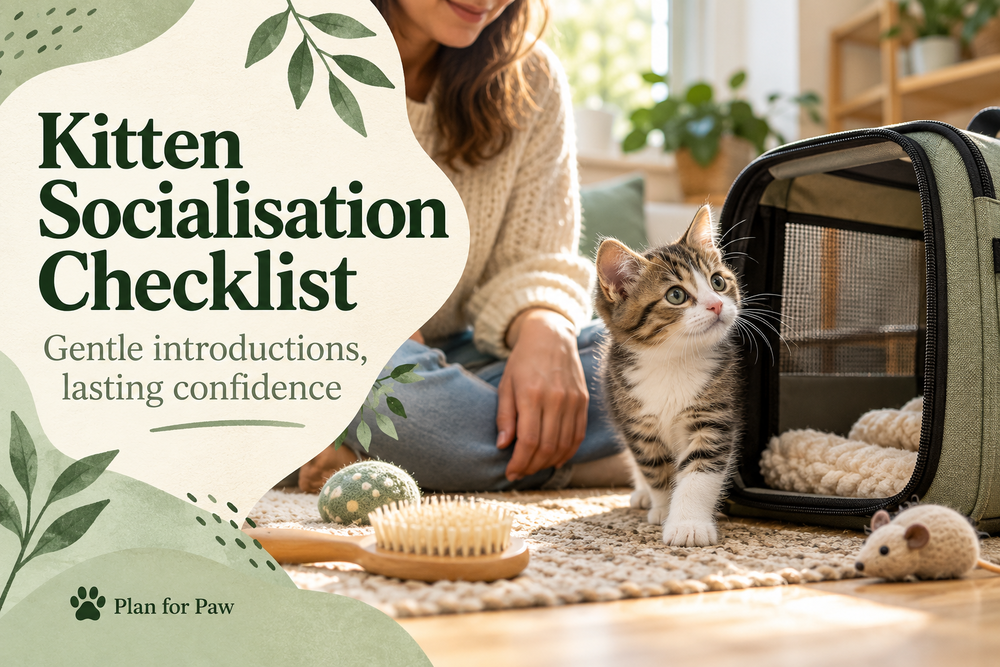
In short
The early weeks shape how confident a cat will be for life. Here is a practical socialisation checklist for kittens — people, handling, sounds, objects and the carrier — and how to do it gently.
Kittens have a sensitive period, roughly from two to seven weeks and continuing to a lesser extent after that, when new experiences are most easily accepted as normal. Many kittens are still with the breeder or rescue for part of it, but the weeks after they come home still matter. A kitten that has gentle, positive experiences of people, handling and everyday life is more likely to grow into a confident, easy-to-handle cat.
The Golden Rule: Gentle and Positive
Socialisation is not about exposing a kitten to as much as possible. It is about calm, short, positive experiences. Watch for signs your kitten is uncomfortable — ears back, tail tucked, freezing, hiding, hissing — and give more distance. A kitten should always be able to move away.
People
- Adults of different ages and appearances
- People wearing hats, glasses and coats
- Calm, supervised children who sit on the floor and let the kitten approach
- Visitors who offer a treat or a toy, then ignore the kitten
Handling
This is the one that makes vet visits, grooming and medication easier for the rest of your cat's life.
- Touching paws and gently pressing to extend claws
- Looking in ears
- Lifting the lip to look at teeth
- Brushing
- Being picked up and put down calmly
- Being gently wrapped in a towel
Keep each session to a few seconds, pair it with a treat, and stop while your kitten is still relaxed.
Complete Cat Owner Binder
Tick off experiences as you go and note how your kitten reacted. The Complete Cat Owner Binder includes printable pages for routines, health, feeding and vet visits — a full first-year record for your kitten.
Get the Complete Cat Owner Binder →Sounds
- Vacuum cleaner — start in another room
- Washing machine and dishwasher
- Doorbell and knocking
- TV, music and normal household chatter
- Traffic sounds from an open window
Objects and Places
- Different floor surfaces
- Boxes, bags and new furniture
- Scratching posts and climbing places
- The carrier — left out, with a soft blanket and treats inside
- Short, calm car journeys in the carrier
Carrier training early saves years of difficult vet trips. See our cat carrier training guide.
Other Pets
If you have a calm, cat-friendly dog or cat, introduce them slowly and with a barrier at first. Never force contact. See how to introduce a cat and a dog.
Play With Toys, Not Hands
Playing with hands teaches a kitten that hands are prey — cute at ten weeks, painful at a year. Use wand toys and toys that can be thrown.
Two ways to start well
Getting ready for a kitten? The New Pet Shopping Checklist covers what to buy. Want vaccination and vet records in one place? Choose the Pet Health Record Binder.
Get the New Pet Shopping Checklist →Frequently Asked Questions
Is it too late to socialise an older kitten or cat?
No. Older kittens and adult cats can still learn, but progress is usually slower and needs more patience.
Should I let lots of visitors handle my new kitten?
A few calm visitors are good. Too many at once can overwhelm a kitten. Let the kitten choose to approach.
My kitten hides from visitors. What should I do?
Let them hide, ask visitors to ignore the kitten and toss treats, and build up confidence slowly.
Printable and fillable PDF templates for pet owners — feeding schedules, health records, training trackers and more.