
How to Stop a Cat Scratching the Furniture
Scratching is normal cat behaviour — the aim is to move it, not stop it. Here is why cats scratch, how to choose and place scratchers they actually use, and how to protect the sofa in the meantime.
In short
Scratching is normal cat behaviour — the aim is to move it, not stop it. Here is why cats scratch, how to choose and place scratchers they actually use, and how to protect the sofa in the meantime.
Scratching is not bad behaviour. Cats scratch to keep their claws healthy, to stretch the whole body and to leave both a visual mark and a scent from glands in their paws. A cat scratching the sofa is usually a cat whose scratching options are in the wrong place, the wrong shape or the wrong material. Fix those three things and most cats switch happily.
Look at What Your Cat Is Scratching
Your cat is telling you what it likes. Notice:
- Vertical or horizontal? The arm of a sofa is vertical; a rug is horizontal.
- What texture? Rough weave, carpet, wood?
- Where? Near where the cat sleeps, near doors, in the main living room?
Choose scratchers that match.
Choose the Right Scratcher
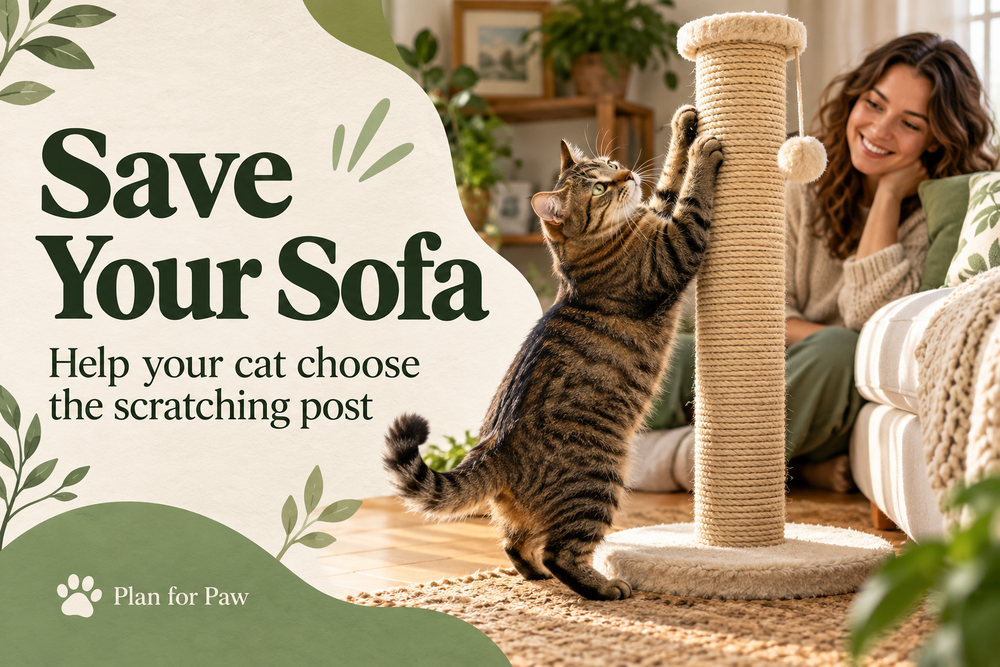
- Tall enough for a full stretch — many posts are too short
- Heavy and stable — a post that wobbles will be avoided after one fright
- Sisal rope or sisal fabric lasts and is popular with many cats
- Horizontal cardboard scratchers for cats who scratch rugs and carpets
Place It Where the Scratching Happens
This is the most important step. Put a scratcher directly in front of, or next to, the furniture being scratched. Add one near where your cat sleeps, as cats often scratch when they wake up. Once the habit has moved, you can shift the scratcher gradually, a little at a time.
Complete Cat Owner Binder
A sudden change in scratching, along with other changes in behaviour, can be a sign of stress. The Complete Cat Owner Binder lets you note behaviour, feeding, litter and health in one printable record.
Get the Complete Cat Owner Binder →Make the Scratcher Attractive
- Drag a wand toy across and up the post
- Rub a little catnip or silvervine on it, if your cat reacts to them
- Reward with a treat when your cat uses it
Make the Furniture Less Attractive (For Now)
- Cover the scratched area with a throw or a smooth sheet
- Double-sided sticky tape designed for furniture is disliked by most cats
- Keep doors to particularly precious rooms closed while the new habit forms
Keep Claws Trimmed
Regular nail trims reduce the damage while you are retraining. See how to trim a cat's nails. Soft nail caps are another option for some cats — ask your vet.
What Not to Do
- Do not shout, spray water or punish — it causes stress and often moves scratching somewhere hidden
- Do not declaw. It is the amputation of part of each toe, is banned or considered unethical in many countries, and can cause long-term pain and behaviour problems.
Multi-Cat Homes
Cats use scratching to mark territory, so more cats means more scratchers, spread around the home. Increased scratching near doors and windows can be a sign of tension with other cats, inside or outside.
Two ways to keep notes
For a cat-focused record of behaviour, feeding and health, choose the Complete Cat Owner Binder. For focused vet records, choose the Pet Health Record Binder.
Get the Pet Health Record Binder →Frequently Asked Questions
Why does my cat scratch the sofa when it has a post?
Usually the post is in the wrong place, too short, wobbly or the wrong orientation. Put a sturdy one right next to the sofa.
How many scratching posts do I need?
At least one in each main room your cat uses, and more in multi-cat homes, including both vertical and horizontal options.
Can older cats learn to use a new scratcher?
Yes. Older cats may prefer lower, horizontal scratchers that are easier on stiff joints.
Printable and fillable PDF templates for pet owners — feeding schedules, health records, training trackers and more.