
Senior Cat Care Checklist: What Changes After Age 10
Check meals, litter access, movement, coat and comfortable resting places. Includes daily and weekly tasks, an access table and changes to raise with the vet.
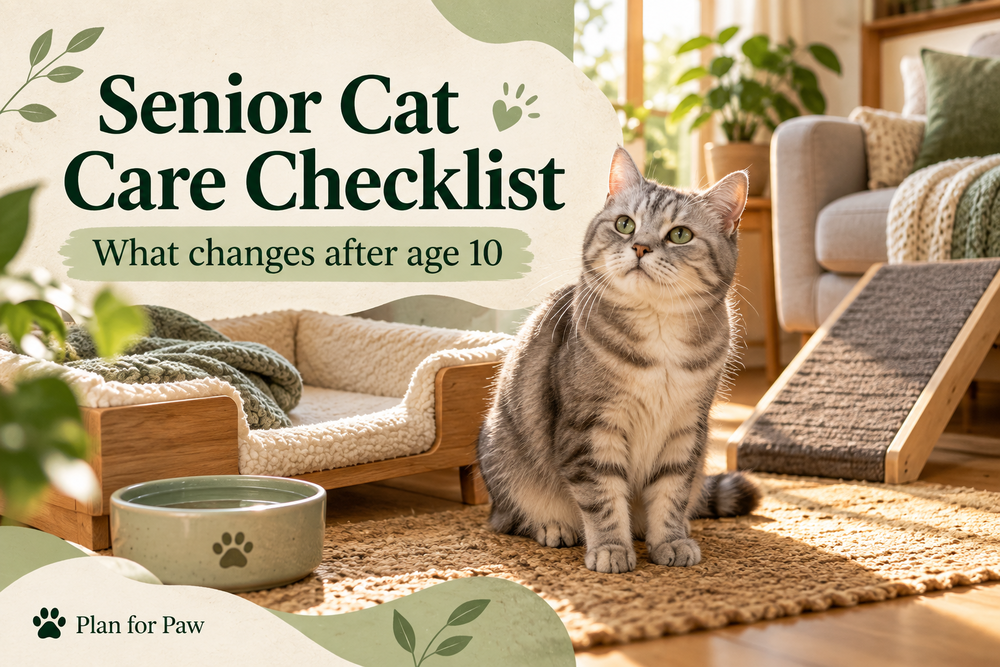
In short
Check meals, litter access, movement, coat and comfortable resting places. Includes daily and weekly tasks, an access table and changes to raise with the vet.
A senior cat care checklist works best when it follows the routes your cat uses: bed to bowl, bowl to tray, and floor to favourite resting spot. An older cat may still want the same things while finding stairs, high tray edges or slippery landings harder to manage.
Keep familiar choices available, check daily comfort and make small changes before access becomes a struggle. New changes in movement, appetite, grooming or behaviour need veterinary attention rather than an automatic explanation of old age.
Senior cat care checklist: daily essentials
- Food: confirm that your cat eats, including in a multi-cat household.
- Water: refresh bowls and make them reachable without difficult stairs or jumps.
- Toileting: scoop trays at least daily and notice changes in use or output.
- Movement: watch an ordinary walk and the route to a favourite bed without making the cat jump on demand.
- Rest: check that bedding is dry, stable and accessible.
- Coat: look for new mats, dirty areas or a reduced ability to groom.
- Company and play: offer gentle interaction and let the cat choose whether to join.
- Prescribed care: follow current directions and contact the practice if completing them becomes difficult.
Look at the cat as well as the resources. A clean tray and an empty bowl can hide a cat that has stopped using them while a younger housemate carries on normally. Quietness is not always comfort.
Make a room-by-room access check
| Area | Check | Possible adjustment |
|---|---|---|
| Feeding space | Can the cat reach it without being blocked? | Offer a quiet feeding place apart from other pets. |
| Litter tray | Are entry and approach manageable? | Try a low-entry tray on a level the cat uses. |
| Favourite bed | Does reaching it require a difficult leap? | Provide stable steps or a lower resting alternative. |
| Hall and stairs | Are surfaces slippery or routes cluttered? | Secure non-slip surfaces and clear the route. |
| Night-time routes | Can the cat navigate to its resources? | Keep positions predictable; consider gentle lighting where useful. |
Introduce an extra resource before removing a familiar one. A lower bed is only helpful if the cat wants to use it, and a ramp needs to be steady and easy to approach. Avoid carrying the cat onto a high shelf that it cannot safely leave.
Keep warm resting options away from draughts, with a choice to move somewhere cooler. Do not improvise heating with hot-water bottles or leave an older cat on an uncontrolled heat source.
Adapt litter access without blaming accidents
A common starting point is one litter tray per cat plus one extra, spread across different locations. For an older cat, the route and entry matter as much as the count. Several trays together upstairs may still leave the downstairs resting area poorly served.
- Keep a tray near the cat’s regularly used living area, away from food and water.
- Make entry easy without leaving the tray unstable.
- Use litter the cat already accepts while testing a new tray.
- Check whether another pet watches or blocks the doorway.
- Report new accidents, straining or changes in urine or faeces to the vet.
Clean soiled areas with a pet-safe product and avoid punishment. A previously clean cat using the floor may have pain, illness or a problem with access. A low tray can improve the environment while you arrange assessment; it does not replace it.
Keep feeding and coat care comfortable
Do not automatically change to a different food because a birthday has passed. Discuss diet, weight and any diagnosed condition with the vet. Appetite loss, dropped food, chewing changes or a new preference for only soft food deserve attention.
Offer the cat its normal food in a quiet, accessible place. If several cats share meals, give the older cat space to eat without a younger cat taking over. Keep fresh water available in more than one useful location if that helps access.
Long coats often need frequent, sometimes daily brushing, and older cats may need help with areas they no longer reach. Work gently and stop at signs of pain. Tight mats and awkward nail growth are reasons to ask for help, not to force a longer grooming session.
For comfortable nail handling, see how to trim a cat’s nails. Check whether claws are catching in bedding or approaching the pads, and tell the practice about a sore paw or a nail you cannot safely manage.
A weekly check and a planned weight review
- Wash or refresh bedding and check that steps or ramps remain secure.
- Look at coat condition, claws and skin where the cat accepts handling.
- Review whether trays, bowls and resting places are still being used.
- Check food supplies and current prescribed instructions before they run short.
- Compare activity and social behaviour with the cat’s recent normal pattern.
Agree a weighing routine with the practice. Use the same reliable scale and avoid stressful lifting for a measurement. A home bathroom-scale estimate may be too coarse for subtle changes in a small cat.
For planning the weighing method and frequency, see how often to weigh your pet. Report an unexpected trend rather than simply reducing or increasing food on your own.
Changes to raise with the vet
Contact the practice about increased drinking, altered urination, weight change, reduced jumping, new hiding, night-time calling, confusion or changes in grooming. Ask about health checks based on your cat’s age and history, and follow the review schedule the vet recommends.
Contact a vet or emergency clinic immediately for breathing difficulty, collapse, suspected poisoning, seizures, severe bleeding, repeated retching without producing vomit, or straining to pass urine. For suspected heatstroke, move the pet out of heat and begin cooling immediately while arranging urgent veterinary care.
“Tess still comes for food, but she no longer uses the upstairs bed and has started hesitating at the tray edge. We have added a lower tray downstairs. Could you assess the change and advise on her movement, comfort and next health review?”
Keep that summary brief and concrete. A dated example of changed access is more useful than a long list headed “getting old”. Bring the current medicine and diet details to the appointment.
A worked example: preserve the favourite view
Owen’s older cat, Tess, stops jumping onto the window seat but still sits below it watching birds. Owen adds a stable lower perch with an easy approach rather than repeatedly lifting her onto the old seat. He also arranges a veterinary assessment of the change.
He moves no other familiar furniture that week. Tess can choose the lower view, her original floor bed or a quiet retreat. Owen checks whether she uses the new option comfortably instead of assuming the purchase solved the problem.
Frequently Asked Questions
Should I buy senior food as soon as my cat is older?
Discuss the individual cat’s diet and health needs first. A cat doing well on a complete adult diet may not need a change solely because of age.
Is sleeping more enough to tell me my cat is comfortable?
No. Check eating, movement, toileting and interaction too. New withdrawal or reduced activity deserves discussion with the practice.
Do I need to remove every high resting place?
Offer easier alternatives and safe routes without forcing access. Let the cat choose, and ask for advice if reaching or leaving a favourite spot has become difficult.
Can I wait for the next routine appointment after a new accident?
Contact the practice about the change and let it advise on timing. Straining to pass urine requires immediate help.
Resources & Links
These sources support an older cat’s comfort, access and review of new changes.
- Cornell: The Special Needs of the Senior Cat — Understand changes in mobility, grooming and wellbeing that influence daily access.
- Cornell: Loving Care for Older Cats — Review comfort, household adjustments and veterinary care for an ageing cat.
- PDSA: Home Health Checks — Use gentle home observations alongside professional assessment of new changes.
Coordinate older-cat care with the Complete Cat Owner Binder and organise clinical information in the Pet Health Record Binder. Get the Complete Cat Owner Binder → Get the Pet Health Record Binder →
Printable and fillable PDF templates for pet owners — feeding schedules, health records, training trackers and more.