
How to Trim a Cat's Nails Without a Battle
Nail trimming is one of the most avoided cat care jobs. Here is how to build tolerance over a couple of weeks, the correct technique, and when a scratching post is not enough.
In short
Nail trimming is one of the most avoided cat care jobs. Here is how to build tolerance over a couple of weeks, the correct technique, and when a scratching post is not enough.
Most cat owners either never trim their cat's nails or attempt it once, get scratched, and never try again. But indoor cats in particular need regular trims: nails that are too long snag on carpets and furniture, and in older or less active cats they can curl round into the pad, which is painful and prone to infection.
How Often
Every two to four weeks for most indoor cats. Outdoor cats wear their front nails down more, but still need checking — and back nails almost always need attention regardless. Older cats need more frequent trims because they use scratching posts less and their nails thicken.
Scratching Posts Are Not a Substitute
Scratching removes the outer sheath of the claw; it does not shorten it in the way trimming does. A cat with excellent scratching habits still needs periodic nail checks.
Understanding the Quick
Cat nails are usually pale, which makes the pink quick visible inside. Trim only the clear, sharp tip — two to three millimetres — and stay well clear of the pink. When in doubt, take less. Little and often beats one dramatic trim.
Building Tolerance Over Two Weeks
- Days 1–3: touch a paw briefly while your cat is relaxed, then treat. Nothing more.
- Days 4–6: press gently on a toe pad to extend a claw, then release and treat.
- Days 7–9: show the clippers, touch them to a claw, treat. No cutting.
- Days 10+: trim one claw, treat, and stop for the day.
One or two claws a session is a perfectly reasonable pace. Trying to do all eighteen in one sitting is how cats learn to disappear when the clippers come out.
Complete Cat Owner Binder
Log nail trims, grooming, weight and vet visits so routine care actually happens on schedule. The Complete Cat Owner Binder includes printable care logs, health records and feeding pages in one organised system.
Get the Complete Cat Owner Binder →Technique
- Choose a moment when your cat is sleepy, not playful
- Hold the paw and press gently on the top and pad of the toe to extend the claw
- Cut the sharp hook only, straight across, well clear of the pink
- Do not forget the dewclaw on the inside of the front leg — it never wears down
- Stop while your cat is still calm, not when they finally protest
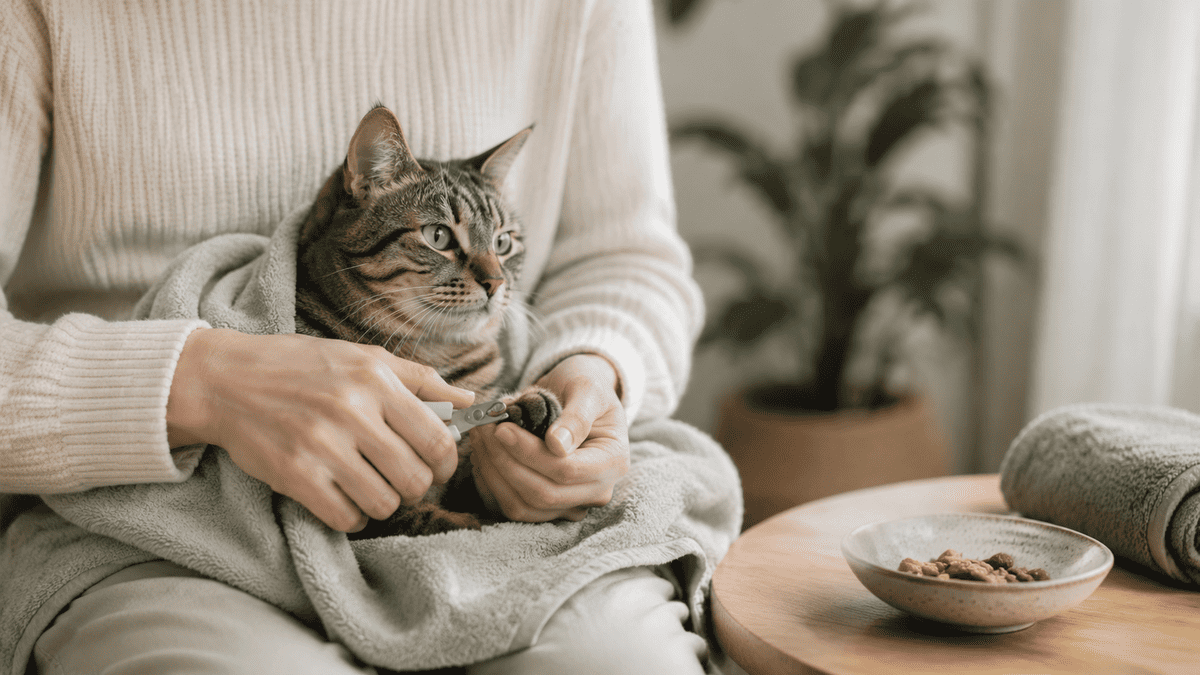
Some cats do better wrapped loosely in a towel with one paw out at a time. Never scruff or restrain forcefully — it makes every future attempt harder.
If You Cut Too Far
Apply styptic powder or cornflour with firm pressure for 30 seconds. Stay calm, end the session, and give a treat. If the bleeding does not stop within a few minutes, contact your vet.
What Not to Do
Declawing is not a nail-management option. It is an amputation of the last bone of each toe, is banned or considered unethical in many countries, and causes long-term pain and behavioural problems. Trimming, appropriate scratching surfaces and, where needed, soft nail caps are the alternatives.
Two ways to keep cat care on track
Want the full cat system with care logs and health records? Choose the Complete Cat Owner Binder. Want a focused medical record for vet visits? Choose the Pet Health Record Binder.
Get the Pet Health Record Binder →Frequently Asked Questions
Do indoor cats really need their nails trimmed?
Usually yes. Indoor cats wear nails down less and are more prone to snagging and, in older cats, nails growing into the pad.
My cat will not let me touch their paws at all. What now?
Go back to brief paw touches paired with treats and build very slowly. If that fails, a vet nurse appointment for regular trims is a perfectly reasonable solution.
Should I trim the back nails too?
Check them, but back nails often need trimming less frequently. Many owners do front nails more often and back nails as needed.
Printable and fillable PDF templates for pet owners — feeding schedules, health records, training trackers and more.