
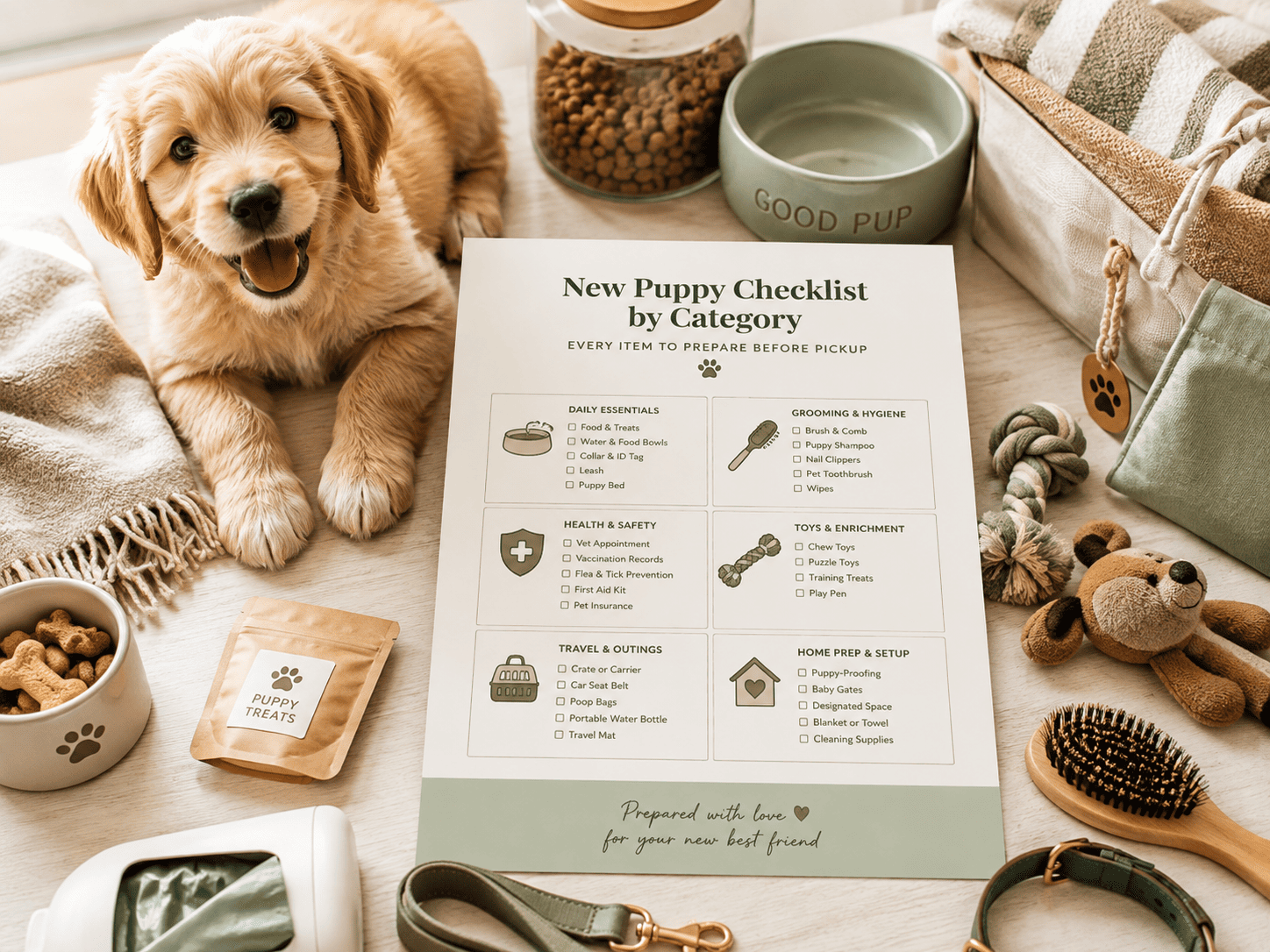
New Puppy Checklist by Category: Every Item to Prepare Before Pickup
Shop by feeding, sleep, walking, grooming, safety and play categories. Use buy-now priorities, borrowed-equipment checks and a small-flat preparation example.
In short
Shop by feeding, sleep, walking, grooming, safety and play categories. Use buy-now priorities, borrowed-equipment checks and a small-flat preparation example.
A new puppy checklist by category helps you buy what you will use and spot gaps before collection day. Start with food, water, a safe resting space, containment, cleaning supplies and identification; decorative extras can wait.
Check what the breeder, rescue or previous carer supplies before ordering. The puppy's current food, size, health information and experience with beds or barriers will affect your choices.
New puppy checklist by category: six shopping lists
Mark each item already have, buy, borrow or wait. Next to anything borrowed, check that it is clean, undamaged and secure for this puppy.
Feeding
- Food the puppy currently eats, with the previous carer's feeding instructions.
- A stable food bowl that is easy to wash.
- A water bowl the puppy can reach, with space for another water station if needed.
- A way to measure the portions in the feeding plan, such as scales or the specified measuring tool.
- Food storage that the puppy cannot open or chew into.
- Small rewards that suit the puppy's diet, allowing for them in the day's food.
Do not buy a large supply of a different food just because the packaging says “premium”. Arrange any diet change with advice for the individual puppy, and keep the current food available during the move.
Sleep and comfort
- Washable bedding without loose parts the puppy can pull off.
- A quiet resting area away from the busiest walkway.
- A gate or pen if you need a protected area while supervising.
- A crate only if you intend to introduce it positively and it fits the puppy.
- Spare bedding so one set can be washed.
You do not have to buy a crate, pen and several beds at once. Choose the arrangement that lets the puppy rest comfortably while you manage access to the home. If using a crate, the puppy needs room to stand, turn and lie comfortably; it should not become a way to leave care needs unattended.
Walking and identification
- A collar or harness fitted to the puppy rather than chosen only by breed label.
- A lead that you can handle securely.
- An ID tag with contact details, checking local requirements for what must appear.
- Waste bags and somewhere to keep them by the exit.
- A secure travel arrangement for the collection journey.
- Microchip details and the registry's process for updating the keeper information.
A growing puppy can outgrow equipment quickly. Check fit as they grow and replace damaged items. Confirm your phone number and address in the microchip registration whenever those details change.
Grooming
- A brush or comb chosen for the puppy's coat.
- A towel for wet outings and gentle drying.
- Dog toothpaste and a toothbrush or tool recommended for introducing mouth care.
- Nail-care equipment if you have been shown how to use it; otherwise arrange help.
- Dog shampoo when it is needed, rather than using a household cleaning product.
Ask the previous carer what grooming the puppy has experienced. Long coats often need frequent brushing, sometimes daily; shorter coats usually need less. Introduce handling in comfortable, brief steps rather than trying to finish every grooming task on the first evening.
Health and safety
- Cleaner intended for pet toileting accidents, used and stored according to its label.
- Secure storage for medicines, cleaners, food waste and other hazards.
- Barriers for stairs or rooms the puppy should not enter.
- A plan to move exposed cables out of reach.
- Vaccination and treatment documents from the previous carer.
- Regular and emergency veterinary contact details.
Ask the vet which parasite-prevention products are suitable for the puppy's age, weight and circumstances. Do not add an adult pet's treatment to the basket or assume a product bought for another species can be shared.
Play and enrichment
- A small selection of toys chosen for the puppy's size and chewing behaviour.
- A chew item you can supervise and inspect for damage.
- A simple food toy if it suits the puppy's diet and can be cleaned properly.
- A place to store toys between sessions.
- A treat pouch if carrying rewards otherwise becomes awkward.
Start with a few different textures or play styles. Watch how the puppy uses them before buying a large set. Remove damaged toys and any item whose pieces the puppy can detach or swallow.
Use the new puppy checklist to prepare care arrangements alongside your purchases. For a shorter essentials list, see 10 things to buy before a new dog comes home.
Decide what to buy now and what can wait
Set the first shopping trip around essential care. Waiting on a non-essential purchase gives you a chance to choose the right size or discover that something you already own works well.
| Priority | Examples | Decision |
|---|---|---|
| Before collection | Current food, bowls, resting space, safe travel setup, cleaning supplies, access barriers where needed | Have these ready and check they work |
| Check fit before committing | Harness, collar, coat-care tools, crate or pen | Use the puppy's measurements and individual needs |
| Buy after observing | Extra toys, more complex puzzles, another bed | See what the puppy enjoys and uses safely |
| Ask the vet first | Parasite treatments, supplements, products marketed for a health concern | Get advice for this puppy before purchasing |
| Often unnecessary | Duplicate feeding tools, several identical toys, expensive matching accessories | Use the money where it closes a care gap |
Keep packaging or receipts for equipment that may need exchanging, but follow the seller's return conditions. A discounted harness is poor value if it slips off the puppy.
Check borrowed equipment and set up the home
A clean bowl or washable bed you already own can save a purchase. Barriers and containment equipment need a closer check because a gap, loose fastening or missing part changes how they work.
- Inspect borrowed items for damage, loose parts and missing fastenings.
- Clean them using a method safe for the material, then let them dry.
- Fit barriers securely and check whether the puppy could climb, squeeze through or become trapped.
- Place the bed away from draughts, intense heat and constant foot traffic.
- Put bowls where the puppy can reach them without blocking a doorway.
- Store cleaning products, waste and food supplies beyond the puppy's access.
- Prepare the toilet route and keep outdoor equipment ready by the door.
Walk the route from the sleeping area to the toilet exit with your hands full. If you cannot open a gate or reach the lead easily, adjust the setup before the puppy arrives.
Collect the information that shopping cannot replace
Before pickup, ask for the puppy's current meal routine, health documents, microchip registration details and familiar care arrangements. Confirm who handles collection, the first evening and the next working day.
Message to the previous carer: “Please tell me the food name, current portions and meal times, and what the puppy usually sleeps on. Could you send the vaccination and treatment records and explain the microchip transfer process before collection?”
Arrange care cover as well as supplies. Bowls and a pen do not provide meals, toilet outings or company while everyone is away. Ask the vet about safe early experiences and local infection risks when planning outings.
Worked example: Kian's small-flat shopping list
Kian is preparing for Wren and has room for one resting area. He already owns washable towels and can borrow an undamaged pen, so he does not buy a large bed-and-crate bundle.
| Category | Kian's choice | Reason |
|---|---|---|
| Feeding | Buy Wren's current food and two stable bowls | Preserve the familiar diet and provide water |
| Sleep | Borrow the checked pen and add washable bedding | Create a quiet area without duplicate furniture |
| Walking | Check measurements before buying the harness | A breed estimate may give the wrong fit |
| Cleaning | Buy accident cleaner and move household cleaners into a secured cupboard | Prepare both cleaning and safe storage |
| Play | Choose a few toys and wait on the large puzzle set | See how Wren plays and chews first |
He also arranges company and toilet outings during his work hours. That care arrangement matters more than filling the unused shelves with accessories.
Final shopping check and common mistakes
- Every essential has a location: bowls, bed, lead and cleaning supplies are unpacked and ready.
- The food matches: you have the product the puppy currently eats and written feeding information.
- The travel setup is ready: you can secure and supervise the puppy during collection.
- Hazards are secured: medicines, waste, cables and vulnerable rooms are protected.
- Equipment fits now: do not use oversized walking equipment solely to save a later purchase.
- Care cover is arranged: everyone knows who handles the puppy when household plans change.
Avoid buying training aids that promise to stop behaviour through fear or discomfort. Reward-based practice, manageable surroundings and patient supervision are a better starting point for everyday puppy learning.
Frequently Asked Questions
Do I need both a crate and a puppy pen?
No. Choose equipment for your space and supervision plan. A crate needs a gradual positive introduction; a pen or gated area may meet your household's needs without buying both.
Can I buy a large harness for the puppy to grow into?
It needs to fit securely while being used. Choose an adjustable option that fits now, check it as the puppy grows and replace it when adjustment is no longer enough.
Should I buy flea and worm treatment before pickup?
Collect the previous treatment record first and ask the vet what the puppy needs. Product choice depends on the individual puppy, and buying early can leave you with something unsuitable.
Which purchases can I leave until after the puppy arrives?
Extra beds, large toy collections and complex food puzzles can usually wait. Have food, water, rest, safe access, cleaning and travel arrangements ready before collection.
Resources & Links
These sources help you choose supplies for the puppy’s rest, grooming and early care needs.
- RSPCA: Puppy Care — Check the puppy’s early care needs before choosing food, equipment and supervision arrangements.
- RSPCA: Crate Training — Decide whether a crate fits your setup and learn how to introduce it positively.
- PDSA: Grooming Pets — Choose grooming tools and handling routines for the puppy’s coat and individual needs.
Organise purchases with the New Pet Shopping Checklist and prepare early care with the New Puppy Starter Kit. Get the New Pet Shopping Checklist → Get the New Puppy Starter Kit →
Printable and fillable PDF templates for pet owners — feeding schedules, health records, training trackers and more.