
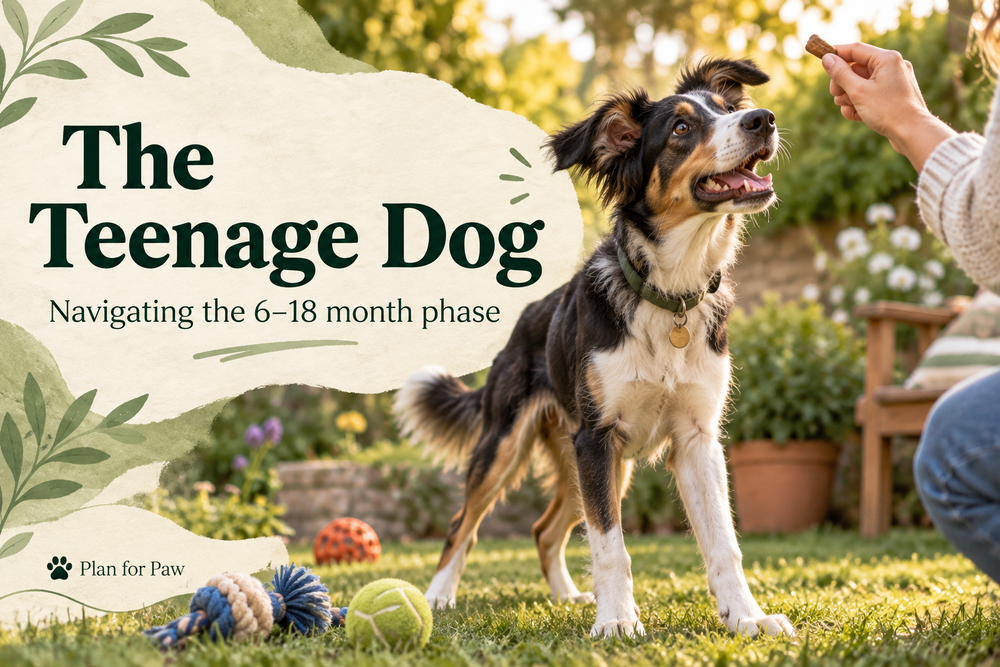
The Teenage Dog: Surviving Adolescence From 6 to 18 Months
Your puppy had a perfect recall — and now ignores you completely. Adolescence is a normal stage, and it is the age many dogs are given up. Here is what is going on and how to get through it.
In short
Your puppy had a perfect recall — and now ignores you completely. Adolescence is a normal stage, and it is the age many dogs are given up. Here is what is going on and how to get through it.
Many owners are caught off guard by adolescence. The puppy who followed them everywhere and sat beautifully suddenly ignores recall, pulls on the lead, jumps up and seems to have forgotten everything. It is frustrating, but it is normal — and it passes, especially if you keep training going through it.
When It Happens
Adolescence usually starts somewhere around six months and can last until 18 months or longer, especially in large breeds. It overlaps with sexual maturity and big changes in the brain.
What You Might See
- Recall that suddenly becomes unreliable
- More interest in the environment, smells and other dogs than in you
- Lead pulling returning
- Jumping up, mouthing and over-excitement
- New fears or wariness of things they previously ignored
- Testing boundaries at home
Why It Is Not Defiance
Teenage dogs are not trying to dominate you. Their brains are changing, their bodies are growing and the world has become more interesting. Skills learned in the kitchen have not yet been practised in the much harder conditions of a field full of smells and dogs.
Keep Training — But Make It Easier
- Go back a step: practise skills in easier places with fewer distractions
- Raise the value of your rewards
- Keep sessions short — two to five minutes, a few times a day
- Reward the good choices your dog does make
Puppy Training Tracker
Adolescence makes it feel like nothing is working. A training log shows you what is still improving. The printable Puppy Training Tracker lets you log sessions, distractions and progress through the teenage months.
Get the Puppy Training Tracker →Manage the Environment
- Recall: use a long line in open spaces so your dog cannot practise ignoring you. See how to teach a reliable recall.
- Jumping up: keep greetings calm and on lead while you train.
- Chewing: keep appropriate chews available and valuables out of reach.
Balance Exercise and Rest
Teenage dogs need exercise and mental stimulation, but more running is not always the answer. Many adolescent dogs are short of sleep and become more wound up with more activity. Include sniffing walks, enrichment at home and plenty of rest.
New Fears
Adolescent dogs may become wary of things they were fine with before. Avoid forcing them; give them space and build confidence gradually.
Neutering
Discuss the timing of neutering with your vet, who can advise based on breed, size and health.
Two ways to get through the teenage phase
Focused on training progress? Choose the Puppy Training Tracker. Want training, health records and routine in one system? Choose the Complete Dog Owner Binder.
Get the Complete Dog Owner Binder →Frequently Asked Questions
When does the teenage phase end?
For many dogs, behaviour settles between 18 months and two years, though it varies by breed and individual.
My dog has forgotten all his training. Should I start again?
Go back a step and practise in easier situations. The training is not lost — it just needs more practice under harder conditions.
Is it normal for an adolescent dog to become fearful?
New fears can appear during adolescence. Give your dog space and build confidence gently. Seek help if fears are severe.
Printable and fillable PDF templates for pet owners — feeding schedules, health records, training trackers and more.