
10 Things to Buy Before Your New Dog Comes Home
Most new dog owners buy too much of the wrong things and not enough of the right ones. This list covers the ten items that actually matter — and what to skip until you know your dog better.
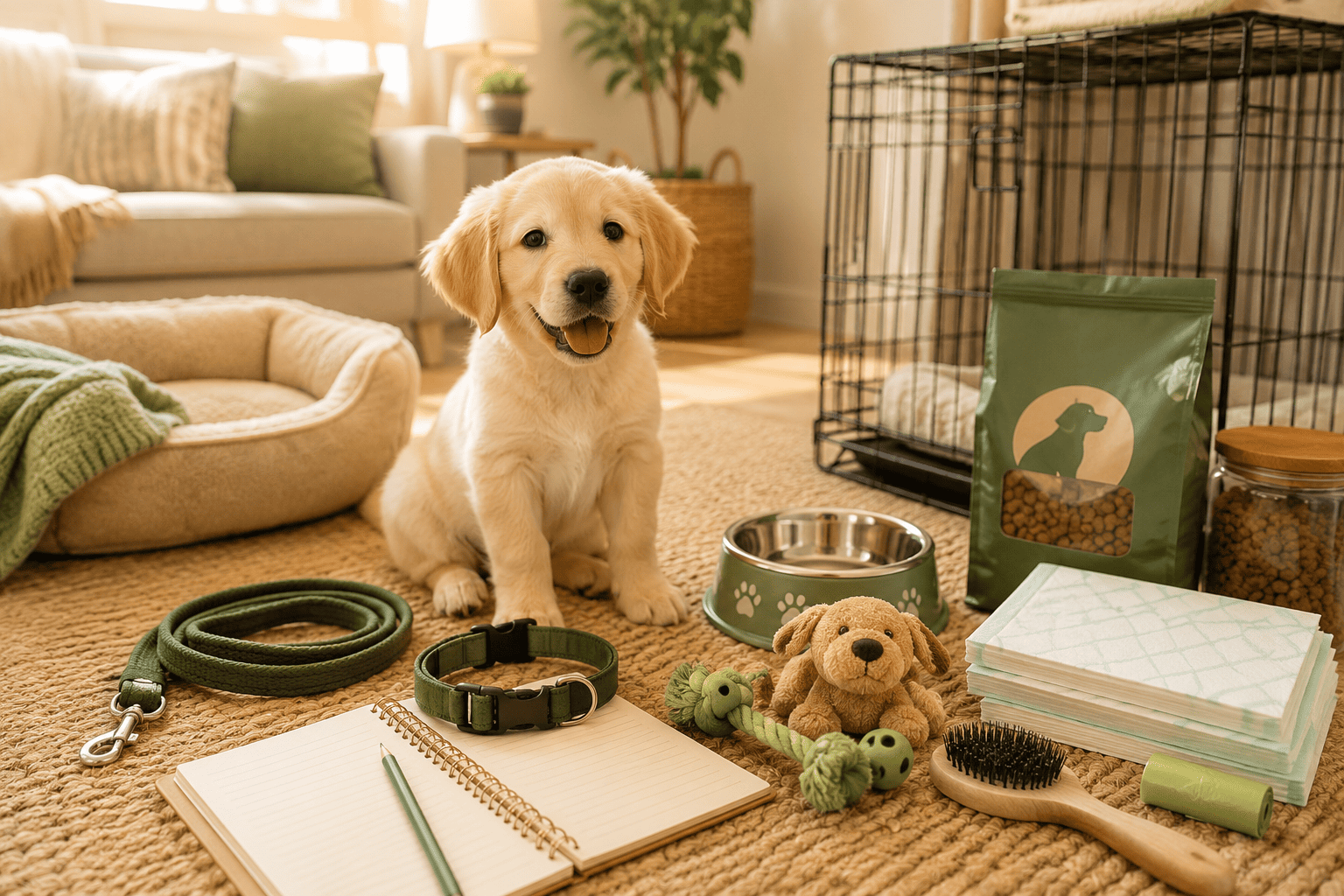
In short
Most new dog owners buy too much of the wrong things and not enough of the right ones. This list covers the ten items that actually matter — and what to skip until you know your dog better.
Pet shops and online retailers are extremely good at making new dog owners feel they need everything at once. The reality is that many items are unnecessary, some are counterproductive, and a few genuinely important things are often overlooked. Here is what to actually have ready before your dog walks through the door.
1. A Correctly Sized Crate
The crate should be large enough for your dog to stand up, turn around, and lie flat — not significantly larger. For puppies, get an adult-sized crate with a divider panel so you can start small and expand as they grow. Wire crates with removable trays are the most practical. Avoid soft-sided fabric crates for dogs that have not been crate trained — a motivated puppy will escape in minutes. The crate is not optional equipment for a new dog: it is the most reliable toilet training and settling tool available.
2. Food and Water Bowls
Stainless steel or ceramic are the most hygienic materials and the easiest to clean properly. Avoid plastic — it scratches and harbours bacteria, and some dogs develop chin acne from plastic bowls. For flat-faced breeds, a shallow, wide bowl reduces the effort of eating. For large, deep-chested breeds at risk of bloat, an anti-gulp slow feeder bowl may be recommended by your vet. Get two sets so one is always clean.
3. A Lead, Collar, and ID Tag
In most countries, dogs must wear an ID tag in public by law. The tag must have your name and address or phone number — not the dog's name. Get a flat collar for everyday wear and a separate lead. For puppies, start with a lightweight lead (not a retractable — these teach dogs to pull and have caused serious injuries). Avoid slip leads as an everyday collar; they tighten on the throat when the dog pulls. The ID tag is the first thing to sort, even before the dog comes home.
4. The Same Food Your Dog Was Eating Before
Ask the breeder, rescue, or previous owner what food your dog has been on and buy a supply of it. The stress of a new environment already puts the digestive system under pressure. A food change on top of this almost guarantees loose stools for the first week. Once your dog has settled — usually two to four weeks — you can transition to a different food gradually if you choose to. Not before.
5. Dog Bed or Bedding for the Crate
A basic vet bed (the cream fleece material used in veterinary practices) is warm, washable, non-toxic if chewed, and very difficult to destroy — unlike most branded puppy beds. Get two so one is always in the wash. For an anxious new dog, placing a piece of your worn clothing in the bed can help them settle. Do not buy an expensive dog bed until you know whether your dog is a chewer.
6. Appropriate Chews and Toys
Dogs need to chew. Puppies especially need chew outlets while teething (3–6 months). Natural chews — bully sticks, dried tendons, beef cheek rolls — are digestible and satisfying. Kongs stuffed with wet food and frozen are the most useful multi-purpose toy for puppies: they provide entertainment, slow down eating, and are invaluable for crate training. Avoid rawhide chews (choking and digestive hazard) and toys with small parts that can be detached and swallowed.
7. Enzyme Cleaner
Not glamorous, but arguably the most important item on this list for the first few months. Enzyme cleaners break down the proteins in urine that standard cleaners leave behind — including the smell receptors that tell a dog "this is a good place to go again." Using a regular household cleaner on a urine accident and then wondering why the dog keeps returning to the same spot is one of the most common early training frustrations. Buy enzyme cleaner before the dog arrives.
8. Poop Bags and a Dispenser
You will need more than you think. A clip-on dispenser for the lead keeps them accessible without rummaging in pockets. Biodegradable options are widely available and worth choosing. In most areas, failing to pick up is a fineable offence — being caught without bags is not a position you want to be in.
9. A Car Travel Solution
In most jurisdictions, a dog that is unrestrained in a car invalidates your insurance and is illegal. Options: a dog-specific harness that clips into a seatbelt, a secured crate in the boot, or a boot guard with a harness. Dogs that are not used to car travel often become anxious or carsick — starting with short journeys and positive associations (the car goes to the park, not only to the vet) makes a significant difference early on.
10. A Plan for the First Week
This is not a physical item, but it matters more than most of the above. Who is taking the dog out in the morning? Where will they sleep on night one? What is the feeding schedule? What happens when someone goes to work? Dogs — particularly puppies — need routine and consistency from day one. Agreeing on the rules, schedule, and training approach before the dog arrives prevents mixed messages and reduces stress for everyone.
New Pet Shopping Checklist
A printable checklist covering everything you need before a new dog or puppy comes home — organised by category so nothing gets missed and no money gets wasted on things you do not need yet.
Get the New Pet Shopping Checklist →Frequently Asked Questions
Do I need a puppy playpen?
Useful but not essential. A playpen creates a safe, contained space during the first weeks and can be used alongside the crate. For owners who cannot supervise constantly during the day, it is worth having. Buy one with a floor tray if using on hard floors.
What should I not buy before I know my dog?
An expensive designer bed (wait to see if they are a chewer), a harness (need to try for fit), interactive electronic toys (many dogs are not interested), and anything marketed specifically as a calming product until you know what your dog actually responds to.
Printable and fillable PDF templates for pet owners — feeding schedules, health records, training trackers and more.