New Puppy Checklist: Everything to Prepare Before Bringing Your Puppy Home
Bringing a puppy home is exciting — and overwhelming. This complete new puppy checklist covers everything you need to buy, prepare and do before and after your puppy arrives.
In short
Bringing a puppy home is exciting — and overwhelming. This complete new puppy checklist covers everything you need to buy, prepare and do before and after your puppy arrives.
Bringing a new puppy home is one of the most exciting things a dog owner can do — and one of the most overwhelming. There is so much to buy, prepare and learn, often all at once. This complete puppy checklist walks you through every step, from the week before pickup to the end of your puppy's first month.
Before Your Puppy Arrives
The best time to prepare is before your puppy sets foot in your home. Puppies are fast, curious and surprisingly destructive. Puppy-proofing and having the right supplies ready makes those first hours far less stressful.
- Puppy-proof the home: Tuck away cables, move toxic plants, block off stairs and secure any cabinets with chemicals or medicines.
- Decide on sleeping arrangements: Crate, pen or bed in the bedroom? Have it set up and ready before you arrive home.
- Buy food in advance: Ask the breeder or shelter what food your puppy is currently eating. Switching food abruptly causes stomach upset. Buy the same brand for the first two weeks.
- Find a vet: Register with a vet before you collect your puppy. Book a health check appointment for the first week.
- Tell your household: If you have children, set ground rules for handling, noise levels and feeding.
Feeding Essentials
Puppies eat three to four times a day until around six months old. Setting up a consistent feeding routine prevents begging, reduces accidents and helps with toilet training.
- Two stainless steel bowls (food and water)
- Age-appropriate puppy kibble or wet food
- A measuring cup — portion control matters for puppies
- Puppy-safe treats for training rewards
- A written feeding schedule so everyone in the house gives the same meals
Write down the feeding times, amounts and food brand on a feeding log. This is especially useful if multiple family members are involved in feeding.
Sleep Setup
Where your puppy sleeps matters. A crate gives puppies a safe den-like space and is the fastest tool for toilet training. A puppy pen is useful for daytime confinement when you cannot supervise.
- Crate sized to allow standing, turning and lying down — not too large or the puppy will toilet in the corner
- Soft, washable bedding (puppies have accidents)
- A blanket or soft toy that smells of the litter — helps with the first nights away from mum
- A white noise machine or low radio can help with settling
Expect the first two to three nights to be noisy. Most puppies settle within a week when a consistent bedtime routine is in place.
Potty Training Setup
Puppies need to toilet every one to two hours. Success in toilet training comes from consistency and taking your puppy outside at the right moments — after waking, after eating and after play.
- Choose a toilet spot in the garden and use it every single time
- Keep training treats by the back door for immediate reward
- Enzyme-based cleaner for indoor accidents (removes the scent marker so puppies do not repeat)
- Puppy pads if you live in a flat or have no immediate outdoor access
- A potty log — note times to spot patterns and prevent accidents
Vet Records and Health Preparation
Vaccinations, flea treatment, microchipping and worming are all time-sensitive. Missing a booster or using the wrong product for the age of your puppy is easy to do without a clear record-keeping system.
- Collect all health documents from the breeder or shelter at pickup
- Note vaccination dates and the next booster due
- Confirm microchip number is registered to you
- Record flea, tick and worming product names and next treatment dates
- Note any breed-specific health checks recommended by your vet
Keeping all of this in one place saves you searching for paperwork at every vet visit. A dedicated pet health record template keeps it organised from day one.
First Week Routine
The first week sets the tone. Puppies thrive on predictability. A loose daily schedule — wake up, toilet, feed, play, sleep — repeated consistently helps your puppy settle faster and reduces anxiety.
- Day 1–2: Keep visitors to a minimum. Let your puppy explore the home at its own pace.
- Day 3–4: Start a basic routine — same wake time, feeding times and bedtime every day.
- Day 5–7: Begin short, positive training sessions (sit, name recognition, coming when called).
- Week 2: Introduce car travel, different surfaces, gentle sounds. Socialisation starts here.
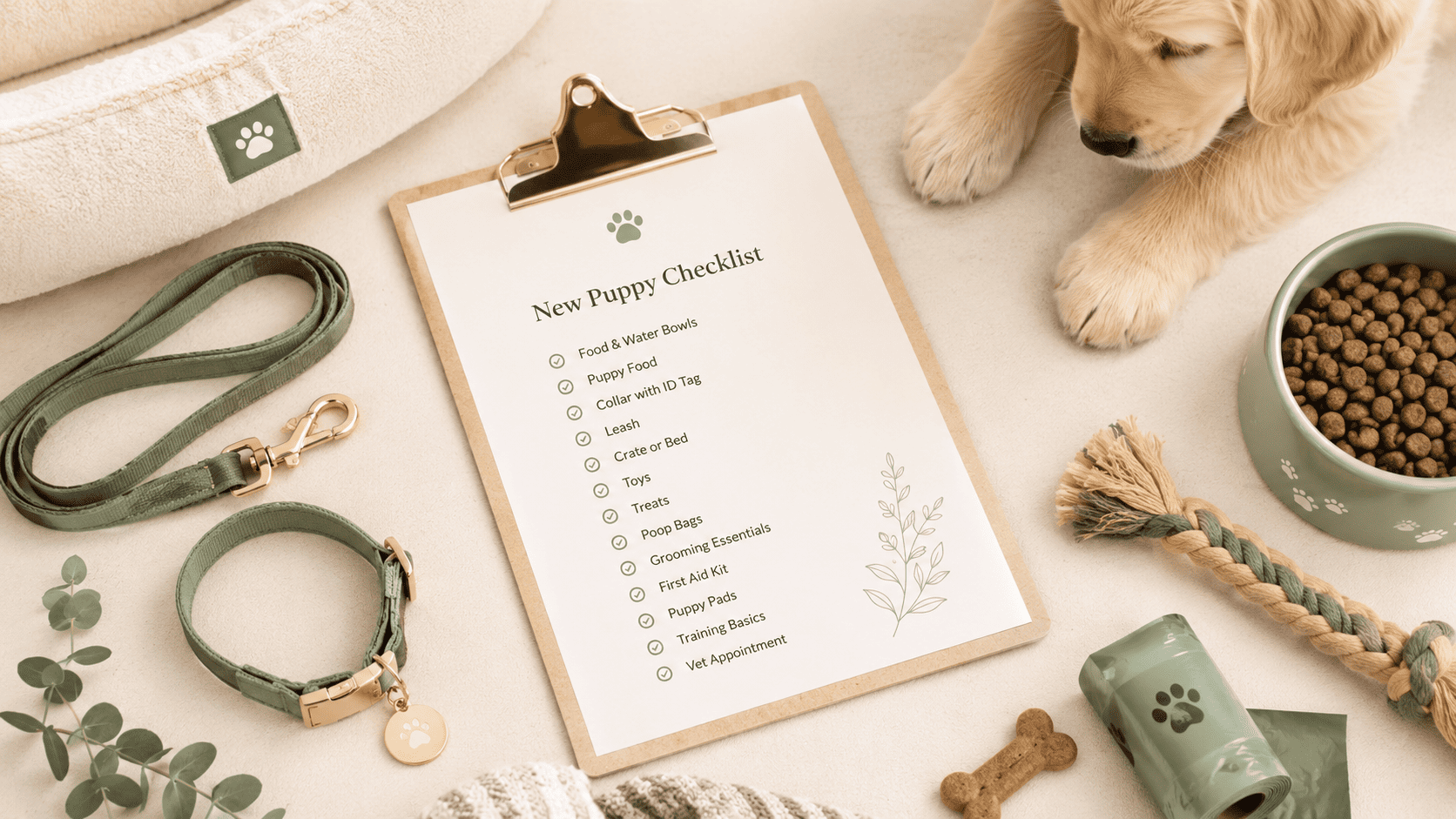
Complete Puppy Shopping Checklist
Here is a full list of everything most new puppy owners need. Not everything is essential on day one, but having it ready prevents a frantic trip to a pet shop at 10pm.
Feeding
- Food and water bowls
- Puppy food (same brand as breeder for first two weeks)
- Training treats
- Feeding mat or tray
Sleeping and Containment
- Crate or pen
- Washable bedding
- Baby gates for stairs or rooms
Toileting
- Enzyme cleaner
- Puppy pads (optional)
- Pooper scooper and bags
Health and Grooming
- Puppy brush or slicker brush
- Puppy nail clippers or file
- Puppy-safe shampoo
- Toothbrush and puppy toothpaste
- Flea and worming treatment (ask vet for the correct product)
Walking and Travel
- Flat collar and ID tag (with your phone number)
- Harness for walks once vaccinated
- 4–6ft lead
- Crate or seatbelt harness for car travel
- Portable water bottle and bowl
Enrichment and Training
- Chew toys (puppies are teething)
- Tug toy and fetch ball
- Kong or lick mat for crate settling
- Treat pouch for training sessions
Download the New Puppy Starter Kit
Printable and fillable puppy checklists, feeding logs, daily routine trackers, potty training records and vet health sheets — everything in one organised kit.
Get the New Puppy Starter Kit →Frequently Asked Questions
What should I buy before getting a puppy?
At minimum: food and water bowls, puppy food (same as the breeder's brand), a crate or pen, bedding, enzyme cleaner, a collar with ID tag and training treats. Add grooming supplies, toys and a lead before vaccinations are complete.
How do I prepare my home for a new puppy?
Remove hazards at floor level: cables, toxic plants, small objects, cleaning products. Secure stairs with baby gates. Decide on the sleeping area and set it up before you collect your puppy.
What do I do on the first night with a new puppy?
Keep it calm. Put the crate or bed in your bedroom for the first few nights — puppies find it easier to settle when they can sense you nearby. Expect some whining. Avoid going to the puppy every time it cries or you will reinforce the behaviour.
How often do puppies need to go to the toilet?
Every one to two hours when awake, and immediately after waking, eating and playing. Puppies cannot hold their bladder for long until about 12 weeks. Consistent, frequent outdoor trips are the fastest route to a toilet-trained puppy.
Printable and fillable PDF templates for pet owners — feeding schedules, health records, training trackers and more.