
Cat Litter Box Problems: Why It Happens and How to Fix It
A cat toileting outside the tray is not being spiteful. It is almost always medical, environmental or stress-related. Here is how to work through the causes systematically.
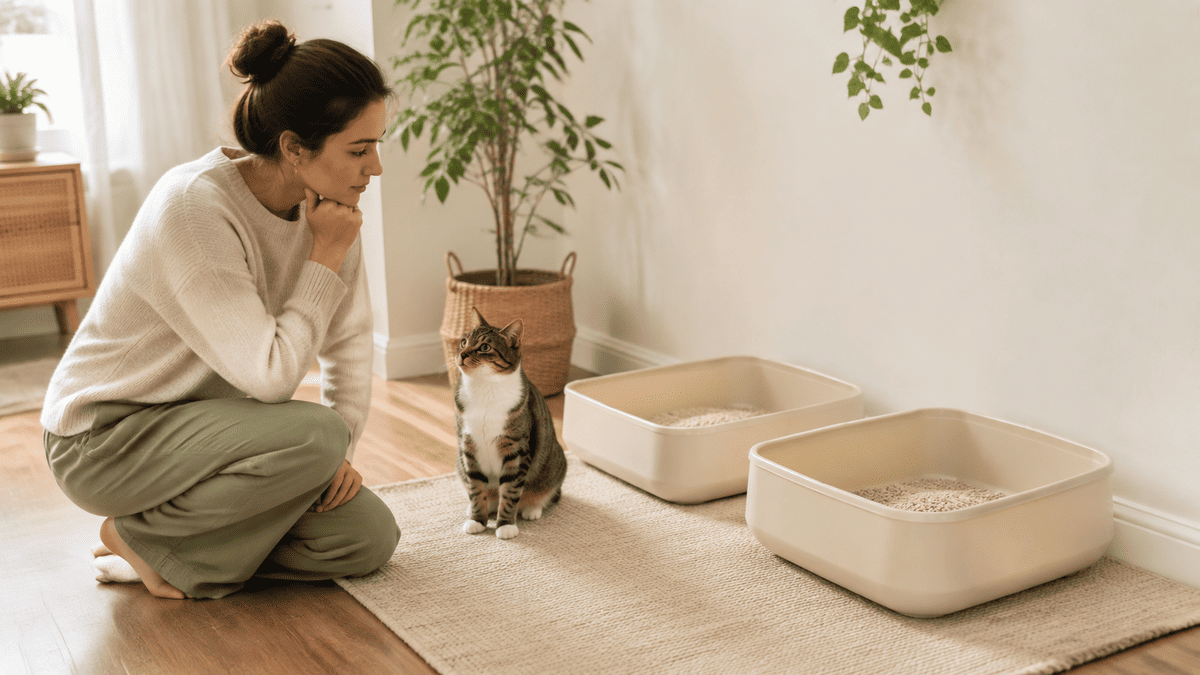
In short
A cat toileting outside the tray is not being spiteful. It is almost always medical, environmental or stress-related. Here is how to work through the causes systematically.
Inappropriate toileting is the single most common behavioural complaint from cat owners — and one of the most misunderstood. Cats do not urinate outside the tray out of spite or revenge. There is always a reason, and working through the possible causes in the right order usually finds it.
Step 1: Rule Out Medical Causes First
Always start here. Urinary tract infections, bladder inflammation (feline idiopathic cystitis), crystals, kidney disease, diabetes and arthritis all cause litter tray avoidance. A cat that associates the tray with pain will start going elsewhere.
Urgent: a cat straining to urinate with little or no output — particularly a male cat — is a medical emergency and can be fatal within hours. Go to a vet immediately.
Step 2: Check the Tray Setup
- Number: one tray per cat plus one spare is the standard guideline
- Location: quiet, low traffic, not next to the food, not next to a noisy appliance
- Accessibility: older or arthritic cats need low sides and no stairs to reach it
- Escape routes: a tray in a dead-end corner can feel like a trap, especially in multi-pet homes
- Covered or open: many cats prefer open trays; hoods trap smell
Step 3: Check the Litter Itself
Cats are particular about texture. Most prefer a fine-grain, unscented clumping litter. Scented litters and pellets are a common trigger for avoidance. If you have changed brand recently, change back and see what happens. Depth matters too — three to five centimetres suits most cats.
Step 4: Cleaning Frequency
Scoop at least once daily, twice for multi-cat homes. Fully change and wash the tray regularly with unscented detergent. Avoid ammonia-based cleaners entirely — ammonia smells like urine and encourages repeat marking.
Complete Cat Owner Binder
A litter log is one of the most useful things you can bring to a vet appointment. The Complete Cat Owner Binder includes printable litter and feeding logs, health records and symptom notes so you can show exactly what changed and when.
Get the Complete Cat Owner Binder →Step 5: Stress and Territory
- A new pet, baby, visitor or house move
- Outdoor cats visible through windows
- Conflict with another cat in the household — often subtle, such as blocking access to the tray
- Building work, new furniture or rearranged rooms
Spraying — a small amount of urine on a vertical surface — is a marking behaviour and usually points to a territorial or stress trigger rather than a tray problem.
Cleaning Soiled Areas Properly
Use an enzyme cleaner, never ammonia or bleach. Any residual scent marker invites repeat use of the same spot. Where possible, change what that area means to the cat: feed there, play there, or place a scratching post nearby.
Two ways to track the problem
Want cat-specific logs and routines? Choose the Complete Cat Owner Binder. Want focused health and symptom pages for vet visits? Choose the Pet Health Record Binder.
Get the Pet Health Record Binder →Frequently Asked Questions
Is my cat doing this out of spite?
No. Cats do not toilet outside the tray to punish. It is medical, environmental or stress-related in essentially every case.
How many litter trays do I need?
One per cat plus one spare, in separate locations. Two trays side by side count as one to a cat.
When is it an emergency?
Straining with no urine produced, crying in the tray, or blood in the urine — go to a vet immediately, particularly with male cats.
Printable and fillable PDF templates for pet owners — feeding schedules, health records, training trackers and more.