
Dog Care Binder: What to Include in a Complete Pet Organisation System
Build working pages for routines, training, health, outings and expenses. Use concrete field lists, task cards and a worked weekend plan for a real household.
In short
Build working pages for routines, training, health, outings and expenses. Use concrete field lists, task cards and a worked weekend plan for a real household.
A dog care binder should help you answer ordinary questions quickly: has breakfast happened, which lead do we use, what are we practising, and where is the vet's latest note? Start with the pages your household needs this week, then keep supporting documents behind them.
You can cover daily care, training, health, outings, expenses and emergencies without making everyone carry a thick folder. Give each job a clear place and keep the front pages short enough for a walker or household member to use.
Dog care binder: what to include in the working pages
Build a small working pack first. Add extra pages when a real task needs them, rather than printing every available form.
| Page or section | Write this on it | What it helps someone do |
|---|---|---|
| Contacts and dog profile | Name, identifying description, owner and backup numbers, regular practice and emergency clinic, microchip registry | Identify the dog and reach the right person |
| Daily routine | Food, portions from your current feeding plan, water, toilet access, walking equipment, rest arrangements | Carry out a normal day |
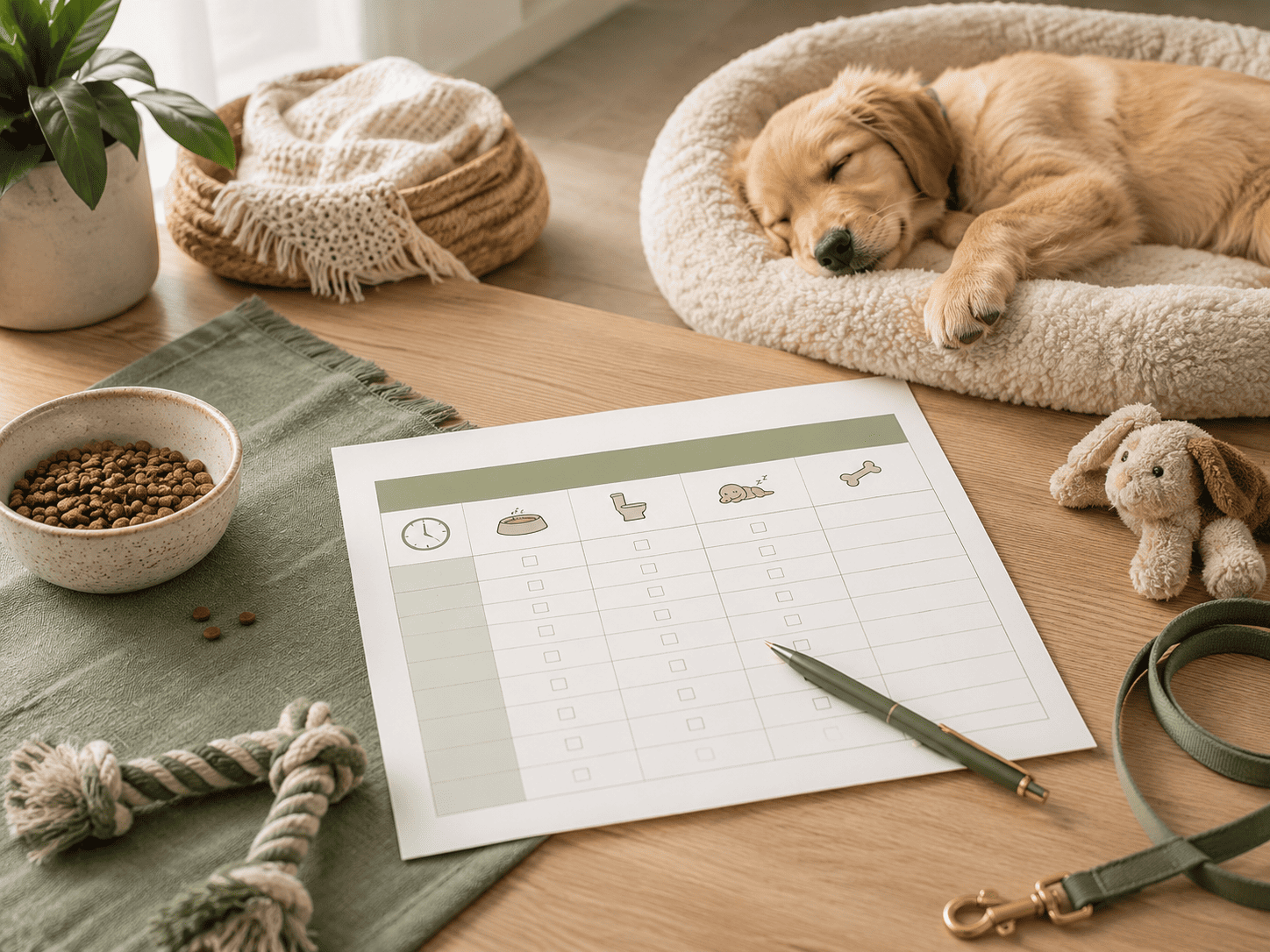
| Daily completion sheet | Meals, walks, toilet outings and other shared tasks, with the person completing them | Avoid missed jobs and duplicate meals |
| Training card | One current cue, how to practise it, reward and stopping point | Use the same approach across the household |
| Health reference | Current veterinary instructions, known allergies, medication labels and upcoming appointment information | Find the instruction or document needed now |
| Sitter and outing notes | Access, walking boundaries, transport arrangements, contacts and the care tasks being handed over | Prepare for a specific absence or trip |
| Expenses and supplies | Purchases, receipts, reimbursement or claim status, and items running low | Plan costs and replace essentials |
Put contacts at the front, not behind the receipts. Keep fuller identification, insurance and medical documents in the reference section; a person finding the clinic number should not have to search through old bills.
For a broader household setup, use the complete dog owner binder checklist. If most of your paperwork is medical, compare a dog care binder and pet health binder before choosing your sections.
Write a daily routine someone can carry out
Describe the tasks, equipment and access. “Walk as usual” means little to a new helper; “use the harness hanging by the back door and keep the lead attached outside the fenced garden” gives them an action.
Copy this daily-care prompt list
- Food: product name, where it is stored, the current portion plan and who prepares meals.
- Water: bowl locations, fresh water and cleaning responsibilities.
- Toilet access: door or route to use, supervision and waste disposal.
- Walks: harness or collar, lead, usual route and any places or interactions to avoid.
- Rest: where the dog sleeps and how household members give them space.
- Grooming: brush or towel location and handling the dog accepts comfortably.
- Time alone: the care cover you have arranged and who to contact if plans change.
Adult dogs generally need daily walks alongside sniffing and play, but the kind and amount depend on health, age and the individual dog. Puppies need short sessions with ample rest; a dog with restrictions needs the vet's plan written clearly beside the routine.
Routine entry: “After a wet walk, use the green towel by the back door. Otto accepts his coat being towelled but moves away from paw handling. Do not hold his paws for cleaning; contact Nadia if mud is causing a problem.”
Do not turn each ordinary task into a lengthy diary entry. A completion mark can handle routine jobs; leave a small space for something the next person needs to know.
Make the training card practical
A useful training page names the behaviour being taught and gives the household the same cue and reward. It also says where the dog can currently practise comfortably.
| Training field | Example entry |
|---|---|
| Skill | Return to the back-door mat |
| Cue | “Mat”, said once when Otto can see the empty mat |
| Practice | Reward stepping onto it in the quiet kitchen; finish while he is still comfortable |
| Current limit | Not yet practised with visitors at the door |
| Help needed | Ask household members to use the same cue and keep the doorway calm |
This example is ordinary household practice, not a treatment plan for anxiety or unsafe behaviour. If you are working with a qualified trainer or behaviour professional, keep their current homework on the card instead of adding conflicting advice from several places.
Keep notes brief: where practice happened, what the dog managed and what to try next. Avoid a page of labels such as “good” or “stubborn”, which do not tell another person what to do.
Keep health documents ready for the next job
Include vaccination certificates, visit summaries, current prescriptions, parasite-prevention records, allergy information recorded by the practice, weight history and insurance references. Keep the original clinic documents alongside any short summary you make.
- Put the next appointment details and questions together.
- Keep current prescribed directions readable and separate from stopped treatments.
- If someone gives medication, keep a single completion record beside the current instructions.
- File a certificate where you can find it before boarding or travel.
- Keep claim paperwork with the relevant invoice and claim reference.
Copy medical directions from the current label or clinic document. If they are unclear, contact the practice; a binder page should not become a reason to improvise treatment.
Use one short filing routine: add new documents after an appointment, replace changed working instructions, and move old paperwork behind the relevant tab. That keeps the practical pages visible without discarding useful history.
Prepare a sitter packet and a small expense list
A sitter needs the routine, access details, walking rules, current prescribed instructions, veterinary contacts and an owner or backup contact. Give them the pages needed for the absence, with clear agreement about what they are responsible for.
For an outing, add the destination's requirements, transport setup, food and water supplies and relevant documents. Verify requirements with the destination before packing; your usual walk kit may not cover an overnight stay.
Keep the budget page simple
- Record the purchase date, item or service, amount and where the receipt is kept.
- Separate regular costs such as food from occasional costs such as replacement equipment.
- Mark a claim as submitted, awaiting a response or settled.
- Keep a short “running low” list for food, waste bags and other essentials.
- Check outstanding costs before assuming a reimbursement has arrived.
Put receipts behind the expense page. The front list should help you make the next decision, such as replacing a damaged lead or checking whether you have enough food for a sitter's stay.
Worked example: prepare Otto's weekend
Nadia has an appointment, a muddy forecast and a family visitor coming over. She gives each task one clear place instead of adding a general reminder saying “sort dog things”.
| Need | Binder entry | Person responsible |
|---|---|---|
| Wet walks | Green towel at the back door; follow the handling note | Whoever returns with Otto |
| Visitor arrival | Keep Otto's mat and rest area free; do not practise the new cue during greetings | Nadia |
| Vet appointment | Take the latest clinic letter and the questions sheet | Nadia |
| Food supply | Check the remaining bag before the visitor's stay | Sam |
Sam can find the tasks without reading Otto's entire medical history. After the appointment, Nadia files the new letter and updates only the instructions that changed.
A quick usability check and common mistakes
Ask a household member to find the clinic number, the next meal instruction and the walking equipment note. If a page is hard to find, rename the tab or move the page forward.
- Emergency details buried at the back: move contacts to the front and keep an accessible backup.
- Two daily tick sheets: choose one shared completion page so carers can see what has happened.
- Old instructions still in use: remove them from the working pages when a replacement arrives.
- A training log without instructions: add the cue, practice setting and reward.
- Receipts mixed with care notes: put them behind the budget page.
Frequently Asked Questions
Which pages should go at the front of a dog care binder?
Start with contacts, the dog profile and the current routine. Put frequently used task pages next, with supporting health documents and receipts behind their tabs.
Do I need a daily log if I am the only carer?
Use one when it helps with a specific job, such as prescribed medication, a care change or a future handover. You can keep a simple routine page for tasks you do reliably without a log.
Should training notes and health records share the same binder?
They can, provided each has a clearly labelled section. Keep current training homework easy to reach and leave clinical documents intact in the health section.
What should a dog walker receive from the binder?
Share the contact details, access arrangements, equipment, route boundaries and relevant health or behaviour instructions needed for that walk. Keep unrelated receipts and private household information out of the packet.
Resources & Links
These sources help you connect binder pages with daily welfare, health checks and reliable owner information.
- PDSA: Home Health Checks — Choose useful health observations for the working pages and your next veterinary conversation.
- RSPCA: Company for Dogs — Plan daily company and care cover alongside the routine and walking notes.
- AVMA: Resources for Pet Owners — Check dependable owner guidance when preparing health and emergency reference pages.
Organise your dog’s everyday care information with the Complete Dog Owner Binder. Get the Complete Dog Owner Binder →
Printable and fillable PDF templates for pet owners — feeding schedules, health records, training trackers and more.