
Senior Dog Care Planner: What to Track as Your Dog Gets Older
As your dog ages, small changes matter more. A senior dog care planner helps you track weight, mobility, appetite, medication and pain observations so nothing subtle is missed.
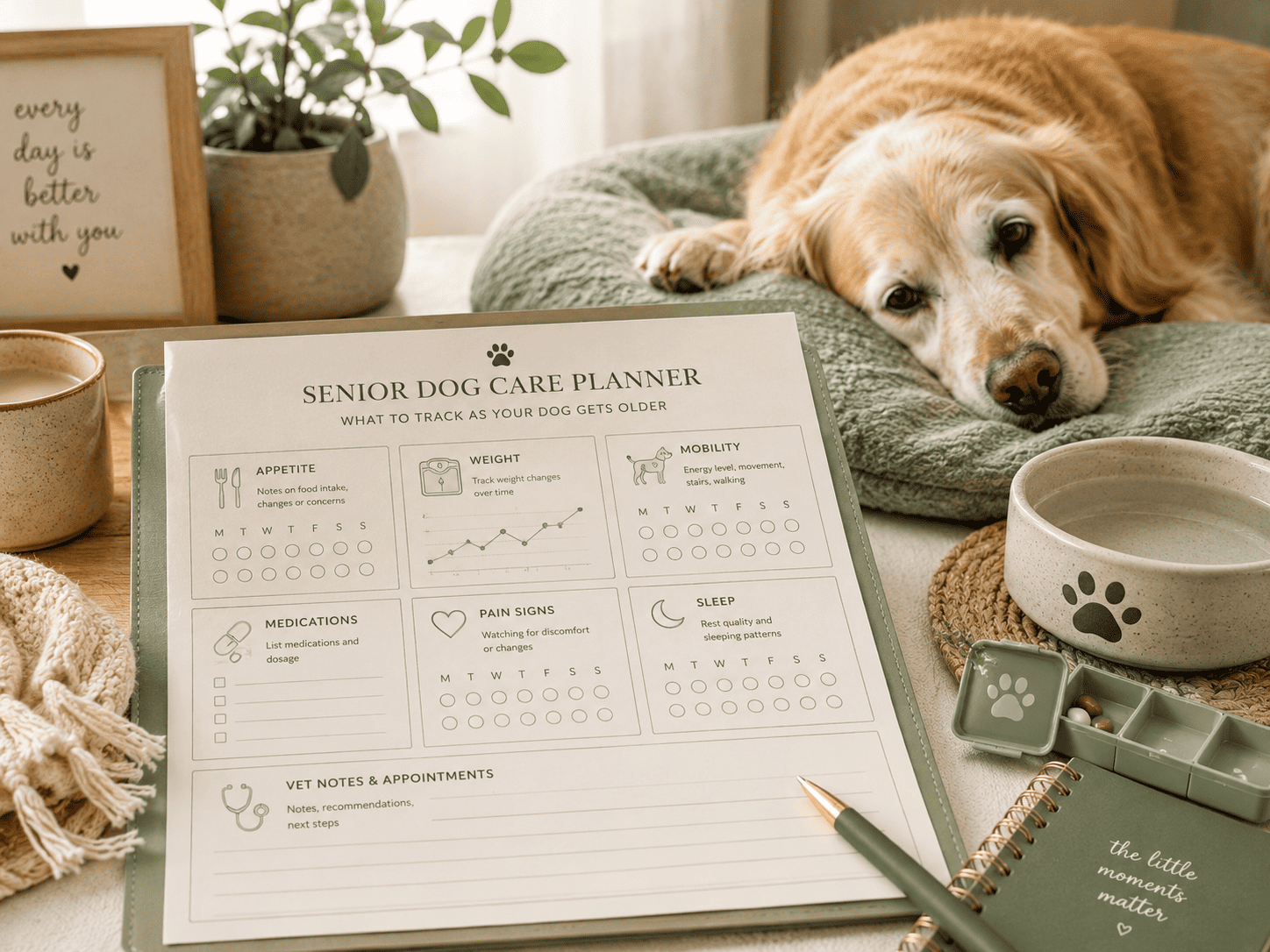
In short
As your dog ages, small changes matter more. A senior dog care planner helps you track weight, mobility, appetite, medication and pain observations so nothing subtle is missed.
Ageing dogs need more from us, not less — and the changes are often gradual and easy to miss. A senior dog care planner helps you track the things that matter most as your dog gets older, so subtle shifts become visible early, when they are most manageable. Here is what to track.
What to Track for a Senior Dog
- Weight — monthly; both loss and gain are early warning signs
- Mobility — stiffness, reluctance to jump, slowing on walks
- Appetite — any reduction, or hesitation before eating
- Water intake — increased drinking is significant in older dogs
- Medications — doses and timing, especially for pain or ongoing conditions
- Sleep and accidents — restlessness at night, house soiling
- Pain observations — posture, facial tension, irritability when touched
- Vet appointments — twice-yearly for seniors, with notes
Why Tracking Matters More With Age
Older dogs instinctively mask discomfort, and age-related conditions — arthritis, dental disease, kidney changes — develop slowly. A written record turns "he seems a bit slower lately" into a clear trend your vet can act on. Arthritis in particular is very common and significantly underdiagnosed, often dismissed as "just getting old".
Pet Health Record Binder
The Pet Health Record Binder gives you weight charts, medication logs, symptom notes and vet visit pages — everything you need to track a senior dog's changing needs in one place.
Get the Pet Health Record Binder →Quality-of-Life Notes
Alongside the clinical details, note the everyday things: is your dog still enjoying walks, greeting you, settling comfortably? These observations, tracked over time, help you and your vet make good decisions about pain management and care as your dog ages.
Adjusting Care as You Go
Tracking naturally surfaces small adjustments that make a big difference — orthopaedic bedding, shorter more frequent walks, raised food bowls, non-slip mats. Discuss changes in mobility or appetite with your vet rather than assuming they are simply age.
Two ways to plan senior care
Want focused health and tracking pages? Choose the Pet Health Record Binder. Want senior care as part of a complete dog system with daily logs and sitter notes? Choose the Complete Dog Owner Binder.
Get the Complete Dog Owner Binder →Frequently Asked Questions
What should I track for a senior dog?
Weight, mobility, appetite, water intake, medications, sleep, pain observations and vet appointments — plus everyday quality-of-life notes.
When is a dog considered senior?
It varies by size — large breeds around six to seven years, small breeds later. What matters is recognising when your individual dog's needs begin to change.
How often should a senior dog see the vet?
Twice a year is recommended, because age-related conditions develop gradually and are more manageable when caught early.
Printable and fillable PDF templates for pet owners — feeding schedules, health records, training trackers and more.