
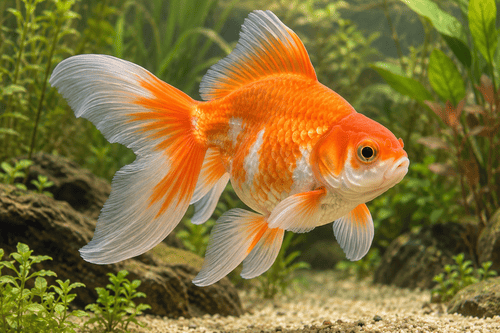
Goldfish
Also known as: Carassius auratus, Fancy goldfish, Common goldfish
Not a bowl fish, not a starter pet, and capable of outliving your dog.
- Peaceful
- Social
- Curious
- Food-motivated
- Interactive
The goldfish is the most misunderstood pet in the world. Domesticated from the Prussian carp over a thousand years ago in China, goldfish are large, long-lived, cold-water fish that produce a great deal of waste and need substantial filtered tanks. Given what they actually require, they are hardy, interactive and genuinely rewarding — and they routinely live past twenty years.
At a glance
- Origin
- China
- Size
- Medium
- Weight
- 0–1 lb (0.1–0.5 kg)
- Lifespan
- 10–25 years
- Coat
- Scales — metallic, nacreous or matt
- Colours
- Orange, Red, White, Black, Calico, Blue, Chocolate
- Average cost
- $20–$45 / month
Breed ratings
Rated 1–5 on the same scale as every other entry, so scores are comparable between breeds. Amber stars mark things that cost you effort rather than things that benefit you.
Temperament
Goldfish are more responsive than their reputation suggests — they recognise the person who feeds them, learn feeding routines and can be trained to swim through hoops. They are social and do better in groups than alone.
Care & upkeep
Exercise
Swimming space is the requirement. Common goldfish reach 25–30 cm and need a pond or a very large tank; fancy varieties stay smaller but still need substantial volume.
Grooming
Not applicable — but tank maintenance is the equivalent commitment. Weekly 25–30% water changes with dechlorinated water, and monthly filter media rinsing in tank water.
Training
Genuinely trainable. Goldfish learn to associate people with food, follow a finger along the glass and can be taught simple target behaviours with patience.
Feeding & diet
- Typical diet
- Omnivorous — sinking pellets plus vegetables
- Daily amount
- What they consume in 2 minutes
- Meals per day
- 1–2 times daily
Fancy varieties with rounded bodies are prone to swim bladder problems from gulping air at the surface. Use sinking pellets rather than floating flakes, and pre-soak dry food. Blanched vegetables help digestion.
Foods to avoid
- Overfeeding — the most common cause of death
- Floating flakes for fancy varieties
- Bread
- Tropical temperatures above 24°C
- Bowls and unfiltered tanks
Who this breed suits
A good match for
- Families with children
- Owners wanting a long-lived aquarium fish
- Ponds in temperate climates
- People willing to maintain a large tank
Probably not for
- Bowls or tanks under 75 litres
- Tropical community tanks
- Owners wanting a low-maintenance decoration
- Anyone unwilling to do weekly water changes
Common health problems
This section describes conditions the breed is known to be predisposed to, so you know what to ask about. It is not veterinary advice and is not a diagnosis — always speak to a vet about your own animal.
- Swim bladder disorderCommon in round-bodied fancy varieties. Often caused by gulping air with floating food — switch to pre-soaked sinking pellets.
- Ich (white spot)A parasite appearing as grains of salt on the fins and body. Treatable if caught early.
- Fin rotRagged, receding fins caused by poor water quality. Fix the water before reaching for medication.
- DropsyPinecone-like raised scales indicating organ failure; usually a late-stage sign with a poor prognosis.
- Ammonia poisoningThe leading killer of goldfish in small tanks. Red streaks in the fins and gasping at the surface are warning signs.
Almost every goldfish health problem traces back to water quality and tank size. A goldfish in a properly cycled, adequately sized, filtered tank is a remarkably hardy animal — the fragility is a symptom of the housing, not the species.
Interesting facts
- Domesticated in China over a thousand years ago from the Prussian carp.
- The oldest recorded goldfish, named Tish, lived to 43.
- Their memory span is measured in months, not the mythical three seconds — they are readily trainable.
Diet & Feeding
Goldfish are omnivores and enthusiastic beggars — overfeeding is the single most common cause of death, both directly and through the water quality collapse it triggers. Feed only what they finish in two minutes, once or twice a day, and remove anything left. Use sinking pellets rather than floating flakes, especially for round-bodied fancy varieties: gulping air at the surface is a leading cause of swim bladder problems. Pre-soak dry food and supplement with blanched peas, courgette or spinach.
Tank & Water Requirements
The two myths that kill goldfish are the bowl and the tropical tank. Goldfish are cold-water fish — ideal range 18–22°C, and they suffer above 24°C — so they do not belong in a heated community tank. They are also large and heavily waste-producing. A realistic minimum is 75 litres for the first fancy goldfish plus 40 litres per additional fish; common and comet goldfish reach 25–30 cm and genuinely need a pond or a very large tank. Filtration must be strong, and the tank fully cycled before any fish goes in.
Tank Maintenance
Test weekly with a liquid test kit, not strips: ammonia and nitrite at 0 ppm, nitrate under 40 ppm, pH 7.0–8.4. Ammonia and nitrite are toxic at any detectable level and damage gills permanently. Do a 25–30% water change weekly with dechlorinated water matched roughly to tank temperature. Rinse filter media in old tank water, never under the tap — chlorine kills the beneficial bacteria colony — and never replace all media at once.
Health & Vet Care
Nearly every goldfish illness traces back to water quality or inadequate tank size. Swim bladder disorder (round-bodied varieties gulping air), ich, fin rot, dropsy and ammonia poisoning are the common ones, and the first response to most should be testing and correcting the water rather than reaching for medication. Red streaks in the fins or gasping at the surface point straight at ammonia. Kept properly, goldfish are genuinely hardy — the fragility they are famous for is a symptom of the housing they are usually sold into.
Living with Goldfish
They are far more engaging than their reputation allows. Goldfish recognise the person who feeds them, learn routines, follow a finger along the glass and can be trained to swim through hoops — the three-second memory is a myth, with recall measured in months. They are social and do better in small groups. The honest headline is longevity: 10–25 years is normal, and the record holder reached 43. A goldfish is a decades-long commitment, not a prize to be won at a fair.