
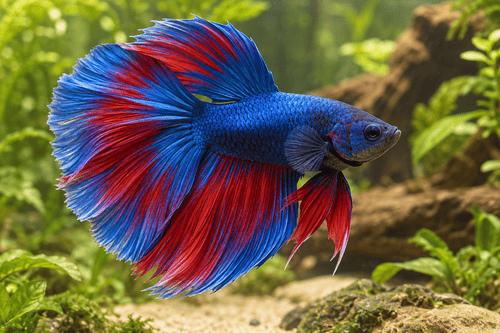
Betta Fish (Siamese Fighting Fish)
Jewel-bright and surprisingly intelligent — the fish that watches you back.
The betta fish is one of the world's most popular aquarium fish, and one of the most mistreated. Often sold in tiny cups and kept in unfiltered bowls, bettas are capable of far more when housed correctly. With a proper setup, a betta will display rich colouration, recognise its owner, respond to stimuli and live 3–5 years. They are genuinely rewarding fish — if you are willing to meet their real needs.
At a glance
- Origin
- Southeast Asia (Thailand, Cambodia, Vietnam)
- Size
- Small
- Weight
- 0.1–0.2 oz (2–5 g)
- Lifespan
- 3–7 years
- Coat
- Fins/scales
- Colours
- Almost any colour — red, blue, purple, green, orange, white, black and multicolour, many fin types (Halfmoon, Crowntail, Delta, Plakat)
Breed ratings
Rated 1–5 on the same scale as every other entry, so scores are comparable between breeds. Amber stars mark things that cost you effort rather than things that benefit you.
Diet & Feeding
Bettas are carnivores — they need high-protein, meat-based food. Feed high-quality betta-specific pellets (look for fish or shrimp as the first ingredient, not wheat or corn) as the staple diet. Supplement 2–3 times a week with frozen or live foods: bloodworms, daphnia, brine shrimp. Feed once or twice daily — only what your betta consumes in 2–3 minutes. Remove uneaten food immediately. Bettas are prone to constipation from overfeeding — fast one day a week. Avoid flake food as the sole diet.
Tank & Water Requirements
The absolute minimum tank size is 19 litres (5 gallons) — the bowls and 1-gallon tanks commonly sold with bettas are cruel and cause early death. Bettas need: a heater maintaining 24–28°C (they are tropical fish and will die slowly in cold water), a gentle filter (strong flow stresses bettas — use a baffle or sponge filter), live or silk plants (sharp plastic damages fins), and a lid (bettas jump). Weekly partial water changes of 25–30% with dechlorinated water are essential. Cycle your tank before adding a betta.
Tank Maintenance
Test water parameters weekly with a liquid test kit (not strips): ammonia and nitrite should always be 0 ppm; nitrate below 20 ppm; pH 6.5–7.5; temperature 24–28°C. Ammonia and nitrite are toxic — even small amounts damage gill tissue and shorten lifespan significantly. Partial water changes remove nitrate. Clean the filter media in tank water (not tap water) monthly — never replace all filter media at once as this destroys beneficial bacteria.
Health & Vet Care
Bettas are susceptible to: velvet (tiny gold dust-like spots — highly contagious), ich/white spot, fin rot (from poor water quality — ragged, receding fins), swim bladder disease (floating at the surface or sinking — often dietary), and dropsy (pinecone-like scale lifting — often fatal). Most conditions are caused or worsened by poor water quality. Improve water first, then treat if necessary. Find an aquatic vet or knowledgeable aquarium store for diagnosis.
Living with a Betta
Male bettas must be housed alone — they will attack any other male betta on sight (hence 'Siamese Fighting Fish'). They can sometimes coexist with peaceful bottom-dwellers (corydoras, snails) in a large enough tank, but individual personality varies. Female bettas can be kept in carefully managed sororities (groups of 5+) in larger tanks. Bettas are surprisingly interactive — many recognise their owner, follow a finger along the glass and can be trained to swim through hoops. They deserve far better than the setups most are sold into.