
Puppy Training Log: What to Record After Every Training Session
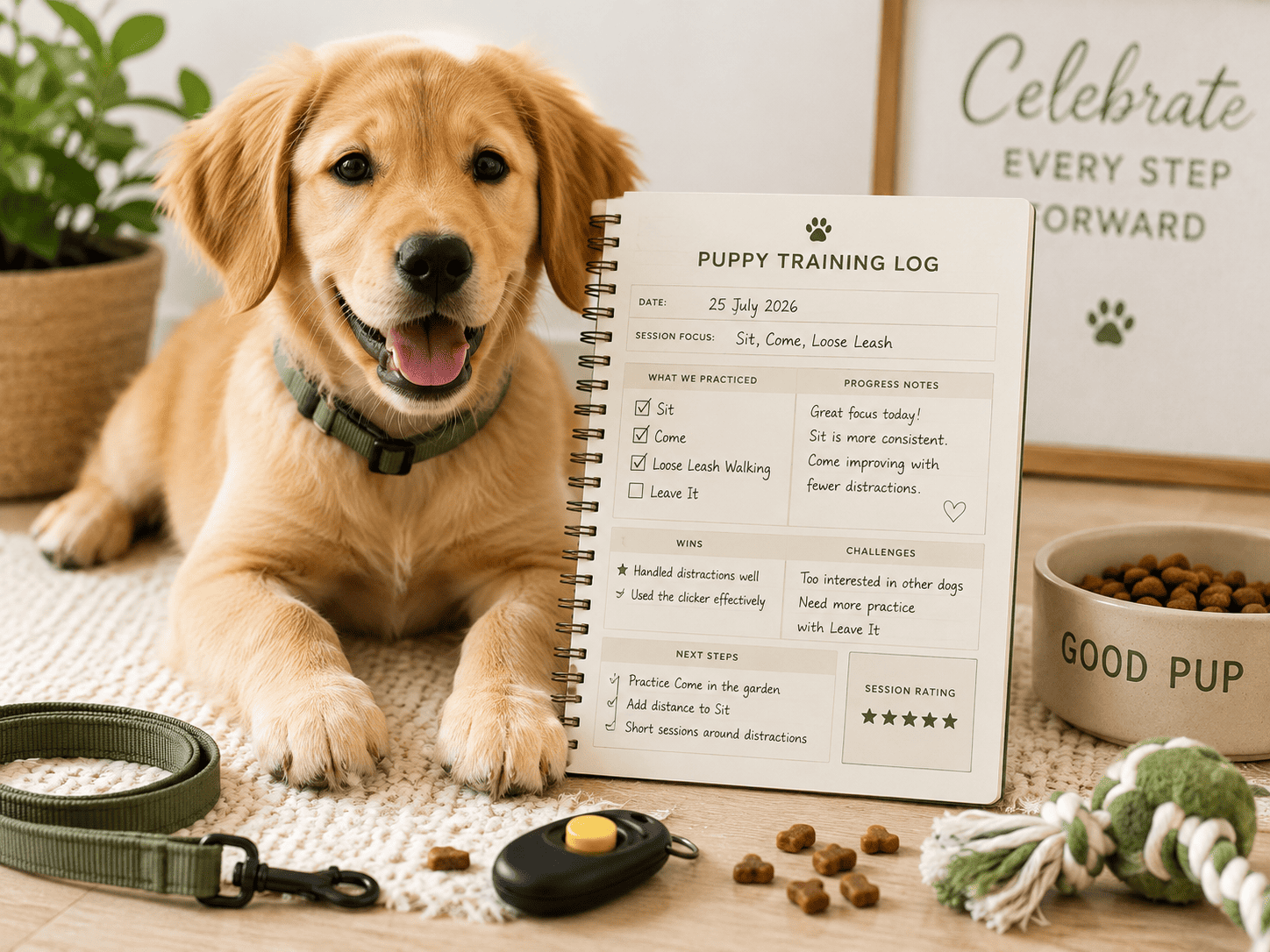
Record skills, cues, settings, rewards and responses in a short session log. Compare filled entries, choose one next change and prepare questions for a trainer.
In short
Record skills, cues, settings, rewards and responses in a short session log. Compare filled entries, choose one next change and prepare questions for a trainer.
A puppy training log should help you choose the next manageable exercise. Write the skill, setting, cue, reward and response, then name one adjustment you can make next time.
Keep the entry short enough to complete after ordinary practice. A few useful details are better than a daily score that changes meaning with whoever holds the pen.
Puppy training log: the fields worth recording
| Field | Write this | Example |
|---|---|---|
| Date and handler | When practice happened and who was involved | Tuesday; Elena |
| Skill | The action you were teaching | Turn towards me when called |
| Cue | The word or gesture used | “Here” |
| Setting | Place, distance and relevant distractions | Quiet kitchen; puppy nearby |
| Reward | Food from the daily allowance, toy or another reward the puppy wanted | Reserved food reward |
| Response | What the puppy did, including any help | Turned after one cue; handler did not move away |
| Next attempt | One change or an easier repeat | Repeat with another household member quietly present |
For handling practice, record whether the puppy participated comfortably. If they move away from a brush or paw touch, stop pushing that step and choose an easier introduction.
A blank entry to copy
“Date/handler: [entry]. Skill/cue: [entry]. Setting and distraction: [entry]. Reward: [entry]. Response and help used: [entry]. Comfort: [observation]. Next practice: [one adjustment].”
Keep a small cue list if several people train the puppy. Agree what each cue asks for before comparing results.
Write the entry in four steps
- Name the job: choose one observable action rather than “be better behaved”.
- Describe the setup: record where practice happened and what made it easier or harder.
- Record the response: say what happened after the cue, including a lure or repeated help.
- Choose the next change: repeat, reduce a distraction or add one manageable difficulty.
Use reward-based practice and end while the puppy can still engage comfortably. A training record is not a reason to keep asking when the animal is tired or overwhelmed.
You can count responses if the definition stays clear. “Returned after one cue in four of five attempts” is an illustrative count; it only becomes useful with the setting and help recorded beside it.
Compare filled entries instead of a vague success score
The following fictional entries show why the environment belongs in the log. They are examples of recording, not a predicted pace of learning.
| Session | Setup | Response | Next decision |
|---|---|---|---|
| Monday: recall | Quiet kitchen; one familiar handler nearby | Returned after one cue in the attempts recorded | Repeat in the garden with safe management |
| Tuesday: recall | Garden; neighbour's dog barking beyond the fence | Looked towards the fence and did not return on the cue | Choose a quieter moment and an easier distance |
| Wednesday: recall | Garden without barking; same handler closer | Returned when called and accepted reward | Repeat this setup before changing another feature |
The Tuesday entry does not establish that the puppy forgot recall. It identifies a changed condition you can manage, without requiring a risky test beside a road or an unsecured dog.
Keep help visible
If you used food to guide a movement, write that. If the puppy followed a person rather than responding to the cue alone, record it. Both can be useful learning steps, but they tell you something different from an independent response.
Choose what to do when practice becomes harder
| Log pattern | Next practice choice | Management to keep |
|---|---|---|
| Works indoors, difficult outdoors | Use a quieter outdoor place and easier distance | Lead, secure area or other safe control |
| Works with one handler | Let another person use the same cue in the familiar setup | Keep the reward and task clear |
| Puppy loses interest later in the session | Finish earlier and choose a calmer learning opportunity | Meet rest and care needs |
| Handling leads to withdrawal | Reduce the handling step and seek help if needed | No forced restraint to finish a checklist |
| A sudden change affects movement or behaviour | Ask the vet about a possible health concern | Avoid repeated tests that cause discomfort |
Change one feature where possible: location, handler, distraction or distance. That makes the next entry easier to interpret than moving straight from kitchen practice to the busiest place you can find.
Worked example: Moss's mat entry needs more detail
Elena records “mat good” for Moss. At the weekend, another household member asks for the mat behaviour while carrying shopping through the doorway, and Moss follows the bags instead.
Elena rewrites the entry: “Walked onto the kitchen mat when invited; no bags or visitors present; rewarded on the mat.” The next practice adds a quiet person nearby while the entrance remains calm.
Next-session note: “Same mat and cue. One familiar person stands away from the doorway. Keep the ordinary entrance barrier in use; this practice does not replace door safety.”
That entry gives the next handler an exercise they can reproduce. It also keeps the doorway arrangement in place while learning is incomplete.
Use the log at a class or trainer appointment
Bring a few representative entries and the question they raise. Include the professional's homework, the setting used at home and anything that made the task difficult.
- Which skill are you trying to improve?
- Where can the puppy do it comfortably?
- What changed in the difficult attempts?
- What help and reward were used?
- What safe management is in place between practice sessions?
- What does the trainer recommend practising next?
For persistent fear, unsafe behaviour or distress, seek a vet's assessment and qualified behaviour support. Do not create a frightening encounter to obtain a dramatic recording for the appointment.
For planning the wider set of skills, use the puppy training checklist for the first year. The session log should answer what you tried and what to change next.
Keep logging light and fix common mistakes
Choose one paper page or shared note that the people training the puppy can reach. Write after practice while the useful details are fresh, and keep the current homework visible.
- Only recording easy successes: include manageable difficulties so the next exercise has a purpose.
- “Good” or “bad” without a definition: describe the response.
- No note of a lure or help: state how the action happened.
- Increasing several difficulties together: choose one manageable change.
- Judging by another puppy's progress: compare your own repeatable settings.
Frequently Asked Questions
Should I count every repetition?
Count when it helps answer a specific question and you can keep the conditions clear. A short description may be enough for ordinary practice or comfortable handling.
How do I record a failed attempt?
Write the cue, setting and response, then choose an easier setup. Avoid labels about the puppy's attitude; describe the feature you can change.
Can several people use the same log?
Yes. Agree the cue and action, identify the handler and use the same fields. Note differences in location or help so entries remain comparable.
When should I practise in a harder setting?
Choose a manageable change when the puppy responds comfortably in the current one. Keep safety measures in place, and return to an easier setup if the new condition overwhelms them.
Resources & Links
These sources help keep logged practice positive, consistent and comfortable for the puppy.
- Blue Cross: Dog and Puppy Training — Support positive practice when choosing exercises from your session entries.
- PDSA: Basic Training for Puppies — Use consistent cues and manageable reward-based tasks before comparing responses.
- PDSA: Canine Body Language — Record comfortable participation and notice when a practice task adds pressure.
Keep puppy practice notes together with the Puppy Training Tracker. Get the Puppy Training Tracker →
Printable and fillable PDF templates for pet owners — feeding schedules, health records, training trackers and more.