Puppy Potty Training Log: How to Spot Your Puppy's Real Pattern
A schedule tells you what should happen. A potty training log shows you what actually happens — and the pattern that makes accidents predictable and avoidable. Here is what to record.
In short
A schedule tells you what should happen. A potty training log shows you what actually happens — and the pattern that makes accidents predictable and avoidable. Here is what to record.
Most potty training advice gives you a schedule. But a schedule tells you what should happen; a puppy potty training log shows you what actually happens. And once you can see your puppy's real pattern on paper, accidents stop being random events and start being predictable — which means preventable.
Why a Log Beats a Schedule Alone
Every puppy is slightly different. One goes 15 minutes after eating; another goes 25. One can hold on for four hours overnight at 10 weeks; another cannot. A log reveals your individual puppy's timings within three to five days — far faster than trial and error, and far more reliable than trying to hold it all in your head during the chaos of a new puppy.
What to Record in the Log
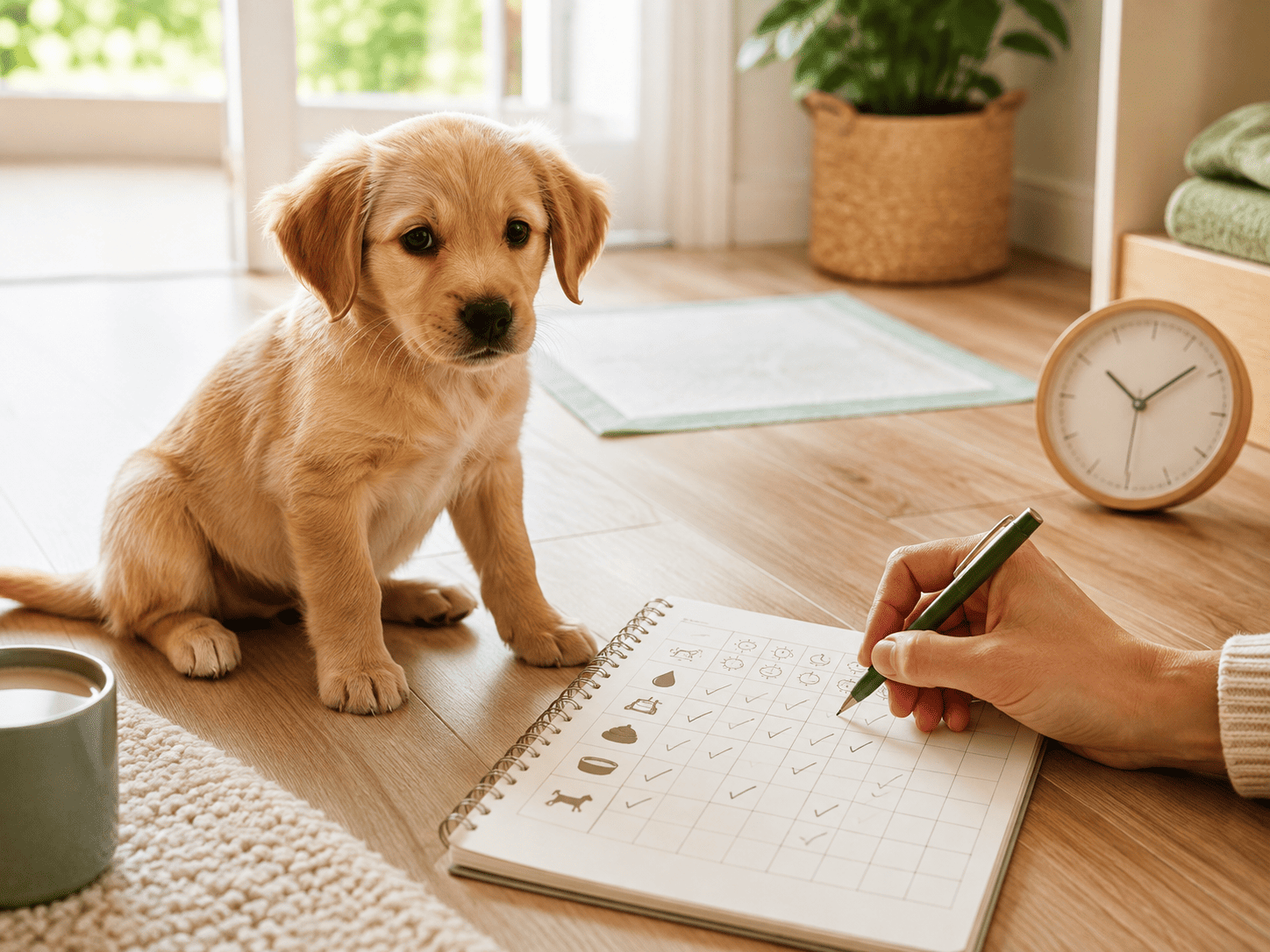
- Time out — every trip outside, successful or not.
- Result — wee, poo, both, or nothing (a "nothing" trip is still useful data).
- Meal times — logged alongside trips, so the post-meal window becomes visible.
- Sleep — puppies almost always need out on waking.
- Accidents — time and location indoors.
The Patterns You Will Start to See
- Post-meal window: exactly how long after eating your puppy needs to go.
- Morning rush: how quickly after waking they need out.
- Afternoon slump: many puppies have more accidents mid-afternoon when overtired.
- Accident clusters: the same time or same spot indoors reveals a gap in your routine.
Puppy Training Tracker
The Puppy Training Tracker includes a printable and fillable potty log alongside training and progress sheets — so you can see feeding, sleep and toileting patterns in one place and get ahead of accidents.
Get the Puppy Training Tracker →Turning the Log Into Fewer Accidents
Once the pattern is visible, you act on it rather than reacting. If your data shows accidents at 2pm and meals at 1pm, you are simply not getting your puppy out quickly enough after lunch. Move the post-lunch trip earlier and the accidents disappear. This is the whole point of logging: it converts a vague struggle into a specific, fixable timing problem.
Log Tips That Make It Stick
- Keep the log by the back door where you will see it.
- Fill it in immediately after each trip, not at the end of the day.
- Note the weather — many puppies resist going out in rain, which creates indoor accidents.
Two ways to track progress
Focused on toilet and training? Choose the Puppy Training Tracker. Want the full first-weeks system with feeding, routine and potty logs together? Choose the New Puppy Starter Kit.
Get the Puppy Training Tracker →Frequently Asked Questions
How long until potty training works?
Most puppies show clear improvement within two to three weeks of consistent logging and routine. Reliable toileting usually comes between 12 and 16 weeks, though some take longer.
Should I log unsuccessful trips outside?
Yes. A "nothing" trip tells you the timing was too early or too late, which helps you refine the schedule.
What do I do about accidents in the log?
Clean with an enzyme cleaner and note the time and place. Clusters reveal exactly where your routine has a gap.
Printable and fillable PDF templates for pet owners — feeding schedules, health records, training trackers and more.