
Cat Carrier Training: How to End the Pre-Vet Battle
The carrier only appears before something unpleasant, so cats learn to avoid it. Here is how to change that association in a few weeks and make vet trips genuinely easier.
In short
The carrier only appears before something unpleasant, so cats learn to avoid it. Here is how to change that association in a few weeks and make vet trips genuinely easier.
Almost every cat owner has the same experience: the carrier comes out of the cupboard, the cat vanishes, and twenty minutes of chasing follows before an already stressful journey. The problem is not the carrier. It is that the carrier has only ever predicted something the cat dislikes.
Choose the Right Carrier
- Hard-sided, for safety in a vehicle and because most cats feel more secure enclosed
- Top-opening as well as front-opening — a cat who will not walk in can be lowered in, and a vet can examine them in the base
- A removable top, so a nervous cat can stay in the base during an examination
- Secure latches that you have tested
- Sized to stand, turn and lie down — no larger, or the cat slides around in the car
The Single Biggest Change: Leave It Out
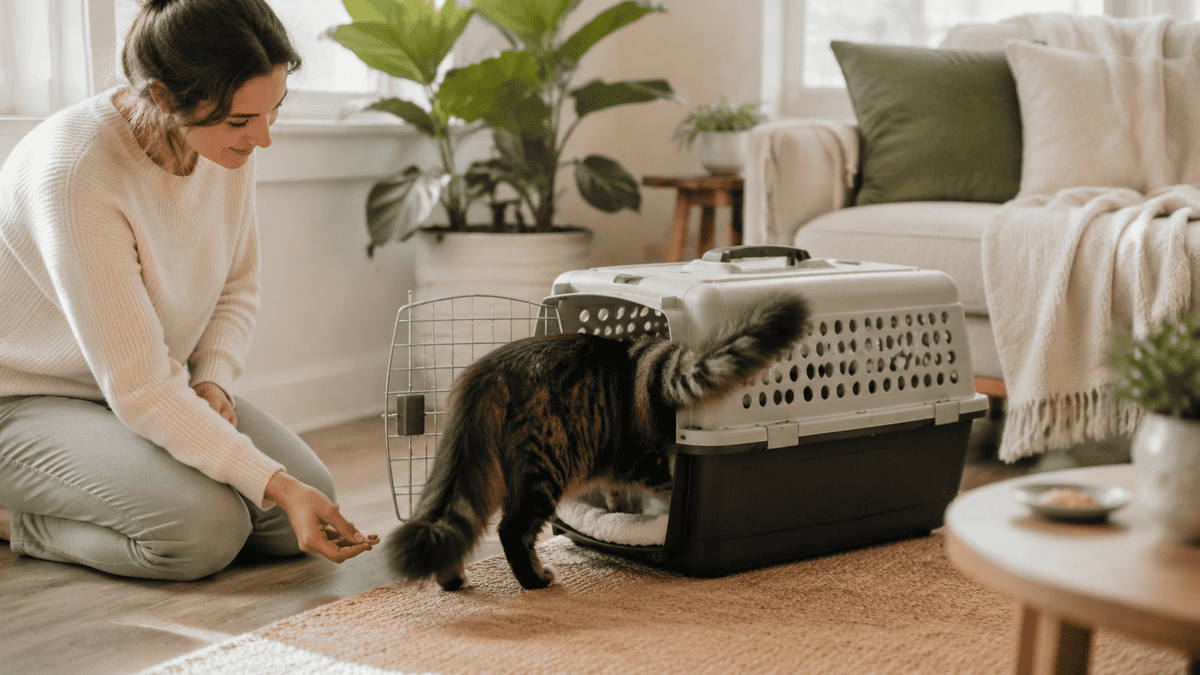
Stop storing the carrier in a cupboard. Leave it out permanently as a piece of furniture, in a quiet corner, with the door removed or fixed open and comfortable bedding inside. A carrier that is simply part of the room stops being a signal at all.
Building a Positive Association
- Week 1: place treats near and just inside the carrier. Do not interact — let the cat investigate alone.
- Week 2: feed meals inside with the door open. Add a familiar-smelling blanket.
- Week 3: close the door for a few seconds while the cat eats, then open it. Build to a minute.
- Week 4: lift the closed carrier briefly, set it down, open, treat. Then carry it a few steps.
- Week 5: a short trip to the car and back, engine on, without going anywhere.
Move at the cat's pace. Any stage that produces obvious stress means the previous stage needs longer.
Complete Cat Owner Binder
The Complete Cat Owner Binder includes carrier and travel notes alongside health records, feeding logs and sitter instructions — so anyone caring for your cat knows how to handle the carrier safely and what your cat needs.
Get the Complete Cat Owner Binder →On the Day of a Vet Visit
- Bring the cat into a small closed room well before you need the carrier
- Load from the top rather than pushing them in headfirst
- Cover the carrier with a light towel to reduce visual stress
- Secure it with a seatbelt in the footwell or on the seat, not loose in the boot
- Drive smoothly and keep the radio low
- In the waiting room, keep the carrier off the floor and away from dogs
Returning Home in a Multi-Cat House
A cat returning from the vet smells of the clinic, which can trigger aggression from housemates who no longer recognise them. Let the returning cat settle in a separate room for a few hours, and consider swapping bedding scent before reintroducing them.
If Your Cat Is Highly Stressed by Travel
Speak to your vet. Options include synthetic pheromone sprays used on the bedding in advance, or in some cases pre-visit medication. Many practices also offer cat-friendly appointment times or home visits for routine checks.
Two ways to make vet trips easier
Want carrier notes, feeding logs and health records together? Choose the Complete Cat Owner Binder. Want a focused medical record to bring to appointments? Choose the Pet Health Record Binder.
Get the Pet Health Record Binder →Frequently Asked Questions
How long does carrier training take?
Typically four to six weeks of short, low-pressure sessions. Cats with a history of bad carrier experiences may take longer.
Should I use a soft carrier?
Hard-sided is generally safer in a vehicle and more secure for a frightened cat. Soft carriers suit calm, well-travelled cats.
My cat panics no matter what I do. What else can I try?
Discuss pheromone products or pre-visit medication with your vet, and ask whether home visits are available for routine appointments.
Printable and fillable PDF templates for pet owners — feeding schedules, health records, training trackers and more.