
Dog and Cat Grooming for Beginners: What You Actually Need (and What You Don't)
Most grooming guides try to sell you everything. This one tells you the five tools that matter, how often to use them, and what to skip entirely if you're just getting started.
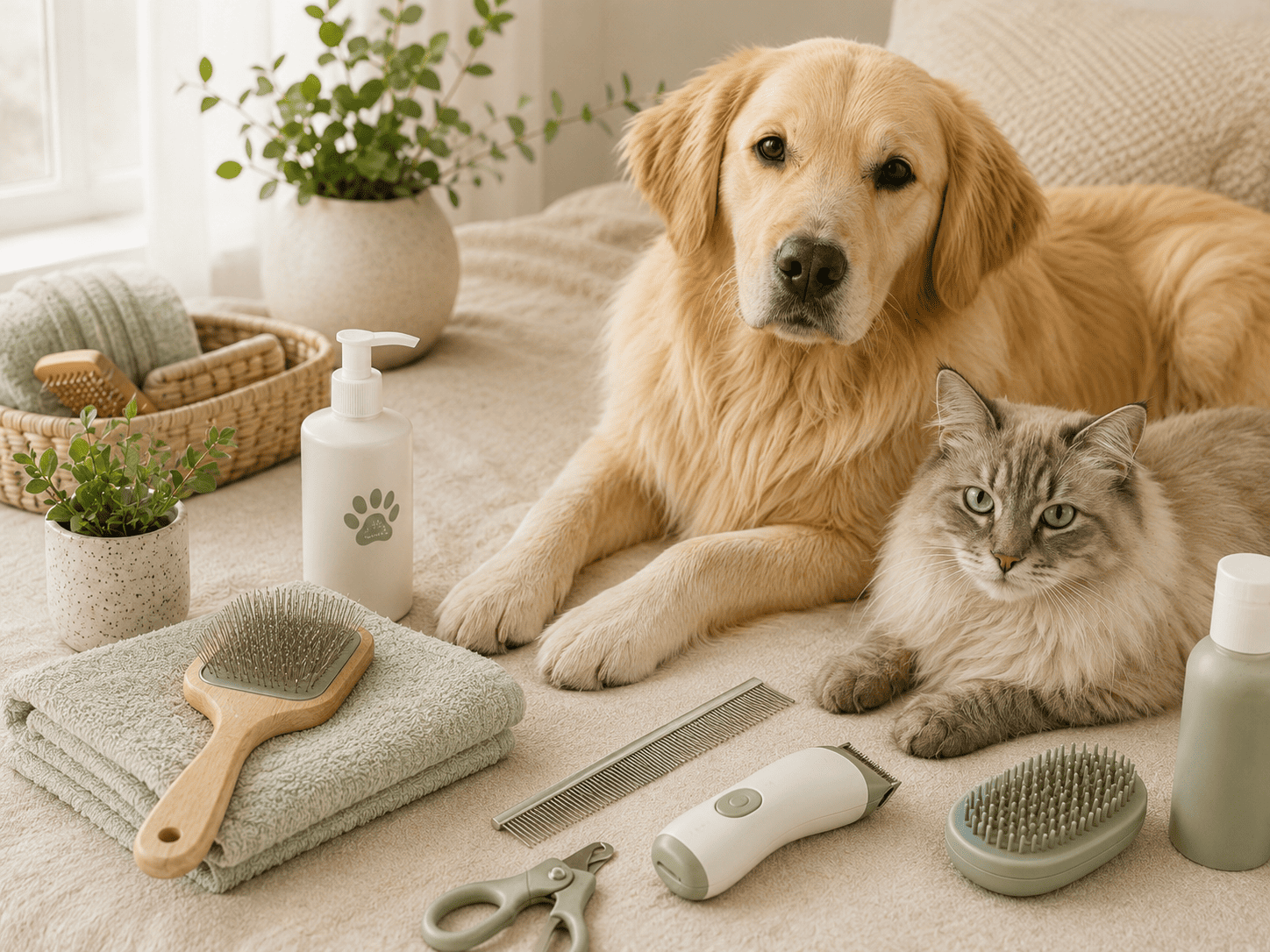
In short
Most grooming guides try to sell you everything. This one tells you the five tools that matter, how often to use them, and what to skip entirely if you're just getting started.
Grooming is one of the most overlooked parts of pet care — not because owners don't care, but because the sheer number of brushes, shampoos, and clippers on the market makes it feel more complicated than it is.
The truth: you need five tools, a consistent routine, and to know your pet's coat type. Everything else is optional.
Why Regular Grooming Matters
Grooming isn't just about appearance. Done regularly, it:
- Removes loose fur before it mats or becomes ingested during self-grooming
- Lets you spot skin problems, lumps, parasites, and injuries early
- Keeps ears clean and reduces the risk of infections
- Maintains nail length, which affects posture and joint health over time
- Builds trust and helps your pet tolerate handling at the vet
A dog that's never been regularly groomed is often a dog that panics at the vet and is difficult to examine. Regular handling from puppyhood makes a significant difference.
The Five Tools You Actually Need
1. A Brush or Comb Suited to Your Pet's Coat
This is the most important purchase. The wrong brush either doesn't reach the undercoat (leaving mats to form underneath) or is uncomfortable and puts the pet off brushing entirely.
- Short-coated dogs and cats (Beagle, Domestic Shorthair): rubber curry brush or grooming glove
- Medium-coated dogs (Spaniel, Border Collie): slicker brush + metal comb for finishing
- Long-coated dogs and cats (Golden Retriever, Maine Coon): wide-tooth comb + slicker brush; dematting comb for tangles
- Double-coated breeds (Husky, German Shepherd): undercoat rake or deshedding tool
Dog grooming brushes on Amazon — search by coat type for more accurate results.
2. Nail Clippers
Nails that are too long change the way a pet walks, putting stress on joints over time. For most pets, nails need trimming every 3–5 weeks.
- Guillotine clippers — easier to use but blade must be replaced regularly
- Scissor-style clippers — more control, better for thick nails
- Grinder — good for pets that dislike clippers; takes longer but removes the risk of cutting the quick
Always have styptic powder nearby in case you accidentally cut the quick.
3. Pet Shampoo
Human shampoo disrupts a pet's skin pH and shouldn't be used regularly. Use a pet-specific shampoo appropriate to their coat and skin type.
- General maintenance: mild, fragrance-free formulas
- Sensitive or dry skin: oatmeal-based
- Flea prevention: pyrethrin-based (not suitable for cats — check the label)
- Whitening: for white or light-coloured coats
How often to bathe:
- Dogs: every 4–8 weeks, depending on breed and lifestyle
- Cats: most healthy cats don't need bathing unless they've gotten into something
4. Ear Cleaner
Floppy-eared dogs (Cocker Spaniels, Basset Hounds) and cats with large ear canals are prone to wax buildup and infections. Clean ears monthly or after swimming.
Use a vet-approved ear cleaning solution — never cotton buds inside the ear canal. Apply solution, massage the base of the ear, let the pet shake its head, then wipe away debris with a cotton pad.
5. Grooming Wipes
For quick clean-ups between baths — paws after muddy walks, faces after meals, under-eye staining in light-coloured pets. Keep a pack near the door.
A Simple Monthly Grooming Schedule
| Task | Dog | Cat |
|---|---|---|
| Brushing | 2–3x per week (daily for long coats) | 2–3x per week |
| Nail trim | Every 3–5 weeks | Every 3–5 weeks |
| Bath | Every 4–8 weeks | Rarely needed |
| Ear check | Weekly | Weekly |
| Teeth check | Weekly | Weekly |
Recording Grooming in Your Pet's Care System
If you have multiple pets or a pet with recurring skin or ear issues, keeping brief notes helps. A quick log of when you last bathed, trimmed nails, or treated ears gives you (and your vet) a clear picture — especially if a problem develops and timing matters.
Printable and fillable PDF templates for pet owners — feeding schedules, health records, training trackers and more.