
How to Organise Vet Records for Multiple Pets
Create named-pet files, separate clinical records from shared administration and label loose pages. Includes a two-cat example and retrieval checks.
In short
Create named-pet files, separate clinical records from shared administration and label loose pages. Includes a two-cat example and retrieval checks.
Vet records for multiple pets need an identity check at every loose page, attachment and prescription. Two folders labelled “dog” and “cat” will not help when you have two cats with similar names and medicine packaging.
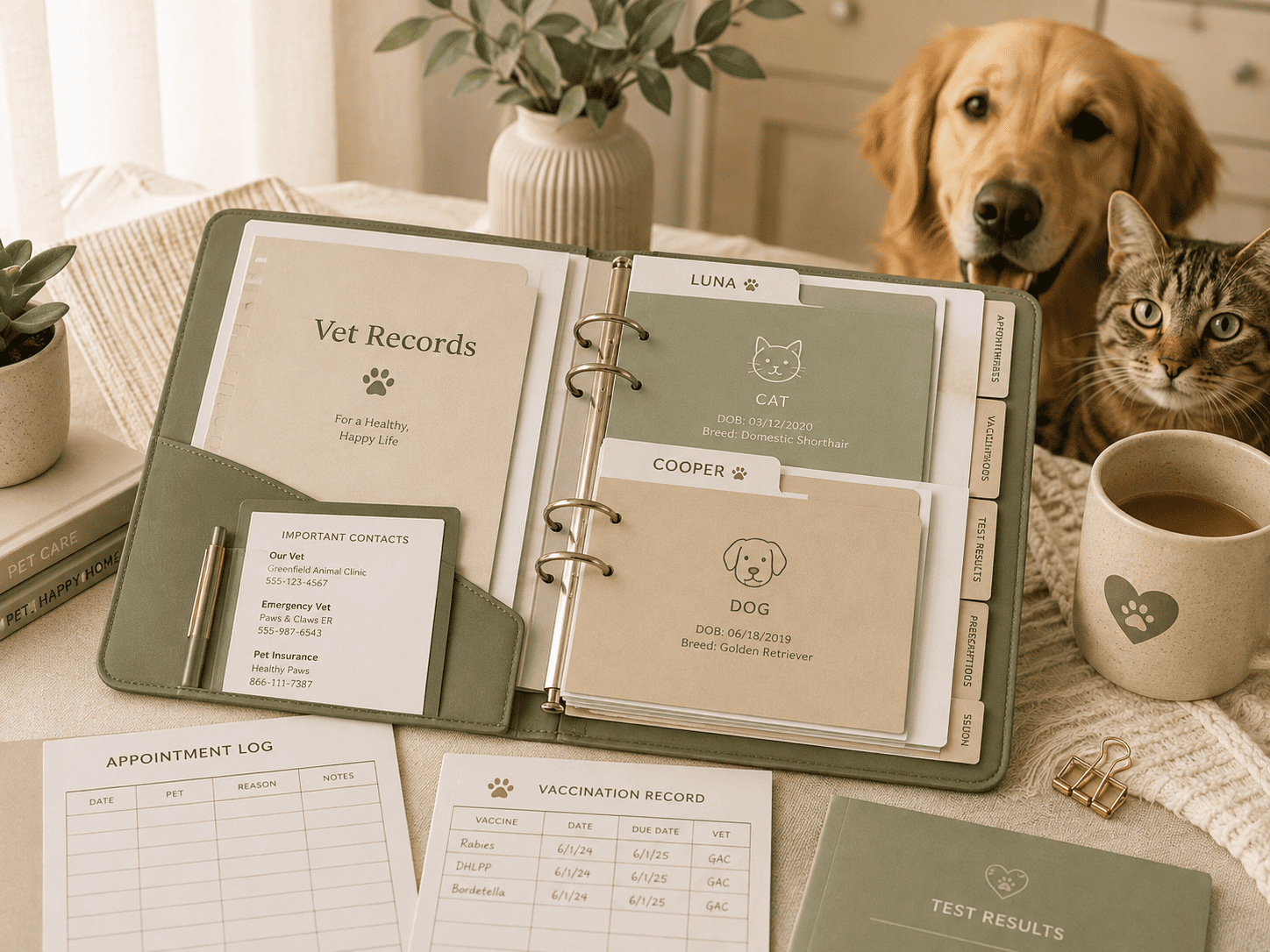
Give each animal a complete named record, then put shared contact and transport information in one household index. A helper should be able to find the correct history without knowing your colour scheme.
Set up vet records for multiple pets by identity
- Make a household pet list. Use each pet’s name, species, identifying description and microchip number if present.
- Create one section or folder per animal. Put the name on the front and on any owner-created loose page.
- Match incoming documents. Check the patient name and other identifying details before filing.
- Separate current instructions from older records. Keep dated evidence, but stop superseded directions appearing as today’s task.
- Build a short household index. Show where each animal’s file, clinic and current care page can be found.
- Test a real request. Ask someone else to retrieve a named pet’s vaccination evidence or current clinic instruction.
Use the clinic’s patient identifier when one is available. If a document seems to belong to the wrong animal, ask the practice to check it. Keep the original record intact while the correction is resolved.
Keep these documents in each animal’s section
- Profile: name, species, breed or description, date of birth or recorded estimate, and identifying photograph.
- Identification: microchip information and registry contact details, with confirmation of updates.
- Vaccination evidence: certificates and clinic records with the dates and products recorded.
- Visits: summaries, diagnoses recorded by the vet, test reports and referrals.
- Current prescribed care: written directions and their source, plus completion entries for tasks that need logging.
- Prevention history: products and administration recorded for that individual animal.
- Allergies and reactions: the vet’s recorded information, with a separate place for concerns awaiting discussion.
- Weight: dated measurements and clinic context, using consistent units.
- Insurance: policy, claim and invoice references associated with that pet.
- Future actions: appointments, pending results and clinic-specified follow-up.
Some animals use more than one practice. Include the referring and receiving clinics, the reason for transfer and where reports are held. Your own summary helps communication, but a new practice may also need records sent directly by the previous one.
Decide what can be shared and what must stay individual
| Information | Household copy | Individual record |
|---|---|---|
| Emergency clinic | Phone, route and opening arrangements | Any pet-specific transport or handling needs |
| Appointment calendar | All bookings, each with a named patient | The documents required for that visit |
| Shared invoice | Original payment reference | The relevant named-patient services or a cross-reference |
| Medicines | Where original labelled containers are stored securely | The prescription and completion log for that animal |
| Weight and results | A reminder that new reports need filing | The measurements, units and reports themselves |
| Sitter access | Agreed private household arrangements | The animal’s current care and contact needs |
Do not create a single blended medication chart with unnamed rows. Similar-looking containers must stay with their original labels, and carers need to match the named animal before following directions. Colour is an extra cue, not the identity check.
For a mixed household, keep species visible on the front page. A product or instruction for one animal must never be assumed transferable to another.
Name files so a detached copy still makes sense
Use a digital filename containing pet name, document type and date, such as “Milo-cat-vaccination-2026-09-14”. If pets share a name, add another stable identifier. Keep the document’s original date distinct from the day you scanned it.
Pet: [name and identifying detail]. Document: [type]. Issued by: [clinic]. Document date: [date]. Filed on: [date]. Related appointment or claim: [reference]. Current action, if any: [clinic instruction and source].
For paper records, use named tabs and a clear front index. Avoid loose certificates in a shared pocket; place each in the relevant section or label its sleeve. Scan readable copies without discarding originals that may be required later.
- Check every scanned page belongs to the same patient before combining a PDF.
- Open attachments before sending them; a familiar filename can hide an older version.
- Keep backup access private and separate from public identification pages.
- Share the relevant pet’s information rather than another animal’s entire archive.
- Use the receiving practice’s preferred transfer route.
Work through a two-cat medication mix-up risk
In an illustrative household, Ada has cats Milo and Mina. Both have recently visited the same clinic, and their dispensed containers look similar. Ada keeps each original labelled container in a named storage area and puts the corresponding written directions in that cat’s section.
Ada’s helper asks which cat the new discharge page belongs to because the printout’s patient name is unclear. Ada contacts the clinic before the helper uses it. She does not decide from the container colour or the order the cats were seen.
| Incoming item | Identity check | Destination |
|---|---|---|
| Milo’s visit summary | Patient name and clinic identity details | Milo’s dated visit history |
| Mina’s written prescription | Named patient and directions match the original label | Mina’s current care page and source document |
| Combined invoice | Services are assigned to the correct patients | Shared finance file, with references in both pet sections |
| Unclear discharge page | Clinic confirms the intended patient | Correct pet file after clarification |
The fix is a readable identity trail from animal to label to instruction. Extra folders would not solve an unidentified page.
Keep the household index short enough to use
Use one line per pet: file location, current clinic, next action and the person responsible. When a new instruction arrives, replace the active household copy and tell carers what changed. File the superseded document in that pet’s dated history.
At a retrieval check, ask for a specific document and watch where the helper pauses. Improve the label or index at that point. If everything depends on your explanation, simplify the route before adding more paperwork.
For deciding the contents of one health file, see what to include in a pet health record. Keep each animal’s section complete even when household administration is shared.
Frequently Asked Questions
Can all my pets use one physical binder?
Yes, if every animal has a clearly named section and loose pages remain identifiable. A household index should direct carers to the correct section immediately.
Is colour coding enough for medicine records?
No. Use the pet’s name and identifying details, keep original labelled containers, and match the instructions to that animal. Colour can assist scanning but cannot replace those checks.
Where should I file an invoice for two pets?
Keep one payment record and cross-reference the named services in each pet’s section. This preserves the clinical connection without counting the invoice twice.
What if the practice sends a report with the wrong pet name?
Contact the practice for verification and correction. Do not relabel it from memory and present it as a confirmed clinical record.
Resources & Links
These sources support reliable identification and prescribed-care information in separate named-pet records.
- AVMA: Resources for Pet Owners — Find reliable background information to accompany each animal’s individual clinical records.
- Cornell: Medication and Care — Prepare questions about prescribed tasks while keeping each cat’s directions distinct.
- AVMA: Microchipping FAQs — Check the registered identification information used to distinguish named-pet files.
Keep individual health information in the Pet Health Record Binder and wider cat care in the Complete Cat Owner Binder. Get the Pet Health Record Binder → Get the Complete Cat Owner Binder →
Printable and fillable PDF templates for pet owners — feeding schedules, health records, training trackers and more.