
What to Include in a Pet Health Record (And Why Each Section Matters)
A pet health record template keeps vaccinations, vet visits, medications, allergies and weight in one place — so you are never searching for information at the vet. Here is what to include.
In short
A pet health record template keeps vaccinations, vet visits, medications, allergies and weight in one place — so you are never searching for information at the vet. Here is what to include.
A well-kept pet health record turns a drawer full of vet receipts and vaccination cards into a single, organised system. The value shows up at the worst moments: an out-of-hours emergency, a switch to a new vet, or a boarding cattery that needs proof of vaccination. Here is exactly what a complete health record contains and why each section earns its place.
The Sections a Health Record Should Contain
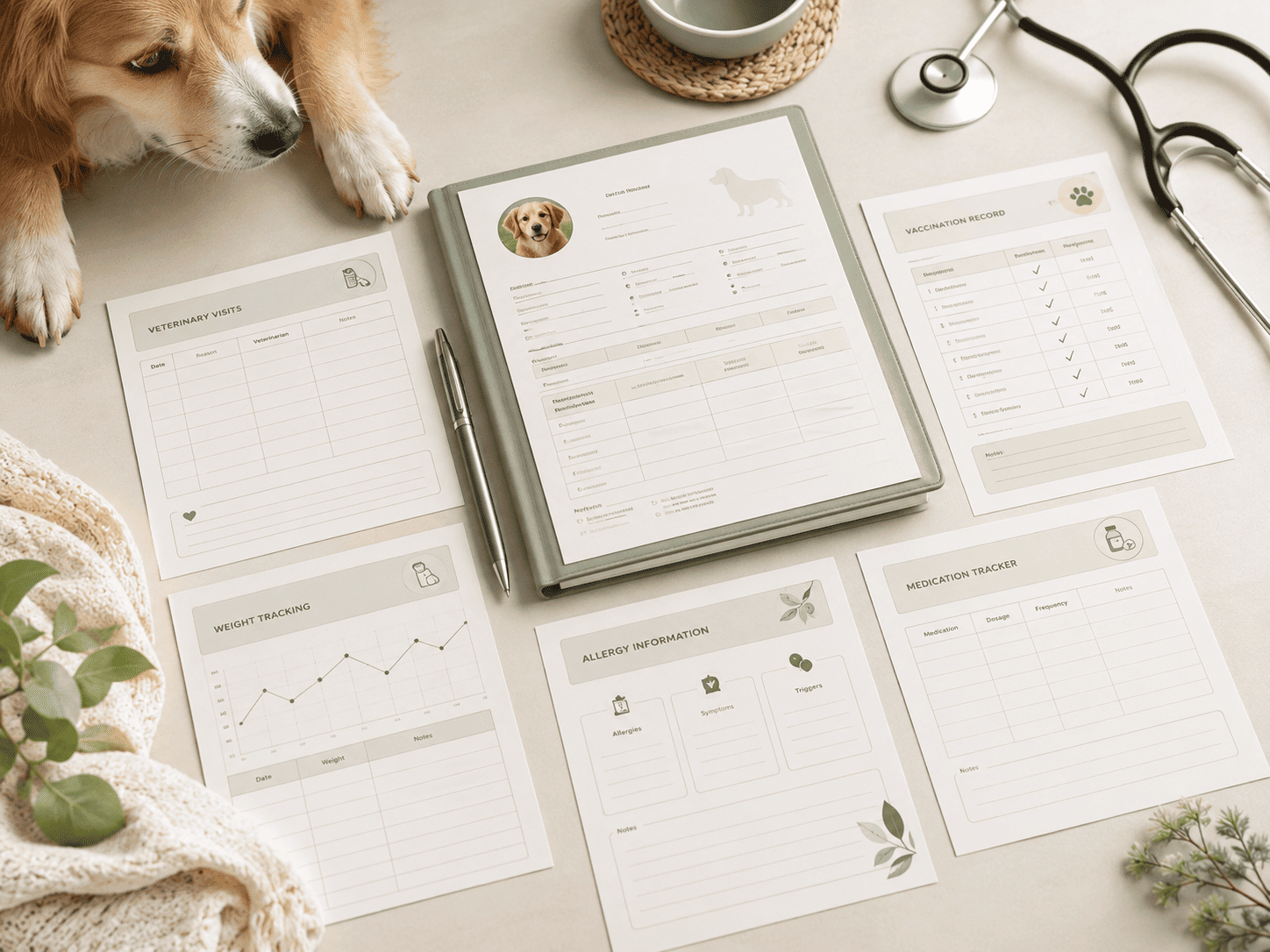
- Pet profile — name, species, breed, date of birth, microchip number, insurance details, vet contact.
- Vaccination log — vaccine, date given, batch number, next booster due, administering vet.
- Vet visit log — date, reason, findings, treatment, follow-up, cost.
- Medication log — name, dose, frequency, start and end dates, prescribing vet.
- Parasite prevention — flea, tick and worm product, date given, next due.
- Allergies and sensitivities — food, drug and environmental reactions.
- Weight tracker — weight at each visit with body condition notes.
- Emergency sheet — quick-reference contacts and critical medical notes.
Why Each Section Earns Its Place
The vaccination log alone prevents expensive repeat vaccination courses when a vet cannot find the record of a previous booster. The weight tracker matters because unexplained weight change is one of the earliest signs of illness — often visible in your records weeks before the pet looks unwell. The medication log helps a vet avoid dangerous interactions when starting a new treatment.
Pet Health Record Binder
The Pet Health Record Binder puts every section above into one printable and fillable system — vaccination log, vet visit history, medications, parasite tracker, weight chart, allergy notes and an emergency card. Fill it in digitally or by hand.
Get the Pet Health Record Binder →Digital, Printed, or Both?
Digital records are searchable and easy to back up but need a working device. Printed records can be handed directly to any vet, sitter or groomer and work without a signal. For critical information, keep both — a fillable PDF as the working copy and a printed copy in your pet's travel bag.
How Often to Update It
- After every vet visit
- When a medication starts or stops
- After each parasite treatment and vaccination
- Whenever insurance details change
Two ways to get organised
Need only the health pages? Choose the Pet Health Record Binder. Want health records as part of a complete care system with daily logs, sitter notes and expenses? Choose the Complete Dog Owner Binder or Complete Cat Owner Binder.
Get the Pet Health Record Binder →Frequently Asked Questions
What should be in a pet health record?
Vaccination history, vet visit log, medication records, parasite prevention dates, allergy notes, a weight tracker and emergency contacts. A profile page at the front makes key information easy to find.
Do vets not keep their own records?
They do, but only for visits at their clinic. If you switch vets, use an emergency clinic, or travel, your own copy gives you full continuity.
Is a printable health record better than an app?
Each has strengths. A printable record is easy to hand to a vet or sitter; an app is easy to search. Many owners keep both.
Printable and fillable PDF templates for pet owners — feeding schedules, health records, training trackers and more.