
How to Brush Your Dog's Teeth (And Why Chews Are Not Enough)
Dental disease affects most dogs by the age of three and causes real pain. Here is how to introduce tooth brushing properly, what to use, and where chews and diets actually fit in.
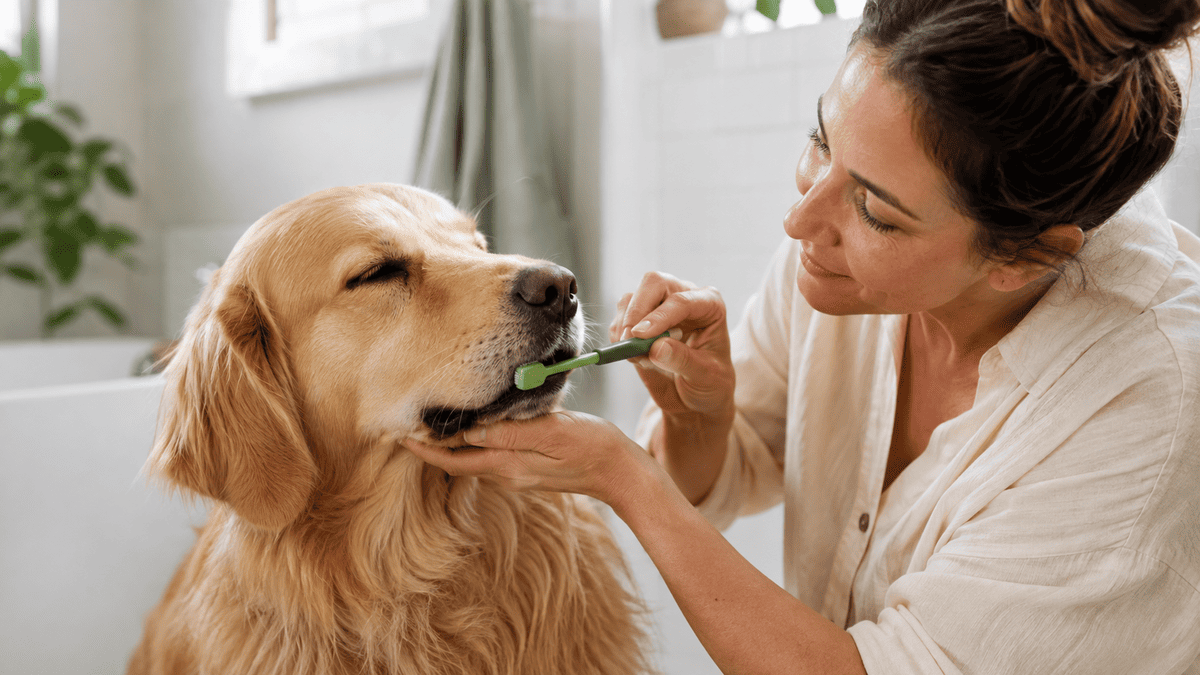
In short
Dental disease affects most dogs by the age of three and causes real pain. Here is how to introduce tooth brushing properly, what to use, and where chews and diets actually fit in.
Dental disease is the most common health problem in adult dogs, and one of the most preventable. It is also frequently invisible to owners: dogs rarely stop eating because of dental pain, and bad breath is normalised as "dog breath" rather than recognised as a symptom. Brushing is the single most effective thing you can do at home.
Why Brushing Beats Everything Else
Plaque forms continuously and hardens into tartar within a few days. Once it has hardened, nothing you do at home removes it — it requires a professional scale and polish under anaesthetic. Brushing works because it removes plaque before it hardens. Chews, diets and water additives reduce build-up; they do not remove existing plaque along the gum line.
What You Need
- A dog-specific toothbrush, a finger brush, or a soft child's brush
- Enzymatic dog toothpaste — never human toothpaste, which contains fluoride and often xylitol, both harmful to dogs
- Small treats for pairing
The Introduction: Two Weeks, Five Minutes a Day
- Days 1–3: let your dog lick toothpaste off your finger. Nothing else.
- Days 4–6: lift the lip and rub a finger along the outer surface of a few teeth, then treat.
- Days 7–9: introduce the brush with paste, touching a few teeth only.
- Days 10–14: brush one section of the mouth per session, building up to all four quadrants.
Rushing this is how dogs become permanently resistant to having their mouth handled. Two weeks of patience buys you years of easy brushing.
Technique
- Focus on the outer surfaces — that is where plaque accumulates most
- Angle the brush towards the gum line at around 45 degrees
- Small circular motions, gentle pressure
- Pay particular attention to the large upper back teeth
- There is no need to brush the inner surfaces or to rinse
Daily Dog Care Tracker
Brushing only works if it actually happens. The Daily Dog Care Tracker includes printable daily and weekly care logs covering teeth, grooming, ears, nails, meals and medication — so dental care does not quietly slip.
Get the Daily Dog Care Tracker →How Often
Daily is ideal. Three to four times a week makes a genuine difference. Once a week is better than nothing but will not prevent tartar on its own.
Where Chews and Diets Fit
Dental chews and specially formulated dental diets do help, particularly for dogs that will not tolerate brushing. Look for products carrying veterinary dental accreditation rather than general marketing claims. Avoid very hard items — antlers, bones, hard nylon toys and ice cubes are a common cause of fractured teeth.
Signs That Need a Vet
- Persistent bad breath
- Red, swollen or bleeding gums
- Yellow or brown tartar along the gum line
- Dropping food, chewing on one side, or pawing at the mouth
- Loose or missing teeth in an adult dog
Two ways to keep on top of dental care
Want a daily and weekly care log? Choose the Daily Dog Care Tracker. Want dental history alongside vet visits and vaccinations? Choose the Pet Health Record Binder.
Get the Pet Health Record Binder →Frequently Asked Questions
Can I use human toothpaste on my dog?
No. It contains fluoride and often xylitol, both of which are harmful to dogs, and it is not designed to be swallowed.
My dog will not let me near their mouth. What now?
Go back to the finger-and-paste stage and move more slowly. If the resistance is sudden rather than long-standing, have the mouth checked — pain is a common cause.
Do dental chews replace brushing?
No, but they are a useful supplement and better than nothing for dogs that will not tolerate a brush.
Printable and fillable PDF templates for pet owners — feeding schedules, health records, training trackers and more.