
How Much Does a Puppy Cost in the First Year? Complete Budget Breakdown
Start with verified UK minimum estimates, then price acquisition, equipment, veterinary care and paid help. Includes a first-year worksheet and care comparison.
In short
Start with verified UK minimum estimates, then price acquisition, equipment, veterinary care and paid help. Includes a first-year worksheet and care comparison.
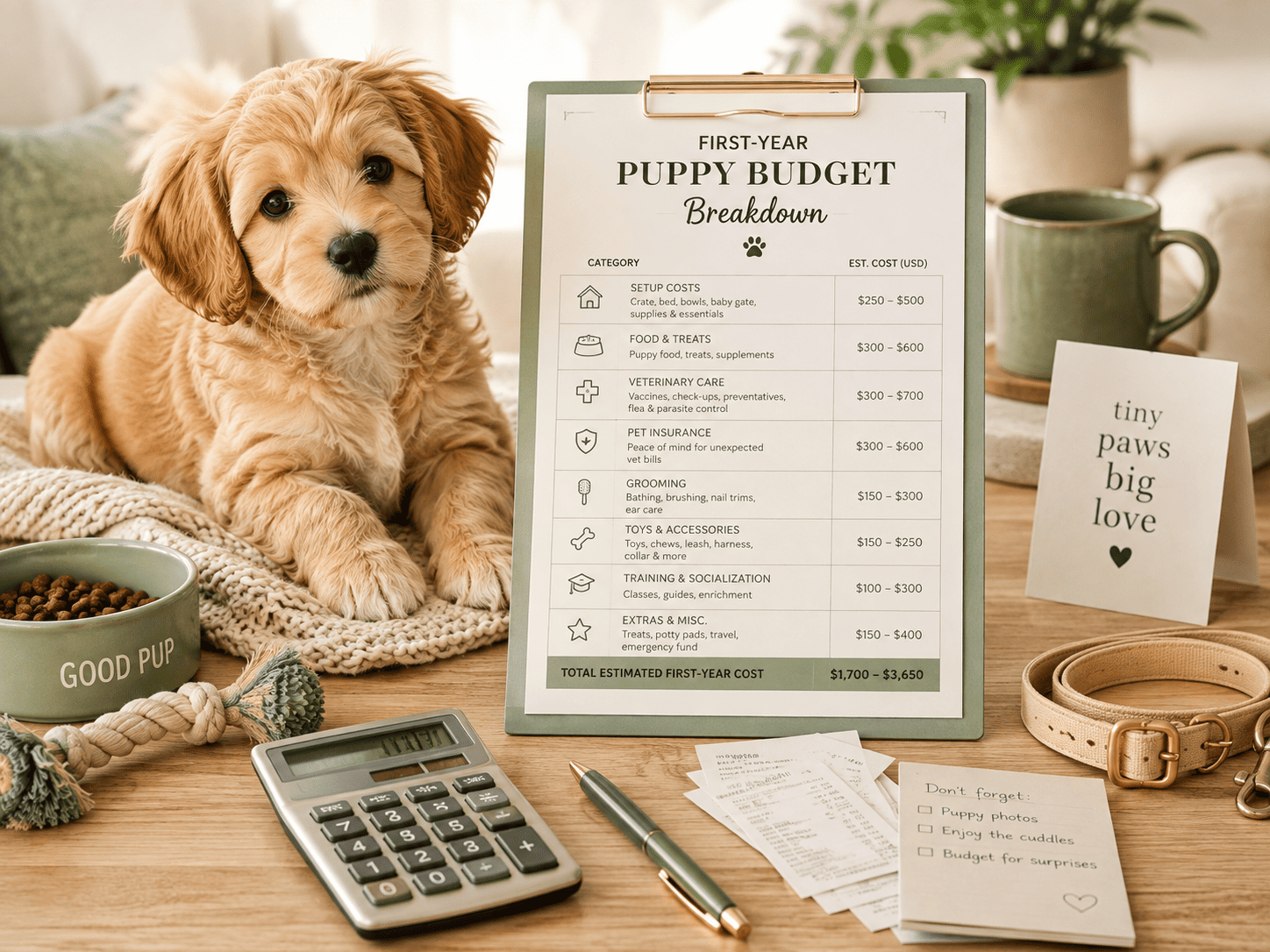
How much does a puppy cost in the first year? As a UK reference point, PDSA’s dog-cost guide lists minimum setup costs of £415–£560 and monthly costs of £69–£116, depending on dog size, using prices calculated in 2024. Setup plus twelve monthly amounts gives roughly £1,243–£1,952 before buying or adopting the puppy and adding excluded costs.
That arithmetic is a basic planning floor derived from PDSA’s general dog estimates, not a puppy-specific quote or a current local price. Training, grooming, paid daytime care, boarding and illness or injury treatment can add substantially; special diets are also excluded. Build your own total before committing to a puppy.
How much does a puppy cost in the first year?
| PDSA dog-size category | Estimated setup | Estimated monthly minimum | Setup plus twelve months |
|---|---|---|---|
| Small | £415 | £69 | £1,243 |
| Medium | £531 | £83 | £1,527 |
| Large | £560 | £116 | £1,952 |
The source includes basic equipment and certain routine-care costs in setup, and insurance and routine essentials in ongoing costs. It excludes acquisition, illness or injury vet fees, special diets, daycare, boarding, grooming services and training classes. Its setup assumptions are budgeting inputs, not a recommendation about when your puppy should receive a procedure.
Use local currency and local quotes outside the UK. Exchange-rate conversion cannot account for a different insurance market, service prices, climate or care requirements. Even within one town, two puppies may need very different food, coat care and daytime arrangements.
Price the arrival shopping basket before adding extras
Choose equipment for the puppy’s size now and expected growth. A collar or harness must fit today; buying adult size and hoping it will work can create an unsafe escape route. For some items, a modest first purchase followed by a planned replacement is more sensible.
- Acquisition: breeder price or adoption fee, travel to collect the puppy and any included care.
- Sleep and separation: washable bedding, safe barriers and a crate or pen if part of your care plan.
- Feeding: bowls, the food currently fed and storage.
- Walking and identification: correctly fitted equipment, lead and readable identification.
- Transport: a secure travel arrangement that fits your vehicle and the growing dog.
- Cleaning: waste bags and pet-safe cleaning supplies used according to their labels.
- Grooming and play: coat-matched tools and a small selection of supervised toys.
Before paying, ask what arrives with the puppy. A vaccination record, registered identification details or familiar food may already be provided. Check the evidence rather than subtracting a vague “starter pack” from the budget.
Get veterinary and insurance quotes that can be compared
Tell the practice the puppy’s age, breed or likely adult size and previous care. Ask what the first appointment includes and which further services the vet expects for that puppy. Clinical decisions belong to the vet; your job is to understand the quoted cost and what has already been done.
“I’m budgeting for a new puppy. Could you explain the cost of the initial appointment, what is included, and which routine services may be charged separately? If you offer a care plan, please tell me its inclusions, exclusions, contract terms and any extra payments.”
A routine-care subscription and accident-and-illness insurance serve different purposes. Compare them by the written inclusions rather than assuming one replaces the other. For insurance, check excesses, owner contributions, exclusions, limits and how claims are paid.
- Ask whether a quote is an estimate and how long it remains valid.
- Identify the cost of services already included in another payment.
- Check whether treatment invoices must be paid before reimbursement.
- Keep an accessible funding plan for exclusions and delays.
- Discuss any known medical history before relying on cover.
Calculate the care your working week requires
Paid care is an easily missed part of the first-year total. A puppy needs frequent attention, rest, feeding and toilet opportunities. A workday budget must cover the arrangement you will use, not just the time you hope the puppy can manage alone.
| Arrangement | Ask before pricing | Include in the calculation |
|---|---|---|
| Help from family | Who has agreed, and which days can they cover? | Travel, supplies and a paid backup if needed |
| Home visits | Can visits meet this puppy’s needs and the vet’s guidance? | Number of booked visits and cancellation terms |
| Daycare | Are age, vaccination, rest and temperament requirements met? | Assessment, transport and regular fees |
| Adjusted work hours | What arrangement is confirmed with your employer? | Any loss of income or extra travel |
For a quoted service, multiply the price per visit or day by the number you expect to book. Add seasonal travel care separately. Check availability as well as price: an affordable service with no space cannot cover your return to work.
Fill a first-year worksheet and test the expensive month
Acquisition and collection: [quote]. Setup equipment: [itemised total]. Routine health care not already included: [quote]. Food and consumables: [monthly estimate × months]. Insurance or other funding: [terms and planned amount]. Training: [course quote]. Grooming: [service quote × expected bookings]. Daytime care: [visit/day quote × bookings]. Travel care: [booking quote]. Planned replacements: [items]. Total planned outlay: [sum]. Emergency funds available separately: [amount and location].
Keep reserve transfers outside the spending total. If the worksheet includes an insurance premium, do not also claim that all future treatment bills are covered. You still need to understand limits and payment timing.
In a worked example, Nia is choosing between bringing puppy Rolo home before a flexible work period or just before a busy office month. The equipment basket is unchanged, but the second option needs confirmed paid visits immediately. She requests a written care quote and adds the booked visits to that first month.
Nia also discovers that the puppy’s expected coat needs professional grooming she had omitted. She adds the provider’s estimate, checks what handling practice is needed and changes her planned arrival date. The useful decision comes from the missing services, not a cheaper toy bundle.
Avoid the costs created by rushed buying
- Buying a complete room before knowing the puppy: prioritise safe essentials, then choose extras from experience.
- Ignoring growth: budget for fit checks and replacement walking equipment.
- Assuming every fee includes everything: confirm records and included services in writing.
- Counting a family promise as full workday cover: agree dates and a backup.
- Keeping only an annual total: check the money needed before arrival and during the first busy month.
Use a puppy shopping checklist by category to inspect the equipment basket. Track later purchases against the first plan so the next quote replaces guesswork.
Frequently Asked Questions
Does the PDSA reference include the puppy’s purchase price?
No. Add the breeder price or adoption fee and collection costs. Check exactly what care and supplies are included with that payment.
Can I simply multiply a monthly budget by twelve?
That misses acquisition, arrival equipment and one-off bookings. Add those separately, and adjust food and equipment assumptions as the puppy grows.
Is a larger puppy always more expensive?
Size can affect food and equipment, but coat care, health needs and paid help also matter. Compare the individual care plan, not size alone.
What should I do if my first-year budget has a gap?
Resolve it before taking on the commitment. Confirm quotes, defer optional purchases and reconsider timing or care arrangements without removing necessary care.
Resources & Links
These sources help identify puppy responsibilities and insurance questions to price alongside the UK reference estimates.
- PDSA: The Cost of Owning a Dog — source of the setup and monthly minimum estimates used above.
- AVMA: Selecting a Pet Dog — Consider care responsibilities and household fit before committing to a puppy.
- RSPCA: Puppy Care — Check the early care needs behind equipment, veterinary and supervision quotes.
- NAIC: Pet Insurance — Understand exclusions and payment arrangements when pricing insurance alongside routine care.
Plan purchases with the New Pet Shopping Checklist and track costs with the Pet Expense Tracker. Get the Pet Expense Tracker → Get the New Pet Shopping Checklist →
Printable and fillable PDF templates for pet owners — feeding schedules, health records, training trackers and more.