
How to Travel With a Pet Without the Stress
Plan transport, safe stops, reachable supplies and a secure arrival for dogs and cats. Compare journey options and use a worked family-visit example.
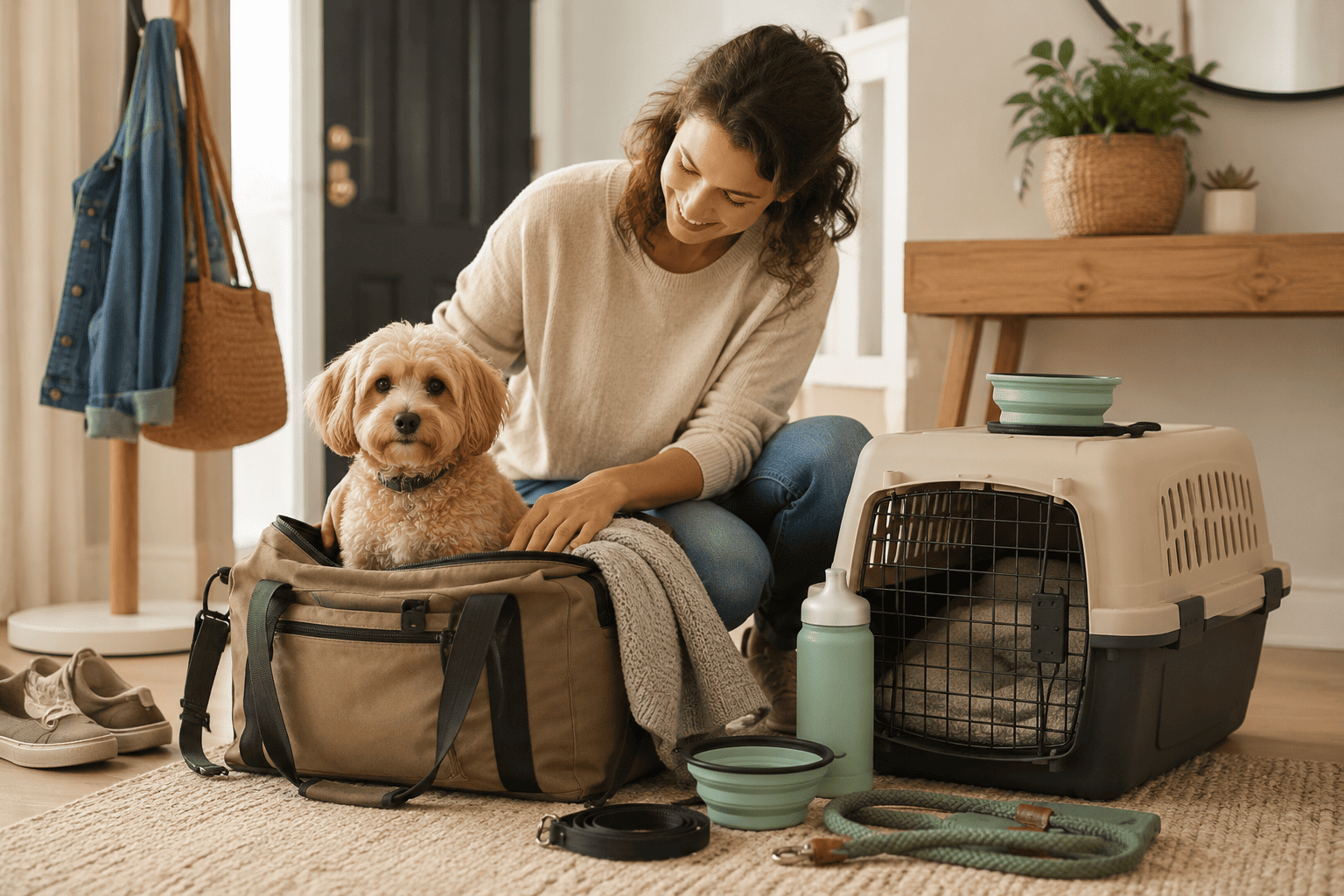
In short
Plan transport, safe stops, reachable supplies and a secure arrival for dogs and cats. Compare journey options and use a worked family-visit example.
Knowing how to travel with a pet means planning the whole day: getting into the vehicle, taking breaks, changing services and settling somewhere unfamiliar. A booking that accepts animals still leaves you responsible for food, water, toileting, rest and preventing an escape.
Start with a journey your pet can manage, then build the itinerary around their care. A shorter trip with fewer transfers is often easier to organise than a cheap connection that leaves you stranded with a frightened animal.
How to travel with a pet: choose a workable journey
List the time away from home, every transfer and where the pet will stay. Include the journey back and any activity they cannot attend. Ask your vet about travel if your pet is ill, recovering, pregnant, very young, elderly or struggling with motion sickness or anxiety.
| Option | Useful when | Check before committing |
|---|---|---|
| Car | You need control over stops and departure time | Secure restraint, temperature, safe stopping places and enough space |
| Train or ferry | The route avoids driving or shortens the journey | Species limits, carrier rules, pet areas and transfer access |
| Flight | A long-distance journey cannot reasonably be done another way | Veterinary fitness, cabin or cargo arrangements, carrier rules and weather restrictions |
| Stay-at-home care | The trip involves unsuitable transport or activities | A reliable carer and coverage for every day away |
For an international journey, check the destination, transit and return rules with the responsible animal-health authority before booking. A transport company's acceptance and permission to enter a country are separate checks. The detailed paperwork sequence is covered in travelling abroad with your pet.
Practise the equipment before departure
Set the carrier or travel restraint out at home. Let your pet investigate, reward calm behaviour and build up to short closed-door periods or brief trips at their pace. Change the plan and ask for help if practice repeatedly causes panic, heavy drooling or vomiting.
- Inspect latches, seams, clips and straps for wear.
- Check that the pet can use the carrier without being squeezed or forced into a painful position.
- Fit the restraint or secure the carrier according to its manufacturer's vehicle instructions.
- Try a short local journey that ends somewhere calm.
- Rehearse getting in and out with doors controlled and the lead ready.
For cars, choose equipment designed for travel restraint; independently crash-tested equipment gives you more useful evidence than an advertising label. Do not allow animals to wander around the vehicle, ride in an open pickup bed or lean out of a window. Keep ventilation clear of luggage.
For flights, get the booked operator's current carrier measurements and construction requirements in writing. “Airline approved” on a shop listing cannot confirm acceptance on your particular service. Ask about every connecting flight as well as the first one.
Pack for access during the journey
Keep the things you need at a stop together, rather than under the holiday bags. Use a separate pouch for documents, and keep an offline copy of useful contacts. Confirm whether formal paperwork must be carried as an original.
- The food your pet currently eats, a measured portion container and bowls.
- Water, a bowl you can reach easily and spare water for delays.
- Lead and harness, plus a backup if a clip breaks.
- Waste bags or a cat's litter supplies and cleaning materials.
- Absorbent carrier lining and spare bedding.
- Prescribed medicines in their labelled packaging, stored as instructed.
- Pet identification, a recent photo and current microchip registration details.
- Your vet's number and a clinic near the destination.
Do not change food just because a smaller travel packet is convenient. Ask the vet how to handle meal timing if your pet gets sick in transit or needs food with medicine. Never use human travel-sickness products or give a sedative without veterinary instructions.
Make car stops safe and useful
Choose stops with a quiet area away from moving traffic and check how to reach it. Leave enough flexibility to stop earlier if your dog needs the toilet, becomes unsettled or is unwell. Puppies, older animals and pets with health needs may require a different pattern from a healthy adult.
- Park safely and have one person hold the lead before opening a door.
- Attach the lead while the dog is still secured; then release the travel restraint.
- Offer a calm toilet and sniffing opportunity away from traffic.
- Offer water, collect waste and check the restraint before returning.
- Secure the pet before restarting the journey.
A cat does not need to be taken out beside a busy road for a walk. Keep the carrier closed in public; arrange any necessary carrier cleaning or litter access inside a secure, enclosed space. Ask your vet how to manage a long journey for a cat who cannot settle or needs frequent care.
Never leave the pet unattended in a parked vehicle. Plan human toilet breaks, food collection and fuel stops so someone can remain responsible for the animal. If travelling alone, find a workable stop arrangement before you set off.
Manage boarding, transfers and arrival
At a station or terminal, keep the carrier shut and your dog under control. Find the waiting area, boarding procedure and relief facilities before joining a queue. Do not rely on a staff member allowing an exception after you arrive.
- Confirm who is responsible for the pet at each handover.
- Keep the carrier's identification label readable without displaying sensitive medical information.
- Carry emergency contact details separately from checked luggage.
- Ask where the pet goes if a service is cancelled or delayed.
- Keep a backup place to stay that accepts your species of pet.
At accommodation, inspect the room before opening a carrier. Check windows, balcony access, gaps behind furniture, cleaning products and doors that others may open. Give your pet water, a toilet option and a quiet resting place before exploring.
Ask whether the accommodation permits pets to be left alone, and what conditions apply. Even where permission exists, a pet who cannot settle needs company or another care arrangement. Plan sightseeing and meals around that reality.
A worked example: a family visit with a dog and cat
Nora is driving to her sister's house with dog Pip and cat Miso. Pip has practised the travel harness; Miso settles in a secured carrier with familiar bedding. Nora's partner handles the animals at stops while Nora checks the route.
They keep Pip's lead, water and waste bags beside the passenger seat. Miso's spare carrier liner travels in a separate bag, but they do not open the carrier at roadside stops. Their sister prepares a closed room with water and litter so Miso can come out after the house has been checked.
The family meal was originally booked at a restaurant that would leave both pets alone on arrival day. They move the meal to the house instead. The useful adjustment is care coverage, not another item in the travel bag.
“We are bringing a dog and a cat. Could you keep the spare room closed and clear the windowsill before we arrive? We will settle the animals first, then join everyone.”
Common mistakes to fix before leaving
- Trying unfamiliar restraint on departure morning: practise beforehand and resolve fit problems.
- Putting water under luggage: pack a reachable stop bag.
- Opening a carrier to reassure a cat in public: keep it closed until you have an escape-proof space.
- Planning a full day of pet-free activities: book care or change the itinerary.
- Ignoring the return trip: check transport and border requirements for both directions.
Frequently Asked Questions
Should I choose a car or a flight?
Compare the total time confined, transfers, veterinary fitness and control over care breaks. A direct flight may shorten a long journey, while a car lets you adapt stops. Choose the option your individual pet can manage, including the arrival arrangements.
What should I do if my pet gets travel sick?
Talk to the vet before the next journey about practice, meal timing and treatment if needed. Stop safely if the pet becomes unwell during travel and ask for advice. Do not experiment with a human medicine.
Can my cat come out of the carrier at a motorway stop?
Keep the carrier closed in a public stopping area. If care requires opening it, use a secure enclosed space and control every exit first. Plan long-distance litter and cleaning needs before travelling.
What if the hotel accepts pets but bans leaving them alone?
Arrange company whenever you go out, take the pet on activities they can manage or change the booking. Tell the provider your plan before arrival; pet-friendly accommodation cannot supply care that has not been arranged.
Resources & Links
These sources help organise the journey, formal travel checks and care at the destination.
- CDC: Pet Travel Safety — Plan transport, identification and welfare needs during the journey.
- USDA APHIS: Pet Travel Process Overview — Check official paperwork for international routes involving the United States.
- Cornell: Travelling Safely With Your Dog — Review vehicle restraint, travel practice, flights and accommodation checks.
Carry essential pet details and contacts on the Pet Emergency Card when travelling. Get the Pet Emergency Card →
Printable and fillable PDF templates for pet owners — feeding schedules, health records, training trackers and more.