Pet Surgery Recovery Log: What to Track After Your Pet Comes Home
After surgery, careful tracking helps you spot problems early and follow your vet's instructions precisely. Here is what to record in a recovery log — and why the vet's plan comes first.
In short
After surgery, careful tracking helps you spot problems early and follow your vet's instructions precisely. Here is what to record in a recovery log — and why the vet's plan comes first.
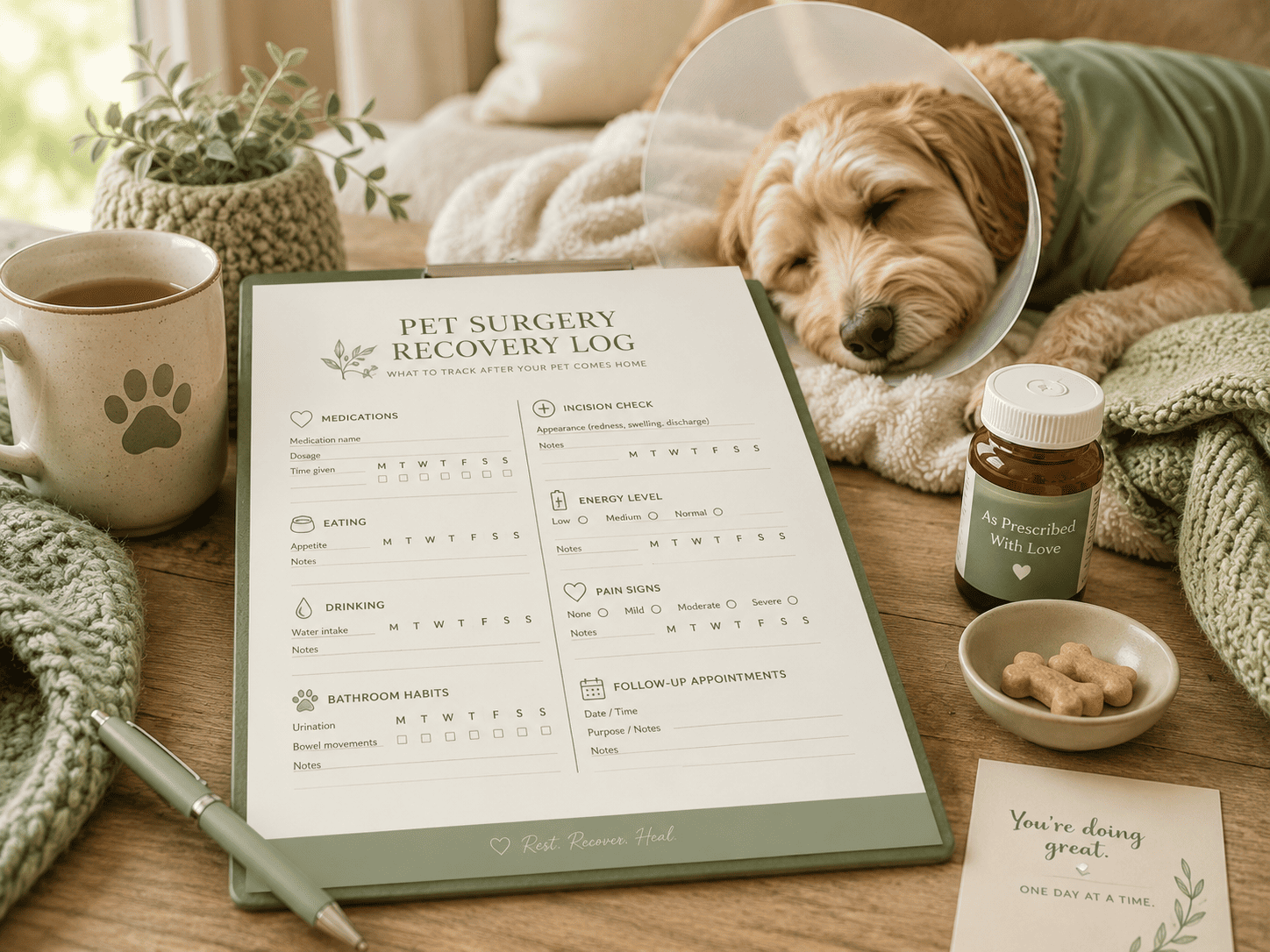
The days after your pet comes home from surgery are when careful observation matters most. A recovery log helps you track medication, eating, toileting and the incision so you can spot any problem early and give your vet accurate information if you need to call. This works alongside — never instead of — the specific recovery instructions your vet has given you.
What to Track During Recovery
- Medication — each dose, with time and who gave it
- Food and water — appetite and intake, which often dips at first
- Toileting — frequency and anything unusual
- Incision — redness, swelling, discharge or the pet licking at it
- Activity — that restrictions are being followed
- Follow-up — appointment dates and any stitch removal
- Questions — anything to raise with the vet
Why a Log Helps After Surgery
Recovery problems are easiest to manage when caught early. A log makes changes obvious — a dose missed, appetite not returning, an incision looking worse rather than better — and gives your vet precise information if you need to call. It also keeps multiple caregivers coordinated on medication and activity limits.
Pet Health Record Binder
The Pet Health Record Binder includes medication logs, symptom notes and vet visit pages you can use to track recovery day by day — so nothing is missed while your pet heals.
Get the Pet Health Record Binder →Follow the Vet's Instructions First
Every procedure and every pet is different. Activity restrictions, wound care, medication and when to worry are all set by your vet for your pet's specific surgery. A recovery log helps you follow that plan precisely — it does not replace it. If you see anything that concerns you, contact your vet rather than waiting.
When to Call the Vet
- Increasing redness, swelling or discharge at the incision
- The wound opening, or persistent licking despite a cone
- Not eating or drinking beyond the period your vet expected
- Lethargy, pain or behaviour that worsens rather than improves
Two ways to manage recovery
Want focused health and medication pages? Choose the Pet Health Record Binder. Want recovery tracking as part of a complete care system? Choose the Complete Dog Owner Binder or Complete Cat Owner Binder.
Get the Pet Health Record Binder →Frequently Asked Questions
What should I track after my pet's surgery?
Medication, food and water intake, toileting, the incision, activity restrictions, follow-up dates and any questions for the vet.
Does a recovery log replace my vet's instructions?
No. The log helps you follow your vet's specific instructions precisely. Always follow the plan your vet gave for your pet's procedure.
When should I call the vet during recovery?
If the incision worsens, the wound opens, your pet will not eat or drink as expected, or pain and lethargy increase rather than improve.
Printable and fillable PDF templates for pet owners — feeding schedules, health records, training trackers and more.