
How to Track Your Pet's Symptoms Before a Vet Visit
Tracking symptoms before a vet visit gives your vet the clear information they need for a faster, more accurate assessment. Here is what to record — and why it is not a substitute for a diagnosis.
In short
Tracking symptoms before a vet visit gives your vet the clear information they need for a faster, more accurate assessment. Here is what to record — and why it is not a substitute for a diagnosis.
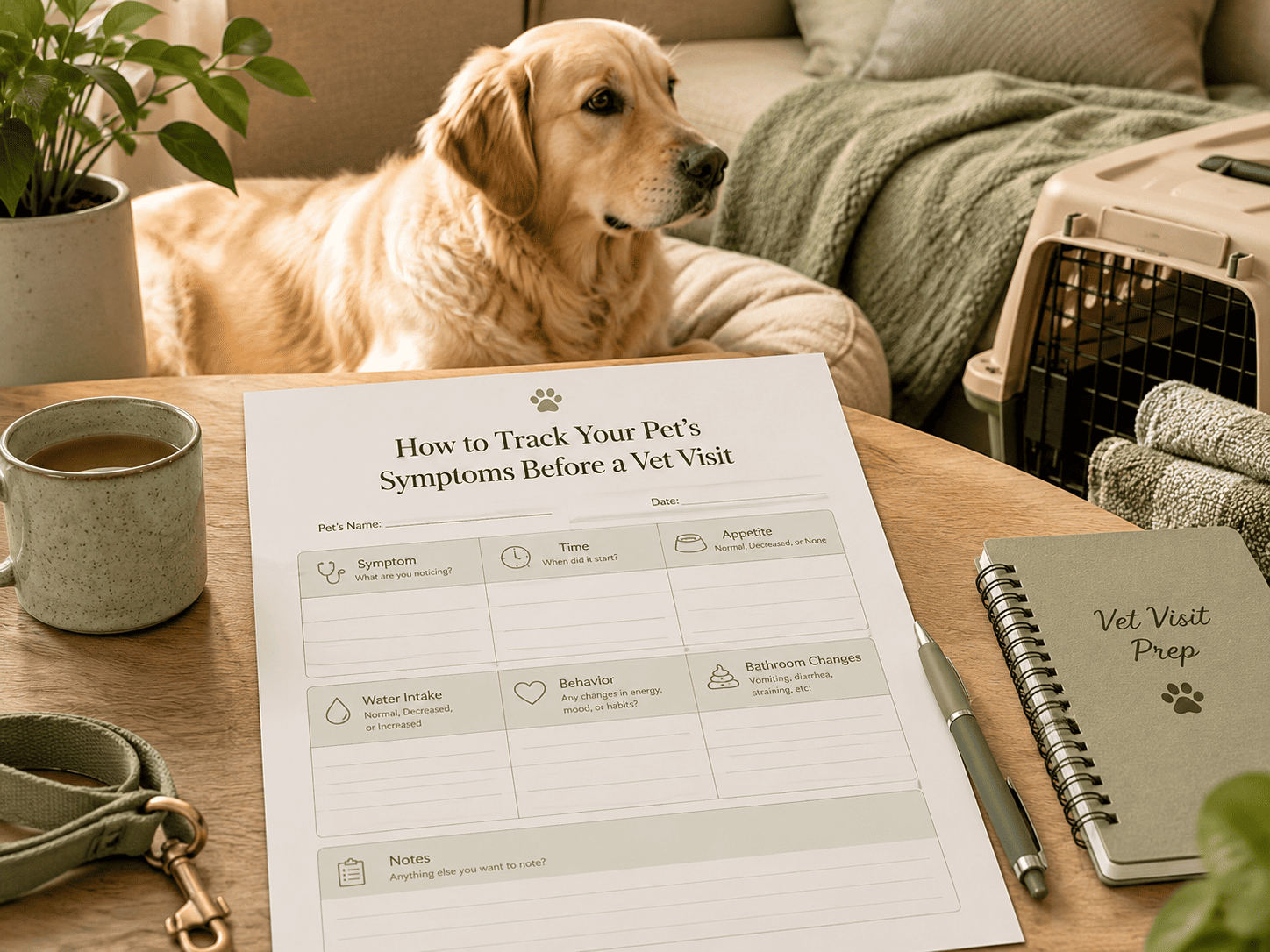
When something is off with your pet, the most valuable thing you can bring to the vet is a clear record of what you have observed and when. Tracking symptoms before a visit helps your vet assess the problem faster and more accurately. This is about giving better information — not diagnosing at home, which is always your vet's job.
What to Record
- When it started — the single most useful detail
- Frequency — how often, and whether it is increasing
- Appetite — eating fully, partially or refusing
- Drinking — normal, increased or decreased
- Toilet habits — frequency, consistency, any changes
- Behaviour and energy — lethargy, restlessness, hiding
- Medication — anything given and when
Photos and Video Help
Many signs come and go — a limp, a tremor, an odd posture — and are often absent in the consulting room. A short video taken at home gives your vet something concrete to assess rather than a description from memory.
Why a Timeline Matters So Much
"It started a few weeks ago" and "it started last Tuesday and has got worse each day since" lead to very different assessments. A written timeline turns a vague impression into precise information, which is exactly what helps a vet narrow things down quickly.
Pet Health Record Binder
The Pet Health Record Binder includes symptom and observation pages alongside vet visit logs and medication records — so you can note changes as they happen and hand your vet a clear picture at the appointment.
Get the Pet Health Record Binder →An Important Boundary
Tracking symptoms is about better communication, not self-diagnosis. If your pet shows serious signs — difficulty breathing, collapse, suspected poisoning, a seizure, or straining to urinate with no output — do not wait to log anything. Contact your vet or an emergency clinic immediately.
Keeping It Simple
You do not need to write an essay. A few lines a day — appetite, drinking, toilet, energy, anything unusual — is enough to reveal a trend that a single snapshot would miss.
Two ways to track health
Want focused symptom and health pages? Choose the Pet Health Record Binder. Want symptom tracking as part of a complete care system? Choose the Complete Dog Owner Binder.
Get the Pet Health Record Binder →Frequently Asked Questions
What symptoms should I track before a vet visit?
When it started, frequency, appetite, drinking, toilet habits, behaviour and energy, plus any medication given. Photos or video help for signs that come and go.
Does tracking symptoms replace a vet's diagnosis?
No. It gives your vet clearer information for a faster, more accurate assessment. Diagnosis is always the vet's job.
When should I not wait to track and just call?
For serious signs like breathing difficulty, collapse, suspected poisoning, seizures, or straining to urinate — contact a vet immediately.
Printable and fillable PDF templates for pet owners — feeding schedules, health records, training trackers and more.