
Winter Pet Care Checklist: Cold Weather Risks Most Owners Underestimate
Cold weather brings hazards that are easy to miss — grit on paws, antifreeze in the garage, stiff joints and shorter daylight. Here is a complete winter checklist for dogs and cats.
In short
Cold weather brings hazards that are easy to miss — grit on paws, antifreeze in the garage, stiff joints and shorter daylight. Here is a complete winter checklist for dogs and cats.
Winter care for pets is mostly about small adjustments rather than dramatic changes. But a handful of seasonal hazards cause a disproportionate number of vet visits every year, and almost all of them are preventable with a short checklist.
Paws and Road Salt
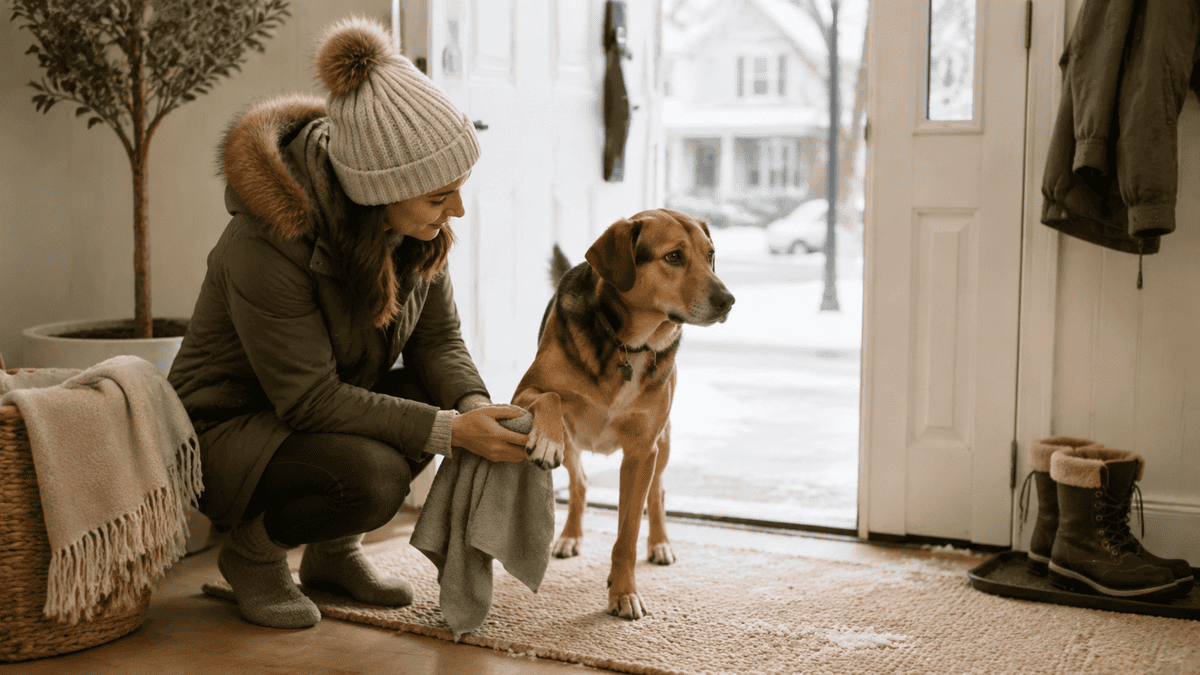
Grit and de-icing salt irritate paw pads and are toxic if licked off in quantity. After every winter walk:
- Rinse or wipe paws, including between the toes
- Check for cracks, redness or embedded grit
- Trim the fur between pads on long-coated dogs — ice balls form there
- Consider a paw balm as a barrier before walks
Antifreeze: The Most Serious Winter Hazard
Ethylene glycol antifreeze tastes sweet and is attractive to both dogs and cats. Very small amounts cause kidney failure and it is frequently fatal. Store it sealed and out of reach, clean spills immediately, and treat any suspected exposure as an emergency — contact a vet straight away rather than waiting for symptoms.
Joints and Older Pets
Cold weather makes arthritic stiffness more noticeable. Watch for reluctance to jump, slowness getting up, or shortened walks. Warm, orthopaedic bedding away from draughts and non-slip mats on hard floors make a real difference. If stiffness is new or worsening, raise it with your vet rather than assuming it is just the season.
Pet Health Record Binder
Note seasonal changes — stiffness, appetite, weight, activity — alongside vet visits and medication. The Pet Health Record Binder gives you the printable pages to spot a trend rather than a one-off bad day.
Get the Pet Health Record Binder →Cats in Winter
- Check under car bonnets before starting the engine — cats shelter in warm engine bays
- Keep outdoor water bowls from freezing
- Provide extra indoor hiding and sleeping spots away from draughts
- Outdoor cats need reliable indoor access in freezing conditions
Dark Mornings and Evenings
- Reflective or light-up collars and lead attachments
- A head torch so you can see the ground and your dog
- Keep to lit, familiar routes if recall is less reliable in the dark
Food and Weight
Shorter walks often mean less exercise while food stays the same. Weigh monthly through winter and adjust portions rather than discovering the change in spring. Working dogs and dogs out in the cold for long periods may need more, not less — ask your vet if you are unsure.
Two ways to stay on top of winter
Want a daily record of walks, meals and weight? Choose the Daily Dog Care Tracker. Want seasonal health notes alongside vaccinations and vet visits? Choose the Pet Health Record Binder.
Get the Daily Dog Care Tracker →Frequently Asked Questions
Do dogs need coats in winter?
Some do — thin-coated breeds, small dogs, puppies and seniors lose heat faster. Thick double-coated breeds usually do not. Shivering, lifting paws and reluctance to walk are the signs to watch.
How cold is too cold for a walk?
It depends on the individual dog, the wind and how long you are out. Shorter, more frequent walks are safer than one long one in freezing conditions.
What should I do if my pet contacts antifreeze?
Contact a vet or emergency clinic immediately — do not wait for symptoms. Time is critical with ethylene glycol.
Printable and fillable PDF templates for pet owners — feeding schedules, health records, training trackers and more.