
Pet Expense Tracker: How to Build a Realistic Monthly Pet Budget
A pet expense tracker turns scattered costs into a clear monthly budget — food, vet, insurance, grooming and more. Here are the categories to track and how to plan for spikes.
In short
A pet expense tracker turns scattered costs into a clear monthly budget — food, vet, insurance, grooming and more. Here are the categories to track and how to plan for spikes.
Most owners underestimate what they spend on their pet, because the costs are spread across categories and paid at different times. A pet expense tracker turns that into a clear monthly budget — so you know your real numbers and can plan for the months when costs spike. Here are the categories to track and how to build the budget.
Categories to Track
- Food — regular food, treats, any prescription diet
- Veterinary — check-ups, vaccinations, dental, unexpected visits
- Medication and prevention — flea, tick, worm, ongoing prescriptions
- Grooming — professional appointments and home supplies
- Insurance — monthly premium and any excess paid
- Daycare and boarding — walkers, sitters, kennels
- Supplies — beds, leads, toys, replacements
- Emergency fund — a monthly amount set aside
How to Build the Monthly Budget
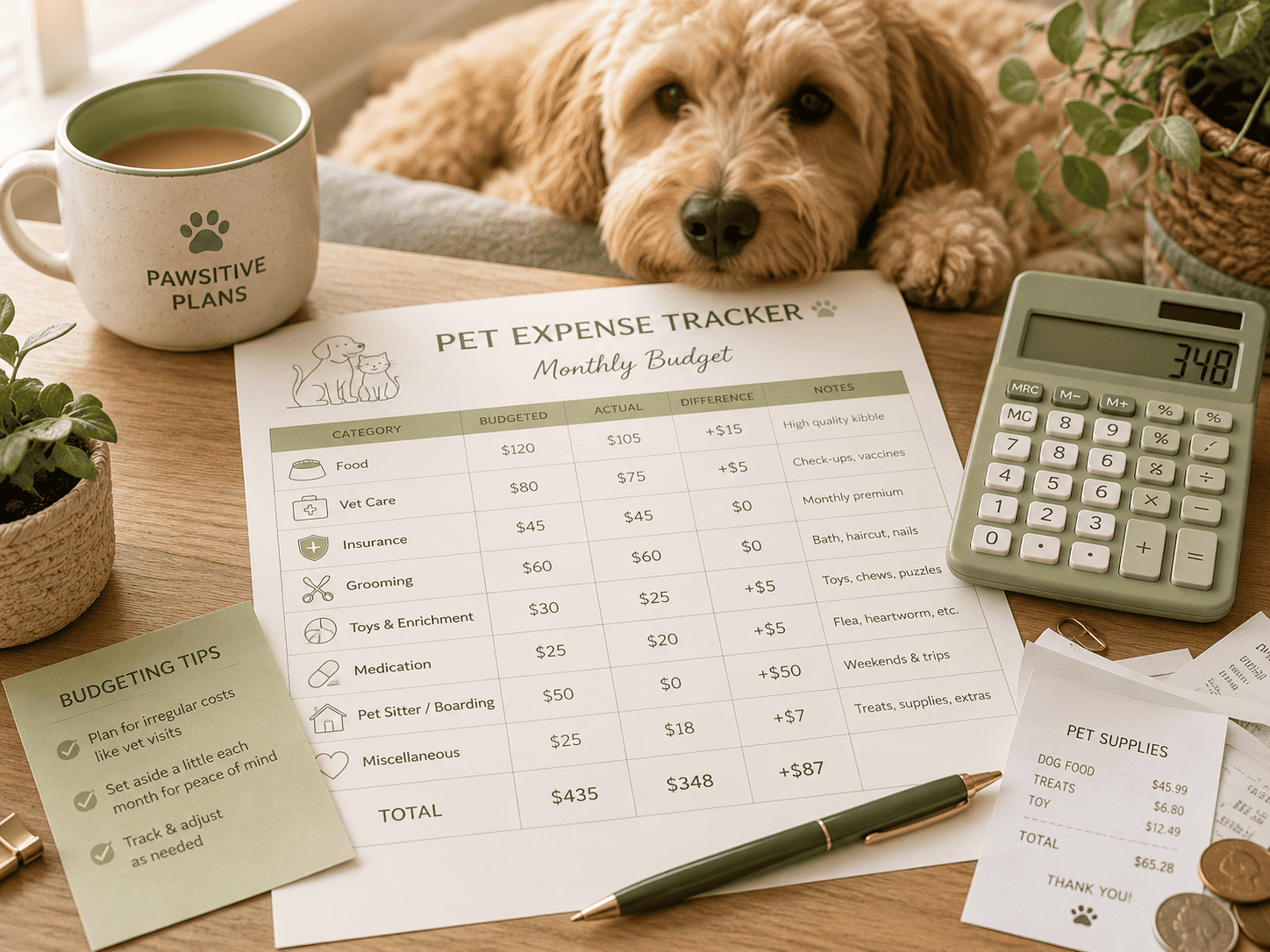
Use a simple monthly format: one row per expense, with columns for date, category, description and amount. Total each category at the end of the month. After three months you have a reliable baseline; after twelve, your true annual cost — and the ability to budget accurately for the year ahead.
Pet Expense Tracker
The Pet Expense Tracker is a printable and fillable monthly tracker covering every category above — food, vet, medication, grooming, insurance, boarding and supplies. See where the money goes and make it go further.
Get the Pet Expense Tracker →Planning for the Spikes
Vet costs are the most unpredictable category. A dental cleaning, a vaccination renewal or an unexpected illness can turn an average month into an expensive one. Setting aside a small amount each month into an emergency fund means those spikes do not have to go on a credit card. Track each vet visit separately with the date, reason and cost.
What the Numbers Reveal
Tracking almost always surfaces something: treats costing more than expected, a subscription that could be cheaper, or a grooming bill worth reducing with home maintenance. Visibility creates choices that guesswork never does.
Two ways to manage costs
Want a focused budgeting tool? Choose the Pet Expense Tracker. Want expenses as part of a complete care system with health, daily care and sitter notes? Choose the Complete Dog Owner Binder.
Get the Pet Expense Tracker →Frequently Asked Questions
What should a pet budget include?
Food, veterinary care, medication and prevention, grooming, insurance, daycare or boarding, supplies and an emergency fund.
How long until I know my real pet costs?
About three months for a baseline and twelve for a true annual figure, including the seasonal spikes.
How do I plan for unexpected vet bills?
Set aside a fixed amount monthly into an emergency fund, and consider pet insurance before any conditions develop.
Printable and fillable PDF templates for pet owners — feeding schedules, health records, training trackers and more.