
How to Stop a Dog Pulling on the Lead: A Practical Training Plan
Lead pulling is the most common training complaint and the most fixable. Here is why dogs pull, the equipment that helps, and a step-by-step plan that works without punishment.
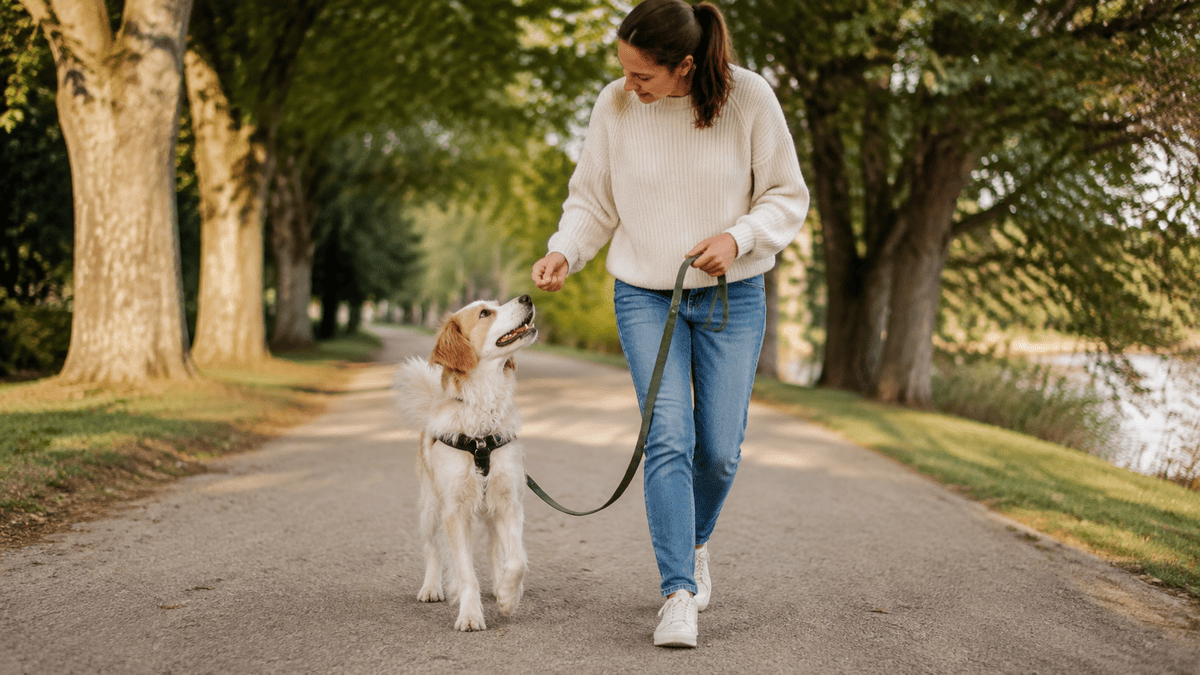
In short
Lead pulling is the most common training complaint and the most fixable. Here is why dogs pull, the equipment that helps, and a step-by-step plan that works without punishment.
Lead pulling is rarely about dominance and never about a dog "knowing better". Dogs pull because it works: pulling gets them to the interesting thing faster. Every walk where pulling produces forward movement reinforces the habit. The training plan below removes that reward and replaces it with a better one.
Equipment First
The right equipment does not train the dog, but it makes training possible and protects the dog's neck while you work.
- Y-shaped harness with front and back attachment points — front clips reduce forward power without restricting the shoulder
- A fixed-length lead of about two metres — retractable leads actively teach dogs that pulling extends their range
- A long line for open spaces — freedom without off-lead risk
Avoid choke chains, prong collars and slip leads used as everyday walking equipment. They suppress the behaviour through discomfort without teaching the dog what to do instead, and carry a genuine risk of neck and throat injury.
Step 1: Start Indoors
Attach the lead in the house or garden with no distractions. Reward the dog for standing beside you with a loose lead. You are teaching a position, not a walk. Two or three minutes at a time.
Step 2: The Stop-and-Reset
- Walk forward. The moment the lead tightens, stop completely.
- Wait. Do not pull back or repeat a cue.
- The instant the lead loosens or the dog looks at you, mark it and reward at your side.
- Continue walking.
The first few walks will be very short and quite tedious. That is the point: the dog is learning that a tight lead stops all progress and a loose lead continues it.
Step 3: Reward Position, Not Just Absence of Pulling
Feed treats at your side, at the dog's head height, while walking. Being next to you should be the most rewarding place to be. A dog who has never been paid for walking beside you has no reason to prefer it.
Puppy Training Tracker
Log each lead-walking session — environment, distance, distractions and how it went. The Puppy Training Tracker gives you printable session logs so you can see steady improvement rather than judging by one bad walk.
Get the Puppy Training Tracker →Step 4: Build Up the Environment
Practise in order of difficulty: house, garden, quiet street, busier street, park. Change one thing at a time. If your dog cannot manage a level, the previous level needs more work — it is not defiance.
Separate Training Walks From Sniffing Walks
Dogs need to sniff; it is genuinely important for their mental wellbeing. Use a long line and a clear cue — "go sniff" — so the dog knows when free exploration is allowed and when walking beside you is expected. Trying to enforce loose-lead walking for an entire hour is unrealistic and unfair.
Common Mistakes
- Only practising on long, exciting walks
- Allowing pulling sometimes, in a hurry — inconsistency is what keeps the habit alive
- Using low-value rewards in a high-distraction environment
- Expecting an adolescent dog to hold it together for an hour
Two ways to track progress
Focused on training sessions? Choose the Puppy Training Tracker. Want walks, meals and training logged together in a daily routine? Choose the Daily Dog Care Tracker.
Get the Daily Dog Care Tracker →Frequently Asked Questions
How long does it take to stop a dog pulling?
Several weeks of consistent short sessions for most dogs, longer for adolescents or dogs with years of practice at pulling. Consistency matters more than session length.
Are front-clip harnesses cruel?
No, provided the harness is Y-shaped and fits correctly without restricting shoulder movement. It reduces leverage rather than causing discomfort.
My dog only pulls at the start of the walk. What should I do?
Start the walk with two minutes of loose-lead work in the garden before setting off, so the dog is already in the right mode before the excitement builds.
Printable and fillable PDF templates for pet owners — feeding schedules, health records, training trackers and more.