Dog Park Safety and Etiquette: How to Use One Well (Or Skip It)
Dog parks work brilliantly for some dogs and badly for others. Here is how to judge whether yours is suitable, the etiquette that prevents incidents, and the alternatives worth considering.
In short
Dog parks work brilliantly for some dogs and badly for others. Here is how to judge whether yours is suitable, the etiquette that prevents incidents, and the alternatives worth considering.
Dog parks are often treated as an obligation — a place every dog should enjoy. In reality they suit a particular kind of dog: sociable, well-socialised, with reliable recall and a handler paying attention. For many dogs, a busy park is closer to a stressful nightclub than a treat, and a bad experience there can set socialisation back months.
Is Your Dog Suited to It?
Good candidates: confident, dog-social adults with reliable recall who disengage easily from play.
Poor candidates:
- Puppies who are not fully vaccinated, or who are still building confidence
- Dogs who are fearful, reactive or recovering from a negative experience
- Dogs in season, or unneutered adolescents in busy mixed groups
- Dogs who guard toys, balls or people
- Seniors who can no longer move away from boisterous play
Not enjoying a dog park is not a failure. Plenty of well-adjusted dogs prefer a quiet walk and one familiar friend.
Before You Go In
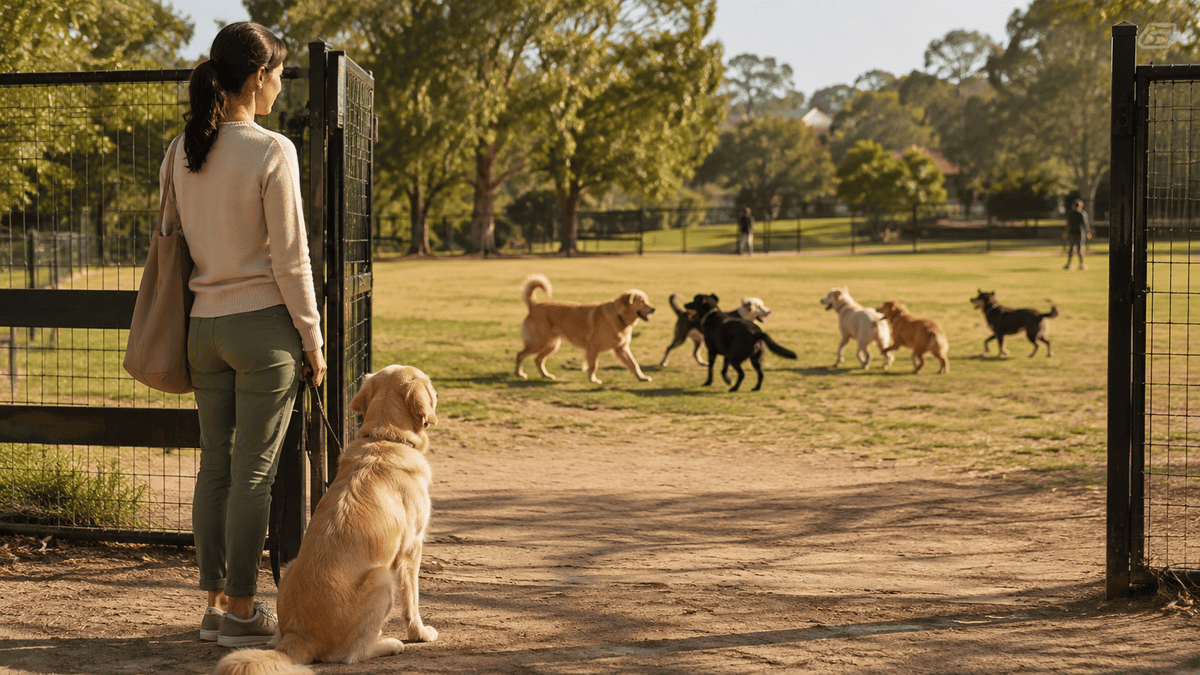
- Watch from outside the gate for a few minutes — assess the current group
- Look for a double-gated entry and use it properly
- Take the lead off inside the airlock, not in the main area — a lead-restrained dog in a group of free dogs is a common flashpoint
- Leave if the group looks over-aroused or if one dog is being repeatedly targeted
Etiquette That Prevents Incidents
- Watch your dog rather than your phone
- Do not bring high-value toys or food into a shared space
- Interrupt play every couple of minutes with a brief recall to lower arousal
- Do not let your dog mob a new arrival at the gate
- Clean up, every time
- Leave before your dog is exhausted or overexcited, not after
Daily Dog Care Tracker
Note how your dog behaves and settles after different kinds of outing. Written records make it obvious whether the park genuinely suits your dog or leaves them wired and unsettled. Printable and fillable.
Get the Daily Dog Care Tracker →Reading Play vs Trouble
Healthy play: loose bouncy movement, play bows, role reversal where dogs take turns chasing, and natural pauses.
Warning signs: one dog never getting a turn, a chase where the pursued dog is trying to escape rather than play, stiff bodies, hard staring, pinning, or a group focusing on a single dog. Interrupt early — calmly calling your dog away and moving on defuses far more than shouting.
Health Considerations
- Keep vaccinations and parasite prevention up to date
- Bring your own water rather than using communal bowls
- Avoid busy parks during a local outbreak of kennel cough
- Check paws and coat afterwards for cuts, ticks and grass seeds
Alternatives Worth Considering
Secure private fields to hire, arranged walks with one or two known dogs, sniffari walks on a long line, and training classes all give social and mental benefit without the unpredictability of an open park.
Two ways to plan outings
Want a daily record of walks and behaviour? Choose the Daily Dog Care Tracker. Want walking notes alongside training progress and health records? Choose the Complete Dog Owner Binder.
Get the Complete Dog Owner Binder →Frequently Asked Questions
Are dog parks good for socialisation?
For confident adult dogs, they can be. For puppies and nervous dogs, a busy park often does more harm than good — controlled introductions to a few calm dogs are far more useful.
Should I take toys to a dog park?
Generally no. Toys and food create competition and are a common trigger for conflict in a group of unfamiliar dogs.
What should I do if a fight starts?
Do not reach between dogs with your hands. Make a loud noise, use a barrier such as a bag or board, and separate by the back legs only as a last resort. Leave calmly afterwards and check your dog for injuries.
Printable and fillable PDF templates for pet owners — feeding schedules, health records, training trackers and more.