
Daily Dog Care Checklist: Feeding, Walks, Medication and Grooming
Copy a daily task table and weekly review box, choose a paper format and test readability. Includes completion fields, handover wording and a household example.
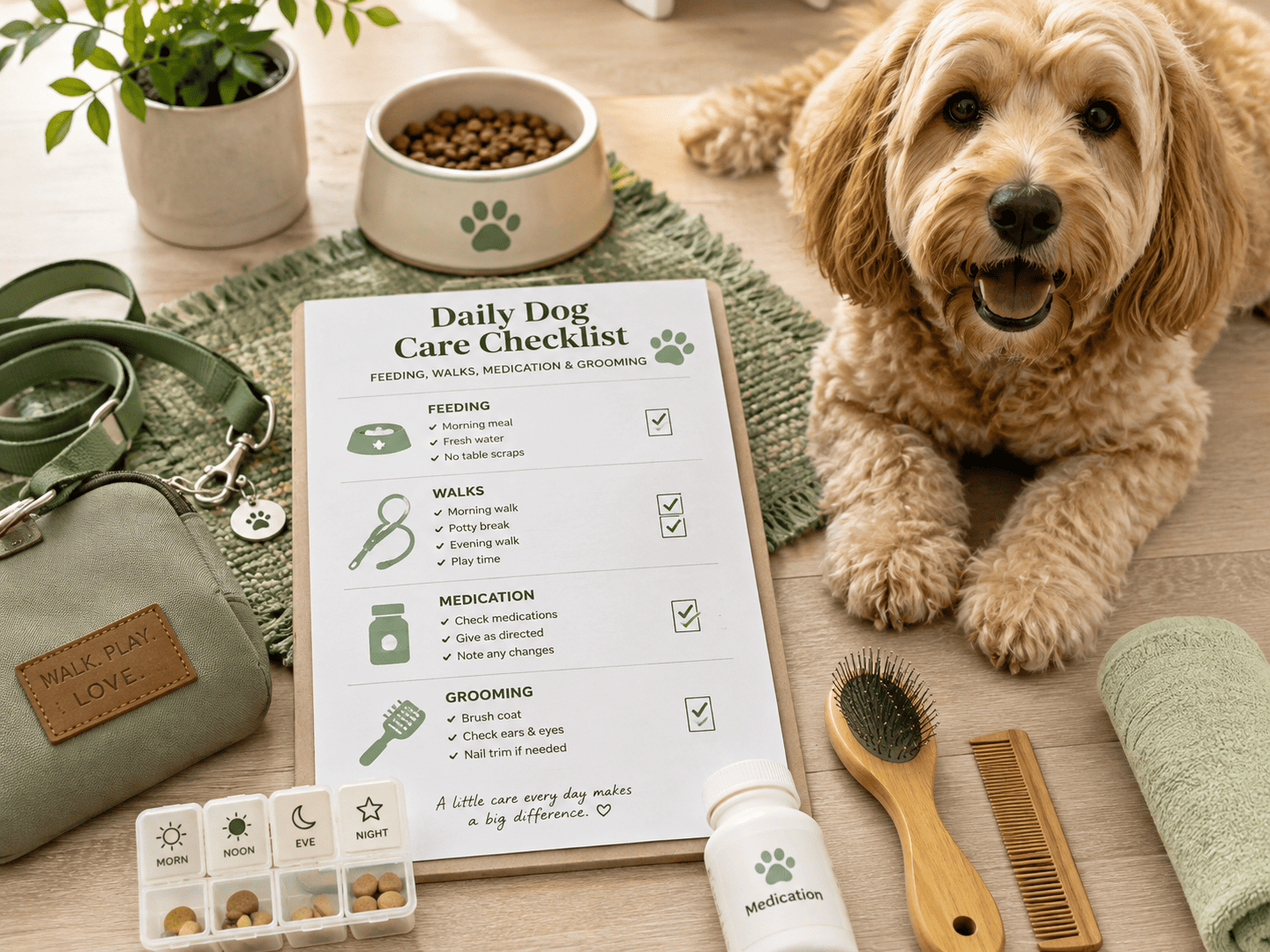
In short
Copy a daily task table and weekly review box, choose a paper format and test readability. Includes completion fields, handover wording and a household example.
A daily dog care checklist printable works best when it is easy to read, mark and replace. Put the dog's essential tasks on one sheet, leave room for initials and give unusual events a notes space instead of hiding them behind ticks.
Build it from your dog's current routine. Keep meals, water, toilet access, activity, rest and prescribed care visible, then place less frequent tasks in a separate weekly box.
Daily dog care checklist printable: choose the fields
Use a heading with the dog's name and the date or week covered. Add the current feeding and veterinary-instruction references where a carer needs more detail than a task label provides.
| Field | Put on the page | Example |
|---|---|---|
| Identity | Dog name and a distinguishing note when needed | Bramble, brown dog with white chest |
| Date | The day or week the sheet covers | [Date written clearly] |
| Task | A short action | Refresh kitchen water bowl |
| When | Time band or event | Morning; after waking; before bed |
| Person | Responsible carer or initials key | R = Robin; E = Ellis |
| Completion | Space marked after the task | Tick and initials; time where needed |
| Exception | Brief change needing attention | Route closed; quiet alternative used |
Keep long medical directions on their current labelled source. A checkbox can record completion of an agreed task, but the task label must point to the correct instructions.
Copy a one-day sheet with concrete tasks
The following layout is a starting point. Remove tasks that do not apply and add the dog's specific needs before printing.
| Part of day | Task | Person | Done / note |
|---|---|---|---|
| Morning | Offer toilet access on waking | [Name] | [Entry] |
| Morning | Refresh water and check every water point | [Name] | [Entry] |
| Morning | Serve the meal in the current feeding plan | [Name] | [Entry] |
| Morning | Provide the planned walk or individual activity | [Name] | [Entry] |
| Middle of day | Provide toilet opportunities and agreed care cover | [Name] | [Entry] |
| Middle of day | Provide a meal if included in the feeding plan | [Name] | [Entry] |
| Middle of day | Offer sniffing, play or a brief familiar learning task, with rest available | [Name] | [Entry] |
| After outdoor activity | Check coat and paws if the dog accepts handling | [Name] | [Entry] |
| Evening | Serve the planned meal and clean feeding bowls | [Name] | [Entry] |
| Evening | Refresh water and provide activity around the dog's needs | [Name] | [Entry] |
| Bedtime | Offer a final toilet outing and a calm resting area | [Name] | [Entry] |
| Prescribed-care time | Follow the named dog's current veterinary directions | [Name] | [Time, initials and any follow-up] |
Adult dogs generally need everyday walks plus opportunities to sniff and play; puppies need shorter sessions and plenty of rest. Adjust activity for the dog's health, weather and veterinary restrictions rather than making a printed row a fixed exercise demand.
For the care tasks themselves, use the dog daily care checklist. Keep the printable focused on making your household's version clear and usable.
Put weekly and occasional jobs in their own box
A weekly box reminds you to review grooming, equipment and supplies without implying every task happens only once a week. Long coats may need brushing frequently, often daily; the dog's coat and comfort decide the routine.
- Review brushing and grooming tasks against the dog's coat needs.
- Check nail length and arrange trimming or professional help when needed.
- Inspect the harness, lead, tag and barriers for wear.
- Wash bedding according to its care needs and material.
- Check food, waste bags and other household supplies.
- Review upcoming appointments and current veterinary instructions.
Do not turn “ear check” into an automatic instruction to put cleaner in the ears. Notice changes and ask the practice for guidance about care the dog needs.
Choose a paper format that people will use
| Format | Works well when | Watch for |
|---|---|---|
| One day per sheet | Care changes frequently or you need room for notes | Loose pages without a dog name or date |
| One week with daily columns | The routine is steady and several people use it | Boxes too small for legible initials |
| Reusable ordinary-task sheet | You need a visible routine reminder | Erasing completion history you still need |
| Fillable master plus paper working copy | You revise the routine digitally but care happens offline | Two versions with different instructions |
Print a test page at the intended paper size. If the table is cramped, shorten labels, split daily and weekly tasks or use a landscape layout. Do not solve it by shrinking text until a carer cannot read the numbers.
Position the page where care happens
Choose a visible, dry location household members use. Leave a pen nearby. Protect the page from food spills without putting it somewhere only one person can find.
Keep a spare blank sheet ready. When a page is full, replace it without losing the current instruction reference or the next care responsibility.
Use one short handover rule
Assign a person and backup for shared tasks, then mark completion afterwards. At a change of carer, confirm the last meal, the next task and any change needing attention. If completion is unclear, ask the previous carer rather than filling a tick from memory.
“Bramble's breakfast is complete and marked. Ellis covers the next outing. The usual path is closed, so use the quieter route on the care sheet. Robin will confirm the evening handover.”
A tick does not tell the next person about a refused meal or damaged lead. Add the exception beside the relevant task and contact the responsible person or veterinary practice when it affects care.
Worked example: the weekly sheet is too crowded
Robin prints a weekly checklist for Bramble with daily care, grooming, stock and appointment notes in one dense grid. Ellis cannot fit a useful note about the closed walking route beside the tiny box.
They keep meals, water, outings and prescribed tasks in the daily grid. A separate bottom box holds weekly equipment and supply checks, while an open notes space holds changes the next carer needs.
The routine has not gained more tasks. The printable has enough space to show which tasks happened and which change still needs a response.
Run a print-and-use check
- Read every label and instruction reference on the printed sheet.
- Find the dog name and date without explanation.
- Mark a sample task with legible initials.
- Write a short exception in the available space.
- Ask another carer to identify the next task.
- Replace confusing labels before using the sheet for real care.
Common printable mistakes
- A morning heading without a meal task: check every essential is represented.
- Grooming hidden in a weekly-only schedule: place tasks at the frequency the dog needs.
- Ticks filled in advance: separate reminders from completion.
- Old and new masters displayed together: keep one current working version.
Frequently Asked Questions
Is a daily or weekly printable better?
Choose daily pages for changing care or detailed notes, and a weekly grid for a stable routine. Test whether carers have enough room to mark completion and record an exception.
Can I laminate the checklist?
You can use a reusable sheet for routine reminders. Keep dated records separately when completed tasks, prescribed care or a care concern need a lasting history.
Should I tick tasks that do not apply?
Remove them or mark them clearly as not applicable. A tick should mean the task was completed, so do not use it to hide an unused row.
What if the routine changes partway through the week?
Replace the working instructions and tell the carers. Mark when the new plan began so an old portion reference or task is not followed by mistake.
Resources & Links
These sources help choose daily and grooming tasks and recognise changes that need attention.
- PDSA: Grooming Pets — Place coat and handling tasks on the printable at the frequency the individual dog needs.
- RSPCA: Company for Dogs — Include company and care cover alongside physical daily tasks.
- PDSA: Home Health Checks — Recognise changes that need a note or veterinary discussion rather than an ordinary tick.
Organise daily care with the Daily Dog Care Tracker. Get the Daily Dog Care Tracker →
Printable and fillable PDF templates for pet owners — feeding schedules, health records, training trackers and more.